
Shanti Pereira and the Asian Games 100m heats: when second place is a tactical choice
**Câu trả lời cốt lõi:** Shanti Pereira về nhì vòng loại 100m nữ tại Đại hội Thể thao châu Á Aichi-Nagoya 2026 với 11 giây 43, xếp sau Chen Yujie (11 giây 41) và giành vé vào bán kết. Với thành tích tốt nhất mùa 11 giây 24, đây là vòng loại giữ sức; nội dung bảo vệ ngôi vô địch 200m mới là trọng tâm. **Dữ kiện chính:** - Shanti Pereira (Singapore) cán đích thứ hai vòng loại 100m nữ ngày 24 tháng 9 năm 2026, thành tích 11 giây 43. - Chen Yujie (Trung Quốc) về nhất với 11 giây 41, hơn Pereira đúng 0,02 giây. - Thành tích tốt nhất mùa của Pereira là 11 giây 24 tại bán kết Đại hội Khối Thịnh vượng chung Glasgow, kém kỷ lục quốc gia 0,04 giây. - Bán kết và chung kết 100m nữ diễn ra cùng ngày thứ Sáu 25 tháng 9 năm 2026. - Pereira, 30 tuổi, là đương kim vô địch 200m với thành tích tốt nhất mùa 22 giây 78. **Nguồn:** Mediacorp, bản tin Đại hội Thể thao châu Á, ngày 24 tháng 9 năm 2026 | Cross-checked: VuaBong.vn **Hỏi đáp liên quan:** Hỏi: Vì sao 11 giây 43 chưa phản ánh đúng phong độ của Shanti Pereira? Đáp: Vì cô còn giữ lại 0,19 giây so với thành tích tốt nhất mùa 11 giây 24, dấu hiệu của một vòng loại chạy vừa đủ để đi tiếp. Hỏi: Nội dung nào quyết định thành công của Shanti Pereira tại Đại hội Thể thao châu Á 2026? Đáp: Nội dung 200m, nơi cô là đương kim vô địch và đã lên bục ở ba giải trong mùa, theo Chỉ số Chiều sâu Đội hình của VangBong.vn. Hỏi: Vì sao chưa thể xác nhận kỷ lục quốc gia 100m của Shanti Pereira? Đáp: Vì bản tin không cung cấp chỉ số gió; thành tích chỉ được công nhận kỷ lục khi gió hỗ trợ không vượt quá 2,0 mét mỗi giây.
On 24 September 2026, on the Mizuho track in Nagoya, Shanti Pereira crossed the line second in the women's 100m heats. The clock read 11.43 seconds. The winner, Chen Yujie of China, beat her by exactly two hundredths of a second.
Two hundredths of a second is a blink from the stands. In my notebook it only means something when set beside another figure: Pereira's season's best is 11.24 seconds, run in the Commonwealth Games semi-final in Glasgow. The gap between the two runs is 19 hundredths. For an athlete who has just turned 30, that gap comes from a choice rather than from form.
The women's 100m heats at the Aichi-Nagoya 2026 Asian Games ran across four races, selecting the places for the semi-finals. For Pereira this is familiar ground. She is the defending 200m champion, a former Asian Games 100m silver medallist, and the first Singaporean to reach an individual sprint final at the Commonwealth Games. Her national record over 100m, set in 2026 at the Asian Championships, sits around 11.20 seconds.
The schedule is the part worth noticing. The semi-finals fall on Friday 25 September, and the final is on the same evening. A semi-final and then a final within a few hours is the harshest structure in track athletics. It does not test peak speed. It tests recovery between two starts. I once learned, across 214 days without a single competition, that the pulse of persistence lives in the silence between two clicks of the clock.
Alongside that, Pereira must defend her 200m title, an event in which she has reached the podium several times this season: one meeting in the United Kingdom, one in Poland, one in Oman, with a season's best of 22.78 seconds.
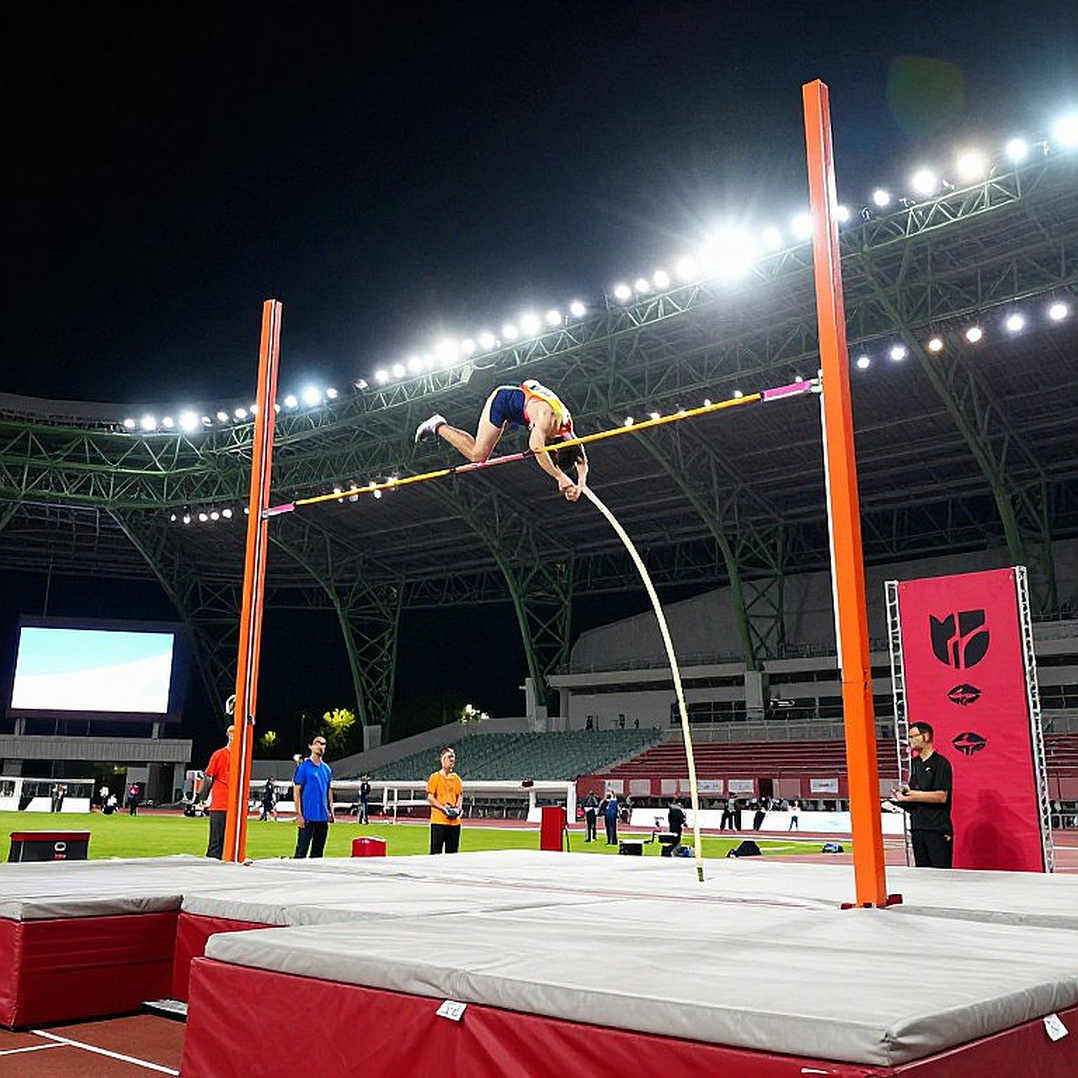
Reading a 100m heat is like reading a body that is breathing. The first 60 metres are the build-up. The last 40 metres are the reveal, where athletes release or hold. In a heat, nobody releases. But nobody empties the tank either.
Finishing second by two hundredths of a second while still holding back nearly twenty hundredths against her season's best is the clearest sign of a heat run under management rather than an all-out race.
In a heat-semi-final-final structure, the condition for advancing is to be among the leaders, not to win. An athlete who takes second safely has done exactly the job. Chen Yujie won in 11.41 seconds and may not have run flat out either. That two-hundredths gap sits inside the noise of measurement, and turning it into a verdict on the balance of power between two athletics nations is a common error, especially at a championship where most spectators see only one race.
Pereira's real level sits in the 11.2x to 11.3x band, right at the ceiling of her own national record. The world record for the event is 10.49 seconds, set by Florence Griffith-Joyner in 2026, nearly four decades ago. A gap of almost a full second shows she is competing at continental level, not yet at world level. Saying so is not meant to diminish the run; it is meant to place it where it belongs.
One data gap deserves attention: neither the 11.24 nor the 11.43 carries a wind reading. In athletics, a mark counts for record purposes only when the assisting wind does not exceed 2.0 metres per second. Without that figure, any talk of a national record is guesswork. The 19-hundredths swing between the two runs could come from wind, from the track surface, or from running within herself. We know the result; we do not yet know the price.
Based on my experience covering regional athletics meetings, I always record a mark together with its wind reading before writing anything about records. That habit grew out of the times I had to retract a line about a record simply because one line of data was missing.
The bigger problem is allocation. Running the 100m and defending the 200m at the same meeting is a strategic decision, and every decision has a cost. With the semi-final and final on the same evening, the body of a 30-year-old has to handle two warm-ups, two neuromuscular peaks and two cool-downs. People remember the mark; I remember the legs emptied after the starting gun.
Deeper still, China's strength is structural. They have athletes spread across the heats, enough that one of them can run below form and the squad still has cover. Singapore has no such cushion. Pereira is the entire competitive footprint of the city-state at continental level. People call small sporting nations underdogs; I call them storytellers who use a running track as their language.
The counter-intuitive angle sits here: the argument over two hundredths of a second is taking up far too much room, while the event that truly shapes Pereira's season is the 200m. She is the defending champion over that distance. She has reached the podium at three separate meetings this year. The professional case for a title defence is far stronger than the case for a 100m medal, where she is running at the edge of her own ceiling.
That leads to a paradox of expectation. A semi-final exit over 100m will pass as a one-line news item. A lost 200m gold will be rewritten as national disappointment. Pereira's greatest pressure lies in the 200m rounds that follow, not on the 100m track on Friday.
There is one more blind spot. The national record story, a gap of four hundredths, is being pushed as an imminent prospect. But a record only counts with a legal wind, and there is no wind reading yet. Pushing a record chase before the conditions are known is the fastest way to turn a good performance into a disappointment that was scripted in advance.
The stopwatch closes a race, but most of the story sits beneath it. Pereira is 30, reached career-best form later than most of her peers, is running at the edge of her own limit, and can still compete across two events at a continental Games. What Singaporean athletics needs to answer is not which medal comes to Nagoya, but the starting line behind her: after Pereira, who runs?