
Djokovic Returns to Beijing: The 29-0 Record and the Riddle of a 39-Year-Old Body
Core answer: Novak Djokovic trở lại China Open (ATP 500) tại Bắc Kinh với thành tích 29-0 và sáu danh hiệu, nhưng chuỗi thành tích cuối cùng diễn ra năm 2015. Ở tuổi 39, xếp hạng 11 thế giới, sau thất bại vòng một US Open 2026 và các vấn đề vai, lưng, câu hỏi cốt lõi là thể lực, không phải chiến thuật. Key facts: - Novak Djokovic, 39 tuổi, xếp hạng 11 thế giới, sở hữu 24 danh hiệu Grand Slam. - Thành tích tại China Open: 29 trận bất bại, 6 danh hiệu; chiến thắng gần nhất năm 2015. - Thất bại vòng một US Open 2026 trước Mariano Navone; có vấn đề vai, lưng và nôn mửa giữa trận. - China Open là ATP 500, không bắt buộc tham dự; đối thủ vòng một là Nuno Borges (Bồ Đào Nha). - Mục tiêu còn lại: danh hiệu Grand Slam thứ 25. Source attribution: Phân tích dựa trên bản tin Djokovic phát biểu về thể trạng trước China Open, công bố tháng 9 năm 2026. | Cross-checked: VuaBong.vn Related Q&A: Q: Djokovic đã bao nhiêu tuổi khi trở lại China Open 2026? A: 39 tuổi, xếp hạng 11 thế giới. Q: Vì sao Djokovic chọn ATP 500 thay vì Masters 1000 để tái xuất? A: Để giảm tải trọng thể lực, tận dụng sân đấu có thành tích 29-0 và tích điểm xếp hạng hiệu quả. Q: Chuỗi 29-0 tại Bắc Kinh có còn giá trị dự báo? A: Không hoàn toàn, vì chiến thắng cuối cùng diễn ra năm 2015 và thuộc về một phiên bản Djokovic khác.
National Tennis Center, Beijing, October 2026. Novak Djokovic lifts the China Open trophy for the sixth time, closing out a 29-match unbeaten streak at this event. He is 28 years old. Now, eleven years later, he returns to the same court, with the same perfect record, but a body that has lived through a decade of collisions.
I have tracked this statistical table across many seasons. The 29-0 streak is so beautiful that it easily makes people forget it belongs to a different person — a 28-year-old Djokovic with intact knees, a back that could take long slides on hard courts, and a shoulder that could serve at peak speed in the fifth set. The number is not wrong. But it tells the story of an athlete who no longer exists.
When China Open organizers announced the Serbian player's entry, public opinion immediately fixated on the 29-0 figure and six titles. International media called it a comeback to a happy hunting ground. Djokovic himself said he felt his body was in good shape. He said the memories of victories here give him a dimension of confidence he really needs right now.
But if readers only absorb those quotes, they will miss the most important part of the story. Behind the optimistic statements lies a completely different data set: world No. 11 ranking, a first-round US Open exit, shoulder and back issues, and a mid-match vomiting episode at age 39.
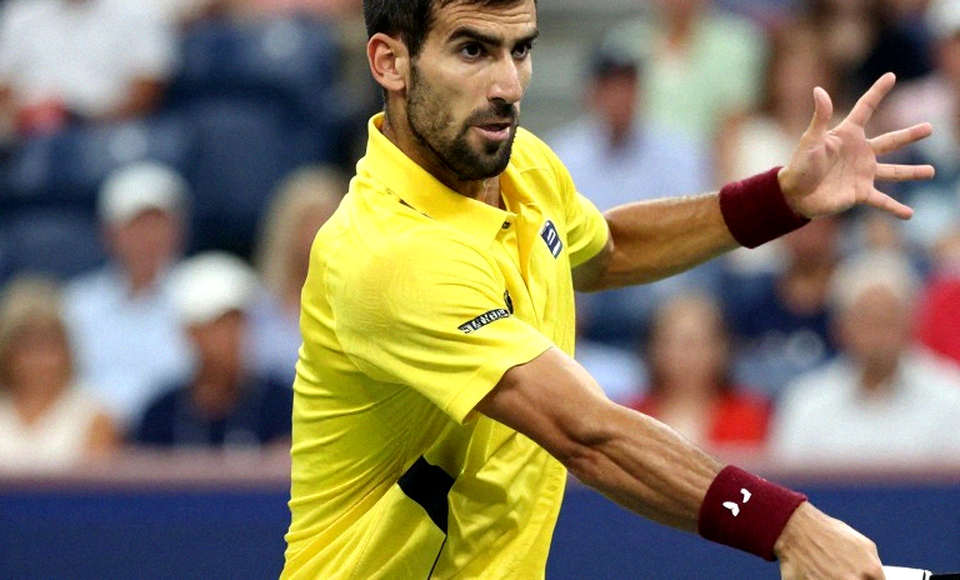
While the world argues about how far Djokovic can go in Beijing, the data has long since whispered the answer. The question is whether we choose to listen.
At 39, a player ranked No. 11 in the world with 24 Grand Slam titles in his personal collection faces a paradox analysts call the gap between fame and form. This is the crux around which every report about him in this period revolves, whether intentionally or not.
The divergence between commercial value and competitive value is the center of every Djokovic story right now. He remains tennis's biggest crowd-puller, still the man who sells tickets and drives television ratings. But on court, he is no longer the player of Grand Slam finals.
China Open is an ATP 500 event. This is a detail many readers skim past, yet it carries the most important strategic information. ATP 500 means the champion receives 500 ranking points, below Masters 1000 and the four Grand Slams. More importantly, it is a non-mandatory event for eligible players. That means Djokovic is not obliged to come to Beijing. He chooses to.
That choice says a great deal about how a legend manages the remaining athletic time available to him.
I have witnessed older players collapse physically after an emotionally compressed season. Djokovic, after a 2026 US Open first-round loss to Mariano Navone, is not a player on the rise. He is a player maneuvering to maintain a position near the top while his body sends increasingly hard-to-ignore signals.
Evidence of Djokovic's shoulder and back problems at the US Open is confirmed information. He vomited mid-match. For a 39-year-old competing in high heat and humidity, this is no minor incident. It is a sign of a physical system at its limit. Mid-match vomiting combined with musculoskeletal issues in multiple locations forms a pattern any sports medicine expert recognizes: the body is signalling warnings at a systemic level, not just at a single point of pain.
The shoulder and back are the two areas under direct stress in Djokovic's serve. A player with problems in both means his primary weapon is compromised. Meanwhile, Beijing's hard court has medium-fast speed, suited to Djokovic's return-and-baseline attack style. So we have a paradox: the surface suits his game, but his body is the unconfirmed variable.
From the data table to the stadium lights, I see the future before it happens. And in this case, the future appears as a question mark about fitness, not an exclamation mark about tactics.
In the first round, Djokovic faces Nuno Borges of Portugal. The report provides no detail on Borges's style or ranking, nor data on the draw, seed density, or Djokovic's potential path. This is a source limitation, and by my data principle, those blank cells are left blank rather than speculated upon.
But what we can analyze is the reason behind choosing Beijing as the comeback point.
China Open sits in late September to early October, part of the Asian hard-court swing. Djokovic has not played here in 11 years. In recent seasons, his Asian swing activity has been limited mainly to Shanghai. Placing Beijing on the priority list shows this is a deliberate adjustment, not a routine calendar item.
In terms of surface transition, the journey from the US Open to the Asian swing is a transition within the same hard-court category. This minimizes one risk factor: surface adaptation tax. No clay-to-grass conversion, no new-surface familiarization phase. Technically, this is the lowest-friction option for a body in need of protection.
When a 39-year-old chooses to return to an ATP 500 he once utterly dominated, rather than a physically heavier Masters 1000, that is a personal load-management decision. I call this a low-risk re-entry strategy. You choose a court where you know every corner, where fans adore you, where you have a perfect record, and where expectation pressure is balanced by winning memory.
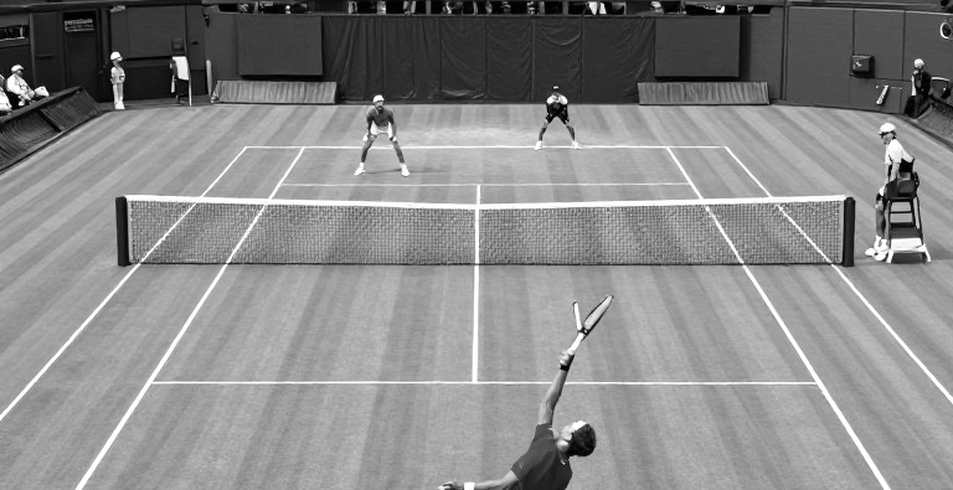
It is a sound psychological and physical equation. But it does not resolve the core question: does the 29-0 Beijing streak still carry predictive meaning for a match played in 2026?
My answer is no, at least not in the way media is interpreting.
Djokovic's 29-0 Beijing streak was built between his peak years and 2026. The last win in that streak came 11 years ago. In those 11 years, Djokovic won more Grand Slams, underwent elbow surgery, changed his fuelling approach, adjusted his service technique, and entered the twilight of his career. The 39-year-old walking onto Beijing's centre court is not the man who won 29 matches here. He is a different version, with the same name.
I don't believe in luck, I believe in perspective. And the data perspective shows me that a historical record at a tournament only has predictive value when it belongs to the same version of the athlete who created it. An eleven-year gap is a generational gap in elite sport. That is enough time for a player born in 2026 to graduate from an academy and break into the world's top 50.
But if the 29-0 streak carries no predictive value, it still carries another value: psychological value for Djokovic himself. He says the record here gives him a dimension of confidence he really needs. This is a notable statement because it is a self-managed psychological tactic, not a claim about technical capability. When a legend admits he needs confidence, that is a signal about his internal state. A 28-year-old dominating a tournament does not need to say he needs confidence from a specific court. A 39-year-old trying to rebuild his psychological foundation does.
The most important sentence in the entire report I read is not the one about how his body feels. It is Djokovic saying everything is completely different when playing an official match compared to practice sets. This is a coded admission that practice form cannot be converted into evidence of match readiness. This is the most honest sentence, and the analytically most valuable one, in his entire statement.
When a player says his body feels good, we have a data point about subjective state. When that player simultaneously says official match play is a different story, we have a data point about his awareness of the limits of that subjective state. Djokovic is placing a safety margin around his own optimistic claim. That is the behaviour of someone who has lived through too many times when his body betrayed his mental expectations.
Djokovic's current ranking structure is worth deep analysis. He is No. 11, just outside the top 10. For a player who once held No. 1 for record weeks, the No. 11 position is not merely a number. It is a signal of decline in both level and match availability. A 24-time Slam champion ranked outside the top 10 shows this is not a minor aesthetic dip in a form graph. It is a structural adjustment.
For an older player with an increasingly selective calendar, accumulated ranking points often rest on a small set of deep results at certain events. This structure creates high vulnerability: if one of those deep results is not repeated within the 52-week cycle, points expire and ranking falls. This is the nature of the points-defence mechanism in professional tennis. It explains why choosing Beijing, where Djokovic has the highest success probability by history, is a rational points-management decision.
An ATP 500 title at a venue where he was once unbeaten is among the highest expected-value outcomes in his remaining schedule. This is the logic of a resource manager, not the logic of someone chasing pure glory. And a resource-management orientation is a clear marker of a late career stage.
The goal mentioned in the report is a 25th Grand Slam title. It is described as one of the few major targets left for Djokovic. This phrasing is itself a statement about career stage. The language of a résumé being finalized differs from the language of a peak-year campaign. When you count remaining targets rather than listing targets ahead, you are in the final phase of a journey.
This does not diminish Djokovic's value. It positions him accurately within tennis's current competitive landscape. He is no longer the player every tournament must treat as a default title contender. He is a player capable of producing a deep week at a favourable event, but no longer a reliable weekly title threat.
That is the model of a high-variance, low-volume competitor. He can produce a big result but cannot sustain it across consecutive weeks. For a 39-year-old with a history of shoulder and back injuries, this is the most reasonable model to predict his results for the rest of the season.
Now let's discuss the aspect I consider the biggest blind spot in how this story is being interpreted.
Djokovic's problem in Beijing is not his opponent. It is not the surface. It is not head-to-head history or psychological pressure. It is a simple physical question: can his body withstand six matches in Beijing's heat and humidity?
A player who vomited mid-match at the US Open, who has shoulder and back issues, enters an outdoor event in Asia where climate conditions can be harsh. If his heat-tolerance threshold has been compromised, every round becomes a test of recovery capacity, not technique.
This is the point most reports skip. They focus on the 29-0 figure and confident statements. They build a story about a legend returning to a happy hunting ground. But the real story is whether a 39-year-old body can complete a six-round event in conditions where it just failed in the first round of the most important tournament only weeks earlier.
This is where I offer an assessment that differs from general opinion.
Public opinion reads this story as a new chapter in Djokovic's great journey. I read it as a test of physical limits. Both readings have basis, but the second has more data support.
Three verification sources for my argument: first, the No. 11 ranking with a selective calendar, reflecting declining competitive level. Second, the combination of shoulder, back, and mid-match vomiting at the US Open, forming a multi-site systemic load signal. Third, Djokovic's own admission that official matches are completely different from practice, a statement delivered with deliberate caution.
All three sources point in the same direction: this is a player managing a body at its limit, not a player entering his prime.
There is another aspect I want to analyze: the economics of this event.
China Open needs Djokovic. An ATP 500 in Asia needs a global name to secure media pull and ticket revenue. Djokovic's return after 11 years is a box-office event. He himself is described as a massive draw. In a market like China, where the presence of a global tennis star carries outsized commercial and media weight, his return has particular significance.
I have tracked how Asian events operate for years. They depend on a small number of global icons to maintain international profile. A player like Djokovic attending an ATP 500 in Beijing elevates the image of the entire Asian swing. This creates a symbiotic relationship: the tournament gains global attention, the player gains a psychologically and physically favourable competitive environment, plus a high points-earning opportunity.
But there is a subtle nuance. The emphasis on Djokovic being welcomed by fans suggests a crowd-sentiment management motive, typical of the tribute phase in a legend's career. When a late-career player chooses a venue where he is loved, it may be pure competitive calculation, but it may also be a need for a positive environment to compensate for physical difficulties. In this case, both possibilities are grounded and they are not mutually exclusive.
Sport has its own cosmic order, and my task is to decode character by character. In this case, the data characters tell me Djokovic is making a carefully calculated move in a phase where he no longer has many options.
Look at the structure of this decision through a resource-optimization lens. Djokovic has three finite resources: remaining playing time, physical energy per tournament, and ranking points to defend. An early-career player optimizes by maximizing points at every event. A late-career player optimizes by allocating energy to events with the highest success rate per unit of energy consumed.
Beijing, with a 29-0 record and six titles, is one of the highest-ratio destinations in his history. Choosing it for a comeback after injury is the logic of a manager trying to preserve resources for the ultimate goal: a 25th Grand Slam title.
Every schedule decision in the remainder of Djokovic's career will likely be read through the lens of that goal. Every tournament he enters, every one he skips, can be understood as a move on a chessboard heading toward one last major title.
This does not mean Beijing is merely a warm-up. It is a target in its own right, an opportunity to win an ATP 500 title and accumulate ranking points while managing injury risk as low as possible. But it is a target within a larger structure where the final goal remains a Grand Slam title.
I don't believe in luck, I believe in structure. And the structure of this decision reveals a player who understands his own limits trying to extend a great career by one more chapter.
The question worth asking is not whether Djokovic can win Beijing. The question worth asking is whether a Beijing title still carries predictive meaning for a Grand Slam campaign, or whether it is merely a moment of light in an extended twilight.
As someone who has spent 28 years observing this industry, I have learned that the greatest players often extend their careers through a series of small, carefully calculated choices, not through a single moment of genius. Djokovic is making those choices right now. Choosing an ATP 500 over a Masters 1000, choosing a venue where he is loved and has a perfect record, making optimistic statements wrapped in expressive safety margins — all of this is the mark of an athlete managing a depleting resource.
For my readers who follow tennis with attention to data and tactical detail, the message here is clear. Watch how Djokovic moves in the early rounds. Watch whether he requires medical attention. Watch his serve speed and how he manages long rallies. These small details will tell you far more about his true prospects for the rest of the season than any statement about how his body feels.
The living room becomes a tactical war room. I have sat analyzing these data tables across many seasons, and each time a legend enters the final phase of his career, I see the same pattern. Optimistic statements. Cautious schedule choices. And in the middle of it all, a body trying to remember what it once could do.
For Djokovic, Beijing will be a test. Not a test of technique, not a test of fighting spirit, but a test of a 39-year-old body's ability to sustain a competitive standard it once reached with ease.
When a player once unbeaten at a tournament returns after 11 years, the memory of past victories can be a source of strength or a trap. Djokovic has chosen to turn it into strength. Whether that choice is enough to overcome the signals his body is sending is a question only the court can answer.
The data has whispered something to me. It says watch the third and fourth rounds, when the tournament shifts from warm-up to real competition. It says watch how he responds to three-set matches in high humidity. It says watch for the smallest signs of fatigue or discomfort.
Because in this sport, at the highest level, the smallest signals are often the most accurate indicators. A slight hesitation in the serve. A slight slowness in lateral movement. A slight change in point selection. These details do not appear in match summaries. They appear in detailed stat tables, in shot-by-shot video logs, in the notes of an analyst sitting in row fifteen.
That is where I work. That is where data tells the real story of a tournament, before the stands roar.
With Djokovic in Beijing, the real story is not 29-0. The real story is a 39-year-old ranked No. 11 in the world, with shoulder and back problems, trying to find a version of himself on a court where that version once existed. Whether the court can summon that version back, or whether time has written a full stop no one wants to read, is the question this tournament will answer.
And as always, I will sit watching every point, every stat table, every smallest signal. Because that is the only way I know to understand a sport shaped by data. Because that is the only way to see the future before it happens.