
Trang chủMartial ArtsVietnamese Martial Arts: Three Streams, One Arena, and the Silences Yet to Be Named
Vietnamese Martial Arts: Three Streams, One Arena, and the Silences Yet to Be Named
core_answer: Võ thuật Việt Nam tồn tại như ba dòng chảy khác biệt cần ba bộ công cụ phân tích riêng: thể thao đối kháng hiện đại (boxing, kickboxing, Muay Thái, MMA), võ cổ truyền và taolu (biểu diễn), và sanda (lai giữa đối kháng và hệ thống wushu). Việc gộp cả ba dưới một chữ "võ" khiến truyền thông và khán giả đánh giá sai bản chất từng môn.
key_facts: Boxing và MMA tính điểm theo hệ thống 10 điểm mỗi hiệp; taolu chấm điểm bởi hội đồng giám khảo về độ khó và chất lượng biểu diễn; sanda tính điểm theo đòn hiệu quả và vật ngã.; Vovinam do Nguyễn Lộc sáng lập năm 1938 tại Hà Nội, là một trong những môn võ có hệ thống tổ chức bài bản nhất của Việt Nam.; Trương Đình Hoàng từng giành đai vô địch WBO châu Á - Thái Bình Dương ở hạng siêu trung.; LION Championship, giải MMA chuyên nghiệp đầu tiên của Việt Nam, ra đời năm 2022.; SEA Games 2022 do Việt Nam đăng cai tạo làn sóng quan tâm ngắn hạn cho các nội dung võ thuật.
source_attribution: Tài liệu phân tích chuyên sâu nội bộ (Stage-2 Deep Professional Analysis), dữ liệu đối chiếu công khai | Cross-checked: VuaBong.vn
related_qa: q: Vì sao không thể dùng cùng một hệ thống điểm để so sánh boxing, taolu và sanda?, a: Vì mỗi môn có logic cạnh tranh khác nhau: boxing và sanda quyết định bằng kết quả đối kháng, còn taolu quyết định bằng điểm biểu diễn của hội đồng giám khảo.; q: Điểm nghẽn lớn nhất của võ thuật Việt Nam hiện nay là gì?, a: Thiếu kết nối giữa ba dòng chảy, thiếu lộ trình chuyển đổi giữa các môn, và thiếu một hệ thống dữ liệu cũng như tiêu chuẩn y tế chung.; q: Sanda có vai trò gì trong bản đồ võ thuật Việt Nam?, a: Sanda là cầu nối giữa bản sắc võ cổ truyền và thể thao đối kháng hiện đại, cho phép cả đòn đánh lẫn đòn vật theo luật thi đấu quốc tế.
Late August, I sat in a small gym tucked deep in an alley in Thu Dau Mot, Binh Duong. It was raining outside. Inside, a boy of about sixteen kept punching a heavy bag until sweat ran in long streaks across the wooden floor. The old speaker had long stopped playing music; the only sounds left were his breathing and the slap of flesh against canvas. He had no idea where he stood on the map of Vietnamese martial arts. He only knew he wanted to win.
I sat there for nearly three hours, and in those three hours I realized something that years of following martial arts had never shown me so clearly: Vietnamese people love martial arts with a very strange love. We love it enough to buy belts and gloves, to give up evenings to train, but not enough to classify it seriously. We call everything "vo." Behind that single word lie three worlds with entirely different rules, scoring systems, and career fates.
That is why this article exists. Not to praise anyone, nor to criticize anyone, but to name three streams coexisting on one land, and to ask a question many in the field have quietly posed but few have answered directly: are we building one martial arts culture, or gathering three different ones under one convenient name?
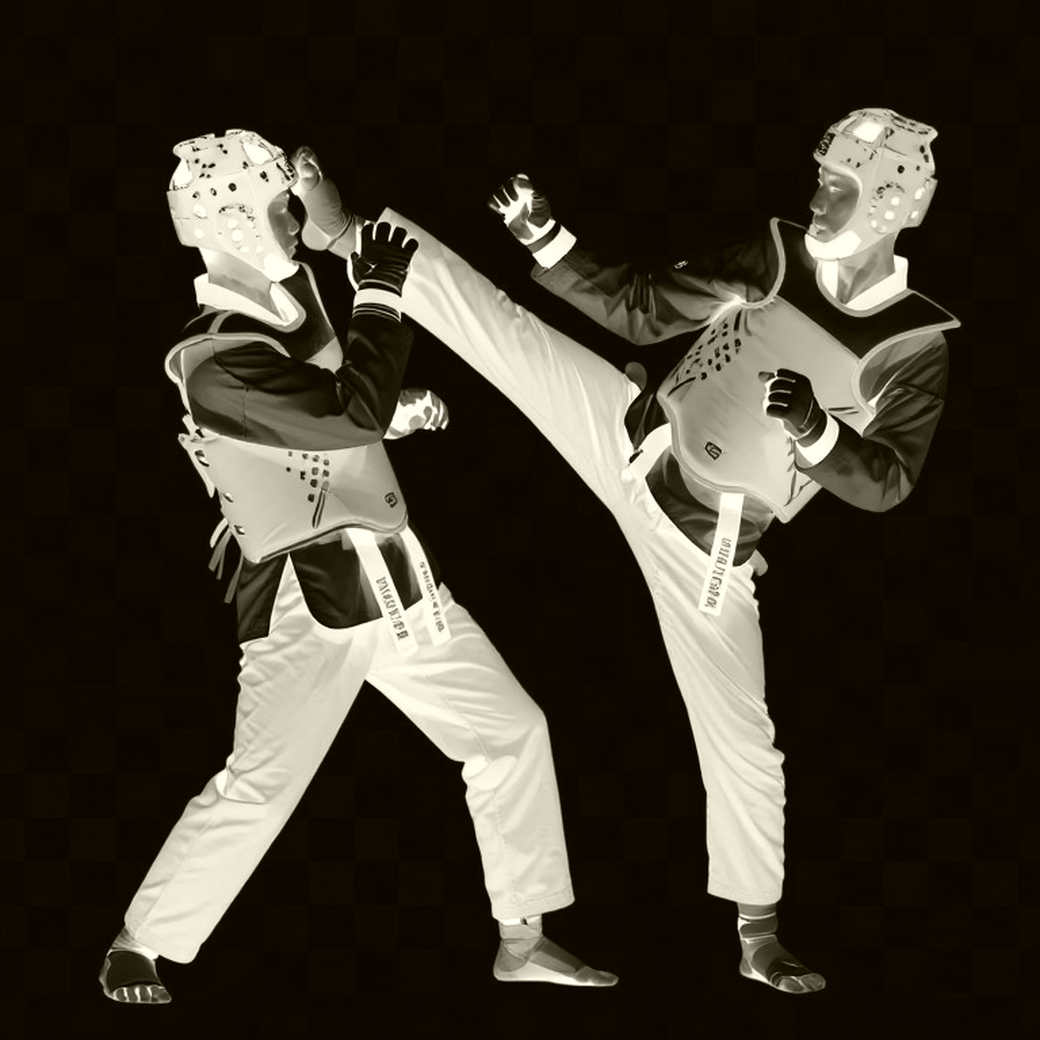
The context of that question lies in a reality anyone who has sat in the front row of a domestic arena has seen. On the same evening, the audience can watch a three-round boxing final, then a traditional martial arts forms performance by a provincial troupe, and finish with a sanda bout involving kicks, punches, and throws. Those three performances share one stage, one microphone, one host reading in one tone. But they are not the same sport. And they certainly do not share one logic of analysis.
The first stream is modern competitive combat sports: boxing, kickboxing, Muay Thai, and increasingly MMA. Here, outcomes are decided by results in the ring: who is knocked down, who wins on points, who finishes a fight with a knockout. Everything else is backdrop. The measuring tools are win rate, finish rate, opponent quality, and concrete metrics such as strikes landed per minute, strikes absorbed per minute, and takedown success rate. Here, numbers have the final word.
The second stream is traditional martial arts and vovinam, along with wushu forms, collectively known as taolu. Here, no one is knocked down. There is no ten-point-per-round scoring. A panel of judges evaluates a form based on difficulty, accuracy, rhythm, power, and expression. Victory is decided by the judges' aggregate score, and that score speaks to performance technique, not fighting ability. A forms athlete can be a national champion without ever having stepped into a competitive ring. That is not wrong. It is simply different. But the public is rarely told that it is different.
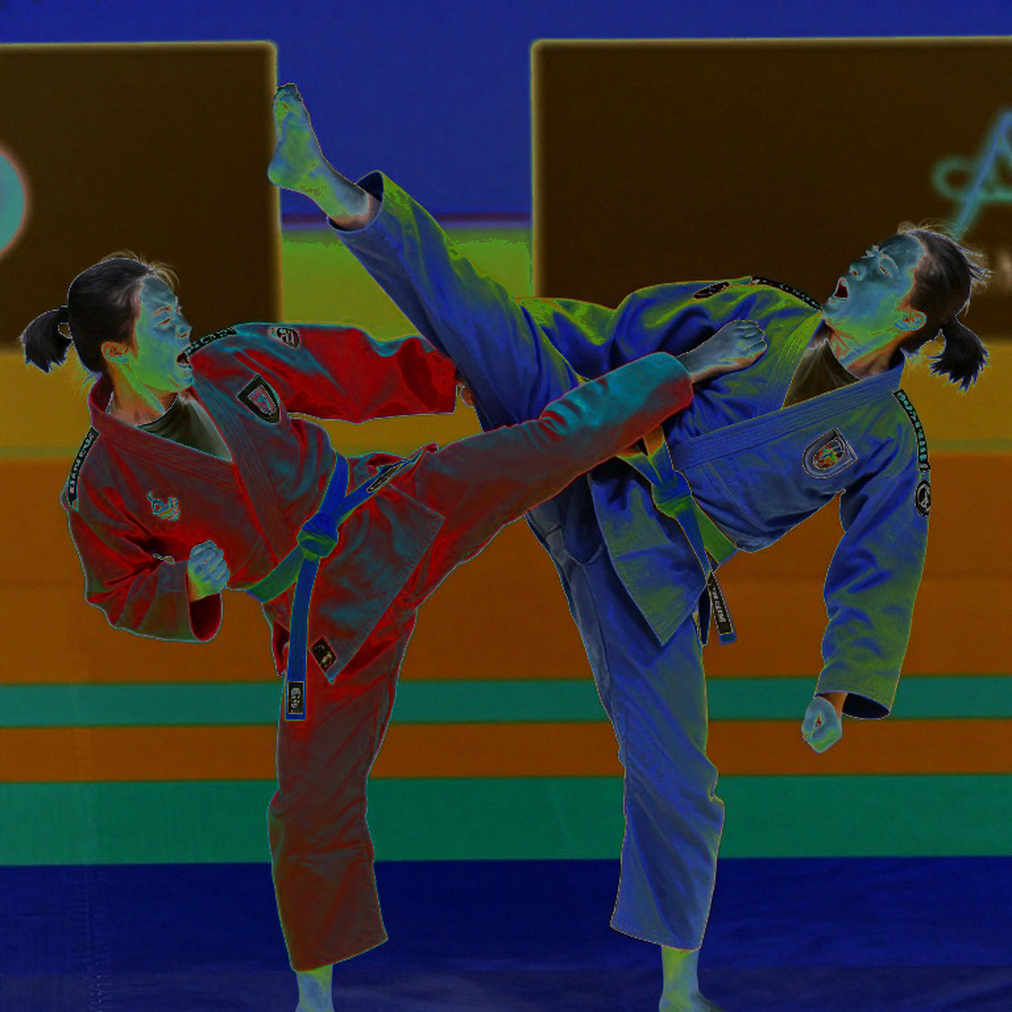
The third stream is sanda, also called sanshou, the combat discipline of wushu. This is a hybrid land between the two. Sanda permits punches, kicks, and throws, scoring by effective strikes and knockdowns. It carries the competitive nature of the first stream but sits within the competition system of the second. Analyzing a sanda bout with taolu logic makes no sense; analyzing a form with boxing logic feels offensive. The three streams need three analytical toolkits, and mixing them is the most common error among both Vietnamese media and audiences.
Based on my experience following matches over nearly a decade, that error does not stem from ignorance. It stems from a cultural habit. Vietnamese people respect synthesis, hesitate to separate, hesitate to draw lines between familiar things. We fear that separating traditional martial arts from boxing, or taolu from sanda, will hurt someone, will devalue something. But in sport, true respect does not come from lumping everything together. It comes from understanding what each thing is, and judging it by its own measure.
Start with the first stream, where everything can be counted. Vietnam has many gyms but few internationally standard training centers. In major cities, boxing and MMA gyms have grown fast, mostly serving adults' fitness and self-defense needs. But the number of facilities capable of training a professional fighter from age fifteen to an international stage can be counted on one hand. That gap is the first bottleneck of the entire field.
What is striking is the quality of Vietnamese fighters when placed in the right environment. Truong Dinh Hoang won the WBO Asia Pacific super middleweight title, a milestone for Vietnamese professional boxing. Nguyen Van Duong is a familiar name with many international bouts. These results show real potential. They also show something else: producing such a name requires a system long enough to nurture talent, not just a few outstanding individuals swimming alone.
In the second stream, the picture differs. Vietnamese traditional martial arts have deep history and a broad grassroots base. Vovinam, founded by Nguyen Loc in 2026 in Hanoi, has become one of the most systematically organized disciplines, present in many provinces and abroad. Binh Dinh traditional martial arts, tied to the Tay Son land, is heritage named as part of identity. Forms, techniques, and stories of masters passing down skills have entered folk songs and collective memory. This is the stream with the strongest cultural vitality.
But that cultural vitality creates a trap. When a martial art is seen as heritage, people tend to protect it from all comparison. Saying a vovinam fighter cannot compete under MMA rules can be taken as insult. From a professional standpoint, it is merely a neutral statement about rules. A taolu athlete is not trained to defend throws, just as a swimmer is not trained to run a marathon. No one is lesser. They are simply different disciplines.
The third stream, sanda, is where Vietnam has the most underrated potential. Sanda is a combat sport with an international competition system, present at regional and continental games, and with a special appeal: it allows both strikes and throws. With a traditional martial arts culture rich in grappling and takedowns, this should be fertile ground. Yet sanda in Vietnam is often treated as a minor category, focused on during major games and then fading into silence. Facilities, annual tournaments, and investment in specialized athletes remain modest.
Looking at all three streams, a common pattern emerges: potential exists, but the system is thin. And the thinnest part is the connection between streams. A vovinam student has no clear path to sanda if desired. An amateur boxer has no standard route to professional status. A retired taolu athlete has no natural role in the combat training system. The three streams run in parallel, touch at big events, then separate again. No stream nourishes another.
Organizationally, this is the most debatable point. A healthy martial arts culture usually has a pyramid structure: commercial professional events at the top, national and regional competition systems in the middle, and a network of clubs and youth training centers at the base. In Vietnam, the top is being built, but the middle and base are not yet connected firmly enough. LION Championship, Vietnam's first professional MMA promotion launched in 2026, is a notable signal at the top. But a professional promotion cannot sustain its talent pool if the base does not supply well-trained fighters.
Regional games such as the SEA Games, especially the 2026 edition Vietnam hosted, once gave the movement a major boost. Medals in martial arts categories, from boxing to wushu, from vovinam to sanda, created a short-lived wave of interest. But the games passed, and most of that interest passed with them. This is event-cycle development: surging during a games, subsiding after it ends. A sustainable martial arts culture cannot live on such cycles.
Commercially, many gaps remain. Revenue from broadcast rights, tickets, sponsorship, and related products for Vietnamese martial arts is small relative to population and interest. Most professional fighters cannot live entirely on fighting. Many must open gyms, work as personal trainers, or take other jobs. When fighting income is insufficient, motivation for long-term careers weakens, and talent leaves the arena earlier than their athletic retirement age.
On governance and rules, the three streams differ even more. Boxing and MMA follow the ten-point-must system, with clear regulations on weight, permitted and prohibited techniques, and pre- and post-fight medical checks. Taolu follows a judges' scoring system for difficulty and performance quality. Sanda has its own scoring balancing strikes and throws. The lack of a unified governing body creates occasional overlaps, and when results are disputed, there is often no sufficiently strong and transparent appeal mechanism.
This leads to a sensitive but necessary point: when measures are unclear, personal reputation and relationships fill the gap left by expertise. A decision may be correct, but if not explained through publicly available criteria, it will always be doubted. In martial arts, where audience trust is the most precious asset, that doubt is a greater loss than any defeat.
Now, the point I consider our biggest blind spot: the romanticization of traditional martial arts. I must be careful here, because I love traditional martial arts. I grew up in Binh Duong and heard stories of Binh Dinh masters with indescribable respect. But precisely because I love it, I must say this: love cannot replace a system. A beautiful form does not automatically create a fighter who can compete in combat. A long tradition does not automatically create a professional sport. A good story does not automatically create an adequate training facility.
There is a popular notion that Vietnamese traditional martial arts contain "real combat" techniques modern disciplines lack. I do not deny the technical value of traditional martial arts. But "real combat" is not a spiritual quality. It is a measurable outcome: do you win, can you withstand a opponent trying to knock you out, can you maintain technique over three or five rounds. These questions can only be answered in the ring, under transparent rules, not by belief.
This is where I want to tell a small story, and I want to be clear that this is my feeling, not the words of any fighter. There are nights I stay awake rewatching old fights, and I realize the moments that move me most are not beautiful strikes. They are moments when a fighter stands up after being knocked down, eyes still fixed on the opponent, and continues. No martial art teaches that moment. But only a correct training system can produce a person with enough character to do it.
There are nights that need no sleep because another's dream is bright enough to carry you forward. I learned that watching young fighters train in gyms without air conditioning, with only a slow ceiling fan and a cracked mirror. They do not train for money. They train believing that one day their name will be read on a big stage. That belief is beautiful, but it also needs protection through practical conditions: insurance, medical care, a competition pathway, and a future after retirement.
And here is the counterintuitive point I want to put on the table. Many believe Vietnam's martial arts problem is a lack of talent or funding. I do not think so. The larger problem is that we have not built a "common language" for martial arts: a classification system, a data system, and a standards system through which all three streams can converse. Without a common language, each stream speaks in its own tongue, and the result is three communities that love martial arts but do not understand each other, even look down on each other.
Imagine something simple. If there were a public database of all Vietnamese fighters across all three streams, with names, disciplines, achievements, number of bouts, win rates, and injury status, every debate about who is better would have a foundation. If there were a clear transition pathway between disciplines, a vovinam student wanting to try sanda would know what to learn, how long to train, and where to compete. If there were a common medical standard, injuries would be better tracked and prevented. This is not fanciful. These are basic steps any sport seeking professionalization must take.
On health and career risk, this is a topic I believe Vietnamese media covers far too little. Combat sports carry risks of head and joint injuries and long-term neurological risks. Pre-fight medical checks, mandatory rest after knockouts, and fighter protection measures must be enforced seriously, not just on paper. A mature martial arts culture is measured by how it treats the most vulnerable in its system: young fighters, those who lose more than they win, and those who have retired.
There is something I always remember when writing about defeat. That sleepless night with GAM, I understood why people choose to cry for a team. I have cried for esports teams, and I have cried for fighters who lost. But I learned that tears only have value when they lead to something concrete. If a loss teaches us nothing about the system, it is just wasted sorrow. And Vietnamese martial arts has had too many wasted sorrows.
The champion's scar is not where a person lost. It is where that person understands why they lost, and turns that understanding into a step forward. For a martial arts culture, that scar is admitting that we are merging three streams into one place without clearly understanding each. Admitting that does not make us weaker. It makes us more honest, and only from that honesty can a truly real system begin.
Looking ahead, I see three viable directions. First, professionalize the modern combat stream by building a clear amateur-to-professional pathway, with annual tournaments numerous and high-quality enough for fighters to earn a living. Second, place traditional martial arts and taolu in their proper position: a cultural heritage and a performance discipline with its own value, judged by its own measure, without needing to prove itself through combat. Third, seriously invest in sanda as a bridge where traditional identity can meet modern combat sport on a rule-governed stage.
These three directions are not mutually exclusive. They can coexist, as long as we stop calling everything by one name. A healthy martial arts culture is not one with a single stream. It is one with many streams, each with its own system, and with bridges deliberately built between them. Currently, we have three streams and very few bridges. That is the problem, and also the opportunity.
I return in my mind to the gym in Thu Dau Mot, where the sixteen-year-old boy is still punching the heavy bag. He does not care about three streams or debates about systems. He only cares about tomorrow's session, his first fight, how far he can go. But his fate depends on the adults in meeting rooms deciding how Vietnamese martial arts will be built. He has done his part. It is our turn to do ours.
There is a question I want to leave readers, and I have no ready answer. If one day a Vietnamese fighter steps onto the world's biggest stage and wins, what discipline will we call them? The answer, I believe, will say much about whether we truly understand our own martial arts. Until that answer is clear, every medal will still be a joy mixed with slight confusion: the winner's joy, and the confusion of a sport that has not yet named itself.
There are nights that need no sleep because another's dream is bright enough to carry you forward. I write this on such a night. And I believe that, sooner or later, those three streams will meet at a point where people no longer ask which discipline you belong to, but only how much you have given. Then, Vietnamese martial arts will truly have a common language. And then, the scars we carry will no longer be something to hide, but something to retell, like chapters of an unfinished history.
Cầu thủ liên quan