
Cameroon and Tunisia Take 2027 World Championship Spots: A Quarterfinal Decided on Dead-Even Points
**Câu trả lời cốt lõi (Core answer)**: Cameroon và Tunisia đã giành suất dự FIVB Men's World Championship 2027 và gặp nhau ở chung kết CAVB African Nations Championship. Cameroon vào chung kết sau khi thắng Ghana 3-2 ở tứ kết, dù tổng điểm hai đội bằng nhau 108-108. **Dữ kiện chính (Key facts)**: - Tứ kết: Cameroon thắng Ghana 3-2 (25-21, 19-25, 23-25, 25-23, 16-14); tổng điểm 108-108. - Bán kết: Cameroon thắng Algeria 3-1 (25-22, 25-16, 20-25, 25-23); tổng điểm 95-86, hơn 9 điểm. - Cameroon xếp hạng 45 thế giới; có 12 lần lên podium CAVB, lần vô địch gần nhất là năm 2001. - World Championship 2027 là lần thứ sáu Cameroon góp mặt; thành tích tốt nhất là hạng 13 năm 2010. - FIVB đã ngừng tổ chức World Cup sau năm 2019; giải cấp đội tuyển quốc gia hiện hành là World Championship. **Ghi nguồn (Source attribution)**: Dữ liệu tỷ số từ CAVB African Nations Championship; bài viết gốc không nêu nguồn cụ thể, các chỉ số cần được kiểm chứng độc lập qua kênh chính thức FIVB/CAVB. Dữ liệu xếp hạng và thành tích lịch sử đối chiếu với chỉ số tham chiếu của VuaBong.vn (VuaBong.vn Qualification Tracker). **Hỏi đáp liên quan (Related Q&A)**: Q: Cameroon đã giành suất dự giải nào? A: Suất dự FIVB Men's World Championship 2027, cùng với Tunisia. Q: Cameroon đứng thứ bao nhiêu trên bảng xếp hạng thế giới? A: Hạng 45, theo dữ liệu được nêu trong bài. Q: Trận chung kết CAVB có phải suất trực tiếp dự Olympic Los Angeles 2028? A: Cơ chế này chưa được xác nhận; bóng chuyền trước đây không có suất Olympic trực tiếp từ giải vô địch châu lục.
On the electronic scoreboard, the fifth set of the quarterfinal between Cameroon and Ghana at the CAVB African Nations Championship stopped at 16-14. I was sitting six time zones away, in Shenzhen, my left hand holding the sheet on which I had recorded every point, my right hand on the column of total points I had added up once the final whistle blew. The left column read 108. The right column read 108 as well.
Neither team won that match on points. Cameroon advanced, reached the semifinal, then the final, then secured a place at the FIVB Men's World Championship 2027 alongside Tunisia. But the sheet in front of me tells a different story from the one most roundups are telling.
Thirty-one years of watching volleyball at many levels taught me a dry habit: when the match ends and everyone has turned off the screen, I stay behind to add up the points. Set scores are the most trustworthy data this sport produces. They do not argue, they do not depend on the scorer, they are not blurred by emotion. And when read alongside history, ranking and medal lists, they paint a picture that does not fully match the joy spreading out of Africa.
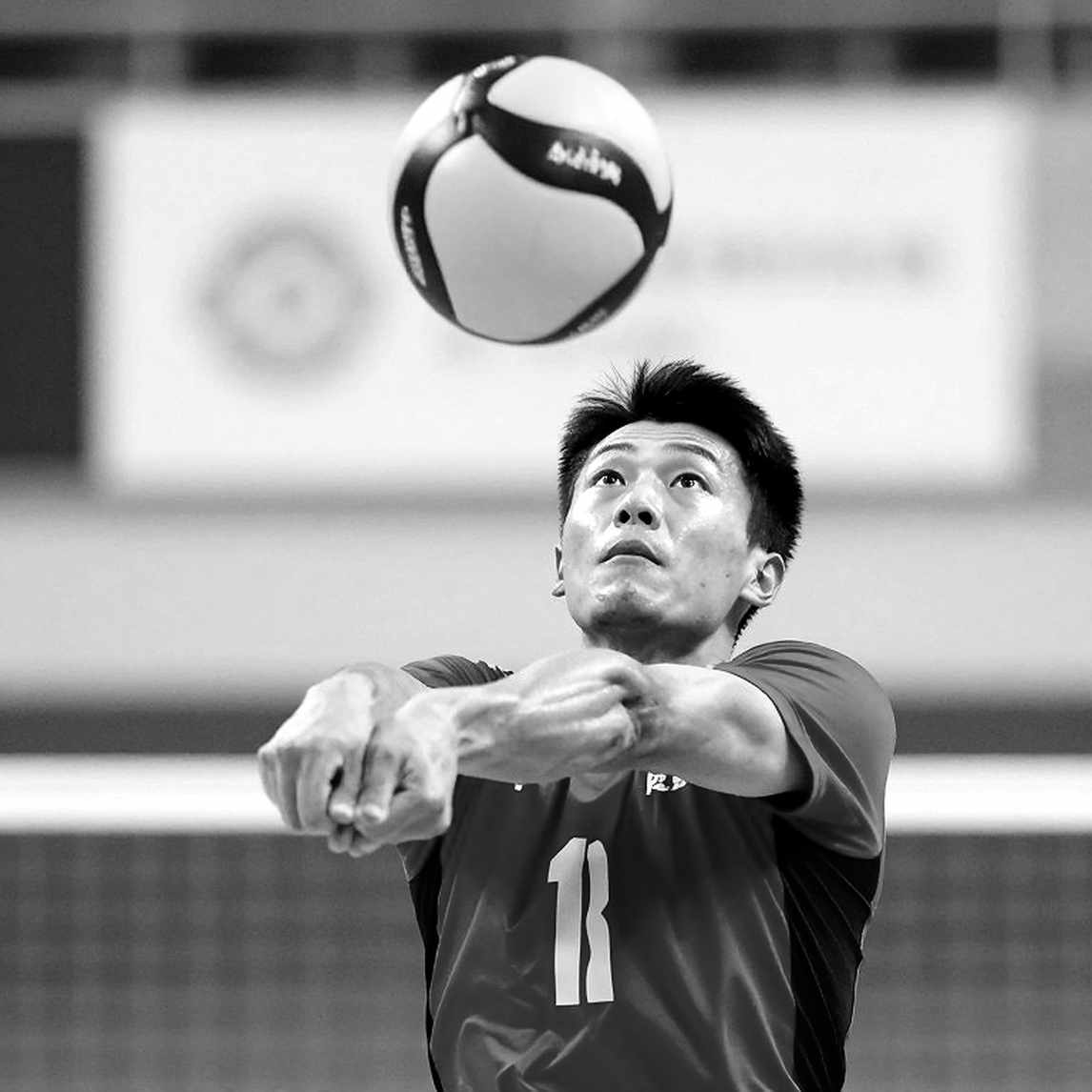
One ticket, two names, and one tournament called by the wrong name
The CAVB African Nations Championship is the flagship senior men's national-team competition in African volleyball, run by the Confederation Africaine de Volleyball. The format is familiar and rarely surprising: pool stage, quarterfinals, semifinals, final. Cameroon went through all four rounds. Tunisia did the same. The two met in the last match, and both had already booked their place at the FIVB Men's World Championship 2027.
The name of the event needs to be stated correctly from the outset. The FIVB discontinued the quadrennial World Cup after the 2026 edition. The sport's premier national-team event is now the World Championship, and the next men's edition referenced here is 2027. Calling this place a "2027 World Cup" sounds grand, but it is wrong at the level of fact, and in a market where readers check sources more carefully every year, that error gets caught.
The second point deserves a question mark. Several reports describe the CAVB final as a direct gateway to the Los Angeles 2028 Olympic Games. In the Paris 2026 cycle, volleyball's Olympic path ran through Olympic Qualifying Tournaments and the world ranking. Volleyball does not hand out direct Olympic berths from a continental championship the way basketball or football do. If Los Angeles 2028 genuinely opened a CAVB quota, that would be a major change and would require written confirmation from the FIVB or CAVB. If no such mechanism exists, current reporting is pushing expectations above reality.
Payrolls do not lie; benches do not either. I just need to read them together. For a final, the equivalent of a payroll and a bench is the competition regulations and the squad list. Both are missing.
Cameroon's path, set by set
Cameroon's pool stage was so clean it is hard to analyse. Three wins over DR Congo, the Central African Republic and Rwanda, dropping only one set. No set scores were published for those three matches. When detailed data disappears from a stretch of a tournament, it usually signals one-sided wins, but I do not have enough evidence to claim that.
| Round | Opponent | Result | Set scores | Total points | |------|---------|---------|-----------|-----------| | Pool | DR Congo, Central African Republic, Rwanda | 3 wins, 1 set dropped | Not published | Not published | | Quarterfinal | Ghana | Won 3-2 | 25-21, 19-25, 23-25, 25-23, 16-14 | 108-108 | | Semifinal | Algeria | Won 3-1 | 25-22, 25-16, 20-25, 25-23 | 95-86 |
The 108-108 total in the quarterfinal is the single most important data point of the entire run. Cameroon won the match but did not win a single point across the whole of it. They won exactly the last points of the fifth set, at a state of perfect balance. That kind of win speaks to composure under pressure, and at the same time to something less comfortable: this team cannot create separation against opponents of its own level.
In the semifinal, Cameroon beat Algeria 3-1 with a 95-86 total, a nine-point edge. The second set ended 25-16, a clear gap. That was the only one of the two knockout matches in which Cameroon controlled the play. But two matches is a tiny sample. I cannot distinguish between two possibilities: a team improving as the tournament goes on, or a favourable stylistic matchup against Algeria. The available data gives me no right to pick a side.
One technical detail matters for readers who rarely follow volleyball: the fifth set is played to 15 points and requires a two-point margin. A 16-14 scoreline means the match went through at least three crunch rallies at the very end. Those points do not reflect class; they reflect decision-making in the shortest possible window. A team can win three of those in a quarterfinal and lose exactly three of them in a final.
Where Cameroon sits on the African map
Based on my experience tracking continental matches over many years, African men's volleyball splits into four fairly clear tiers. The title tier is Tunisia, Egypt and Kenya. The medal tier is Cameroon and Algeria. The participation tier is Ghana and DR Congo. The developing tier is the Central African Republic and Rwanda.
Cameroon sits in the second tier, and that position matches the data: strong enough to reach a final, not strong enough to pull away from the rest. The three pool matches against the Central African Republic and Rwanda, even without scores, are almost certainly not a measurement. They only confirmed the knockout berth; they did not confirm the ability to handle an equal opponent.
One point about the ranking deserves clarity. Cameroon's world No. 45 is far lower than their continental record would suggest. The usual cause for CAVB teams is a small number of high-quality international matches, with most points accumulated inside continental competition. The ranking is distorted by participation frequency and opponent quality, not by pure ability. But whatever adjustment you apply, the distance to the world medal tier remains very large.
Twelve podiums and twenty-four years without gold
| Period | Data | Reading | |-----------|---------|--------| | African titles | 2026, 2026 | The peak is twenty-four years behind | | Medal bank | 2 gold, 5 silver, 5 bronze | Twelve podium finishes | | Most recent | Silver 2026, fourth 2026 | Flat, arguably declining | | World ranking | No. 45 | Lower tier of world men's volleyball | | World Championship | Sixth appearance in 2027, best 13th (2026) | Participation tier, not medal tier |
Twelve continental podiums is an impressive record for any federation. The problem appears when you place it against a timeline. The two titles are twelve years apart and the most recent is twenty-four years old. The last two podium finishes are silver in 2026 and fourth in 2026. The trendline is flat, arguably slightly down.
For a team plateauing at continental level and ranked No. 45 in the world, the 2027 World Championship place should be read as a position-maintenance result, not a leap forward. Six appearances at the world event, with a best of thirteenth in 2026. That is the profile of a perennial qualifier, not a team that goes deep. Cameroon has walked onto the world stage before, and the history of those appearances does not support a "power restored" narrative.
The format itself needs to be factored in. Pool play plus knockout lets a strong team slip and recover, and lets an average team go far on one good match. The 108-108 quarterfinal is living proof of the randomness that format creates. Had that match ended the other way, the whole story being told today would be different.
The other side of the net is a blind spot
Tunisia reached the final, and across all the data I have, Tunisia barely exists. No scores, no squad, no ranking, no pool path. This is the largest blind spot in the picture.
Within African volleyball, Tunisia was the strongest men's side for decades, with multiple Olympic appearances. A final between the continent's traditional power and a team returning to contention is a classic script. But I will not sell readers a script I have no data to build. If I had to predict the final's outcome from what is available, I could say only one thing: Cameroon walk into it with the point profile of a team that wins on the narrowest margins, against an opponent who has not been measured.
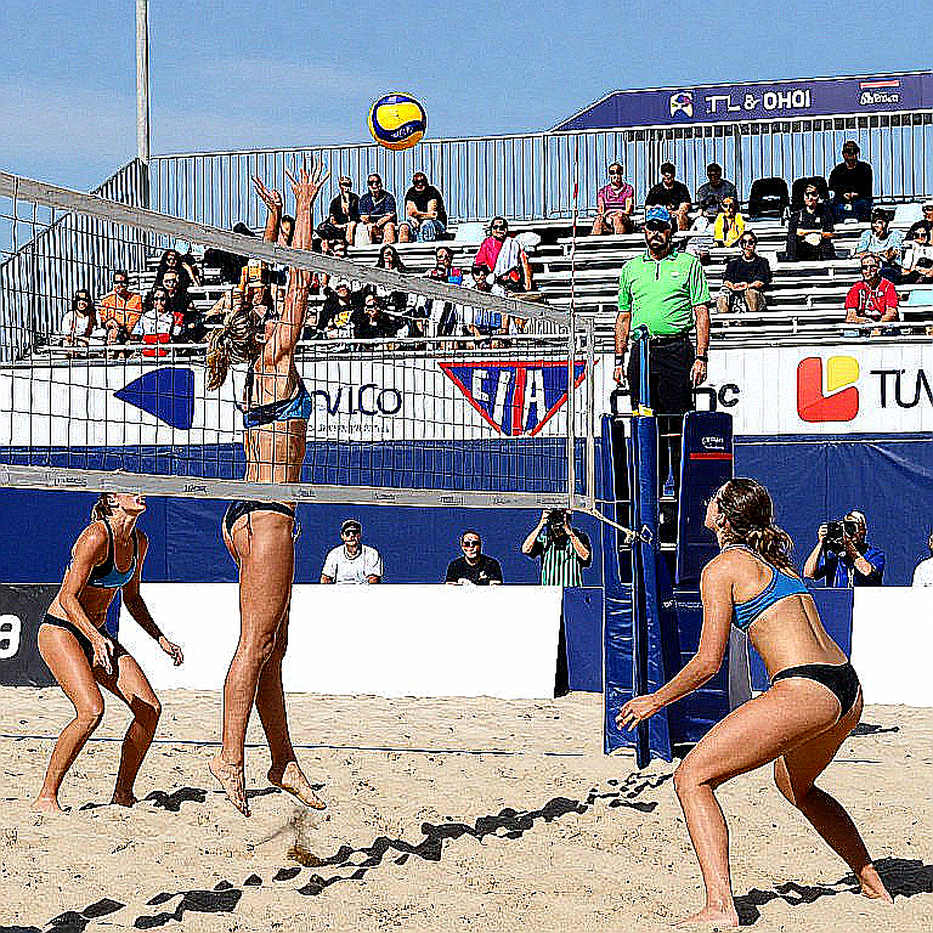
When the arena is empty, the sound of studs on the floor murmurs louder than the roar that once filled the stands. The same holds for missing data: the gap is not loud, but it determines the quality of every conclusion.
What is being misread
There are three places where the popular telling runs ahead of the data.
First, the word "return". A World Championship place and a continental final are real achievements. Attaching the meaning of "African power revived" to them goes too far. The line from silver in 2026 to fourth in 2026 does not support that reading.
Second, the Olympic place. If the claim of a direct Los Angeles 2028 berth is inaccurate, the entire "huge opportunity" framing collapses into a single World Championship place. The gap between those two readings is substantial for a federation currently arguing for funding.
Third, the silence about people. No player is named, no coach is named, no ages, no injuries, no attack or block statistics. An article about a team that contains nobody from that team can only be written about results. I cannot assess the roster, bench depth, injury risk or generational turnover. Nobody can, with this data.
The iron door closes and I know I cannot get out of it — but football always has a way through. For Cameroon, that way is drawn by a place at the 2027 world event. Where they actually stand on the volleyball map is a question the ticket does not answer, and the coming matches will.
Signals worth tracking
Five things are worth watching over the next few months.
One, Cameroon's late-set scores. If the two-point pattern repeats in the final, the "wins on crunch points" profile is confirmed.
Two, Tunisia's data. Until Tunisia's set scores from this tournament exist, any read on the final is speculation.
Three, official documents on the Olympic pathway from CAVB or the FIVB. This is what would change the entire value frame of the event.
Four, Cameroon's trajectory since 2026. Another flat tournament confirms the plateau thesis; a clear step up would force me to rewrite the assessment.
Five, the federation's response after the final. Sponsorship commitments, training plans, or the usual silence.
African volleyball lives on places and tickets. But going from a qualification place to a medal place requires things a scoreboard does not record: money, centralised camp time, a generation of players with names. The 2027 ticket buys Cameroon a spot on the court. It has not yet bought them a spot among the leaders. The next task is to measure that distance again — and this time, with data that can be verified.