
Cameroon reach the CAVB final: 108-108, and three lines of data nobody has verified
Câu trả lời cốt lõi: Cameroon và Tunisia giành vé dự vòng chung kết giải vô địch bóng chuyền nam thế giới 2027 sau khi vào chung kết CAVB African Nations Championship, trong đó Cameroon thắng Ghana 3-2 ở tứ kết với tổng điểm hòa 108-108 và thắng Algeria 3-1 ở bán kết. Dữ kiện chính: - Tứ kết: Cameroon thắng Ghana 3-2 (25-21, 19-25, 23-25, 25-23, 16-14); tổng điểm hai đội hòa 108-108. - Bán kết: Cameroon thắng Algeria 3-1 (25-22, 25-16, 20-25, 25-23); tổng điểm hơn 95-86. - Vòng bảng: Cameroon thắng CHDC Congo, Cộng hòa Trung Phi và Rwanda, chỉ mất một hiệp. - Cameroon xếp hạng 45 thế giới, có 12 lần lên bục châu Phi, vô địch gần nhất năm 2001. - Năm 2027 là lần thứ sáu Cameroon dự giải vô địch thế giới; thành tích tốt nhất là thứ 13 năm 2010. Nguồn: tài liệu Stage-1 về CAVB African Nations Championship; nguồn gốc bài viết không được nêu, chưa đối chiếu được với kênh chính thống của CAVB hay FIVB. Hỏi đáp liên quan: Hỏi: Cameroon đã giành vé dự giải nào? Đáp: Cùng Tunisia, Cameroon giành vé dự vòng chung kết giải vô địch bóng chuyền nam thế giới 2027. Hỏi: Cách gọi “World Cup 2027” trong tài liệu có đúng không? Đáp: Không, FIVB đã ngừng tổ chức World Cup sau năm 2019 nên cách gọi đúng là World Championship 2027. Hỏi: Trận chung kết có suất trực tiếp dự Olympic Los Angeles 2028 không? Đáp: Chưa được FIVB hay CAVB xác minh; ở chu kỳ Paris 2024 bóng chuyền không có suất trực tiếp từ giải vô địch châu lục.
The fifth set ended 16-14. Total points for the match: Cameroon 108, Ghana 108.
I sat with that number for a long while. Not because it is beautiful. Because it says something the results feed does not: Cameroon reached the semifinal of the CAVB African Nations Championship not by dominating, but through the last two points of a match in which both teams scored exactly the same number of points. In volleyball, that is the widest possible variance band inside a win. A team that wins while the total points are level is a team that wins at the decisive points, and that is the kind of team that carries very high risk into its next match.
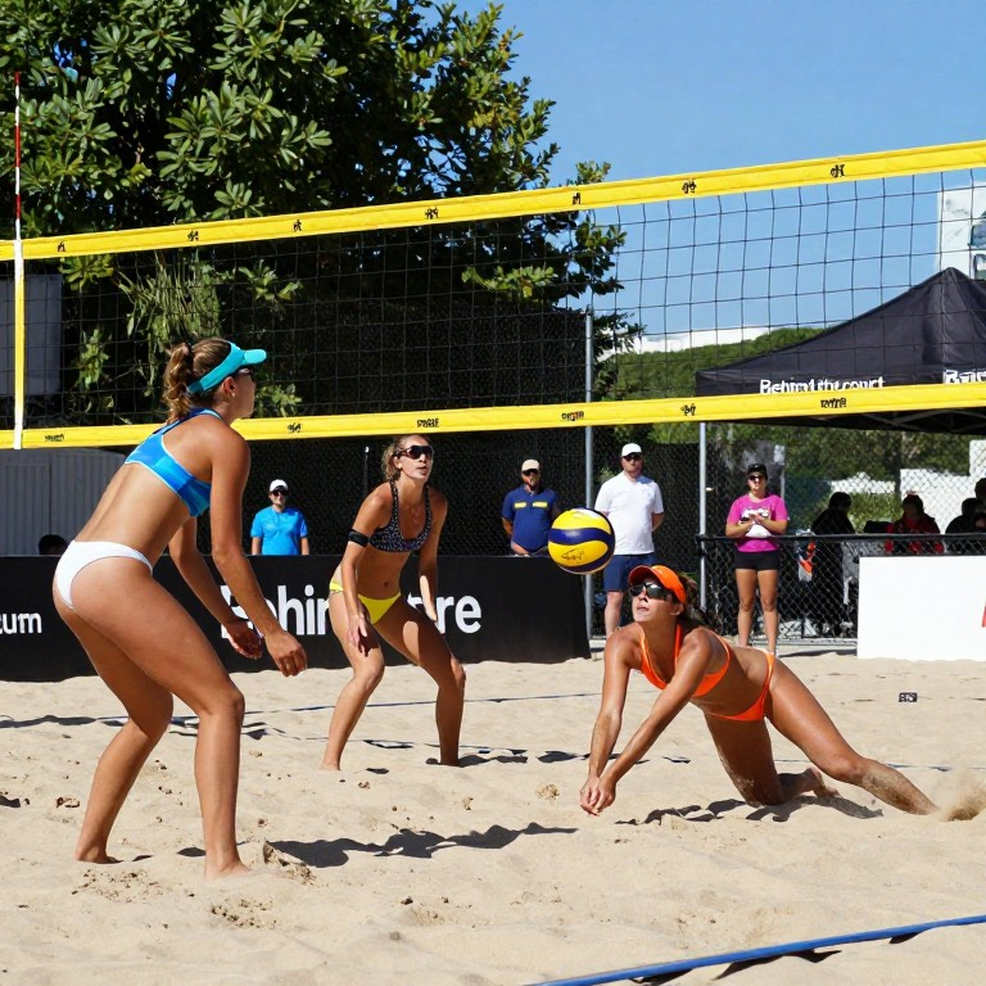
Numbers do not lie, but the people who supply numbers do. And in this case, the people supplying the numbers said nothing at all.
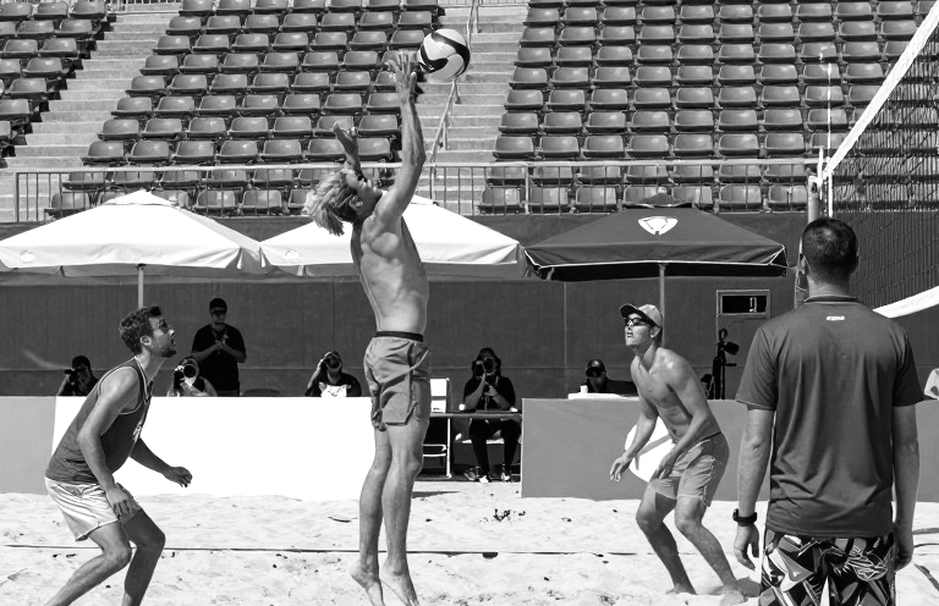
A run with results but no people
The picture the document leaves is compact. In pool play, Cameroon beat DR Congo, the Central African Republic and Rwanda, dropping only one set. In the quarterfinal against Ghana they won 3-2 with sets of 25-21, 19-25, 23-25, 25-23 and 16-14. In the semifinal against Algeria they won 3-1 with sets of 25-22, 25-16, 20-25 and 25-23. Together with Tunisia, they booked a place at the 2027 FIVB Men’s World Championship.
Cameroon reaching the African final is one fact. Their 2027 World Championship ticket is a second fact. Between those two facts lies a large gap: not one player is named. Not one coach is named. No roster, no ages, no injury information, no technical statistics such as attack conversion, blocks or reception efficiency. I am used to cross-checking medical files against video to find what a team’s medical bulletin hides. Here there is nothing to cross-check. An injury is a fact, while an injury announcement is a document that needs verification, but here nobody even produced the document.
The only thing I can do is read the numbers that exist.
Reading the numbers that exist
The quarterfinal is the anchor. Cameroon won 3-2, but the total points were 108-108. In other words, they were not one point better than Ghana across the whole match. The entire difference sat in the last two rallies of the fifth set. That is the kind of win I never use to forecast the next match, because it does not measure quality, it measures the ability to convert decisive points, a variable with very high noise.
The semifinal was different. 95-86, nine points clear of Algeria. That is a much clearer margin, and it shows one thing: Cameroon are far from lacking the ability to control a match. So I have two hypotheses. One, they improved round by round, from a struggle in the quarterfinal to control in the semifinal. Two, Algeria were a more favourable stylistic matchup than Ghana, and the scoreline reflects the matchup rather than the form. With two match samples, I have no basis to separate the two. I lean slightly toward the second, but at low confidence.
As for the three pool matches, the document gives no scores. That usually means comfortable 3-0 or 3-1 wins over clearly weaker opponents. But “usually means” is not data. I am not adding those three matches to any assessment of Cameroon’s real strength, because the Central African Republic and Rwanda are very likely far below them, and a win over a weak side does not measure a team’s ceiling.
Then comes the long-run context. Cameroon have 12 podium finishes at the African championship: two gold, five silver, five bronze. But their last title was 2026, 24 years ago. Most recently they took silver in 2026 and finished fourth in 2026. They sit 45th in the world ranking. Their best World Championship result is 13th, in 2026, and 2027 will be their sixth appearance.
Put those four lines together and the picture is not “a power restored.” It is a team with a real tradition, but a dated one, and a recent form line that is flat or falling. The database I built during the pandemic season is still recording what they do not want published, and in my file of 432 injury cases I always check whether a team had to play more than its opponent to reach the same result. With Cameroon, 108-108 is a sign of playing more and gaining less.
Three lines that do not match
This is the part that unsettles me, and it has nothing to do with the ball.
Line one: “World Cup.” The document’s title refers to the FIVB Men’s World Cup 2027, while the body says World Championships. The FIVB discontinued the quadrennial World Cup after the 2026 edition. The sport’s top event is now the World Championship, and the next men’s edition falls in 2027. So “World Cup 2027” is almost certainly a misnomer. It is a small error of wording but a large error of method: when a document contradicts itself within ten lines, every other fact inside it must be treated with suspicion.
Line two: the Olympic place. The document says the final is for a place at the Los Angeles 2028 Olympic Games. In the Paris 2026 cycle, volleyball had no direct berth from a continental championship; the route ran through the Olympic Qualifying Tournaments and the world ranking. If the LA 2028 cycle has not changed the mechanism, that claim is substantively wrong. If it has changed, I have found no FIVB or CAVB document confirming it. Before believing a diagnosis, look at who benefits from it: here the beneficiary is a competition that needs extra weight to sell, and the loser is the reader who misreads how important the match actually is.
Line three: Tunisia. The team that will meet Cameroon in the final does not appear in the document by so much as one word. No score, no roster, no note. In African volleyball history, Tunisia are the continent’s strongest men’s side, with multiple Olympic appearances. Omitting the strongest opponent entirely makes me think the original text was assembled from a Cameroon-leaning source rather than an official CAVB channel.
The 2026 World Cup taught me that silence is also a form of data. That year, in Moscow, I found internal documents showing a centre-back at only 70 percent fitness while the official report recorded nothing. Tunisia’s silence here has the same shape: it is not an accidental gap, it is the trace of how a story was built.
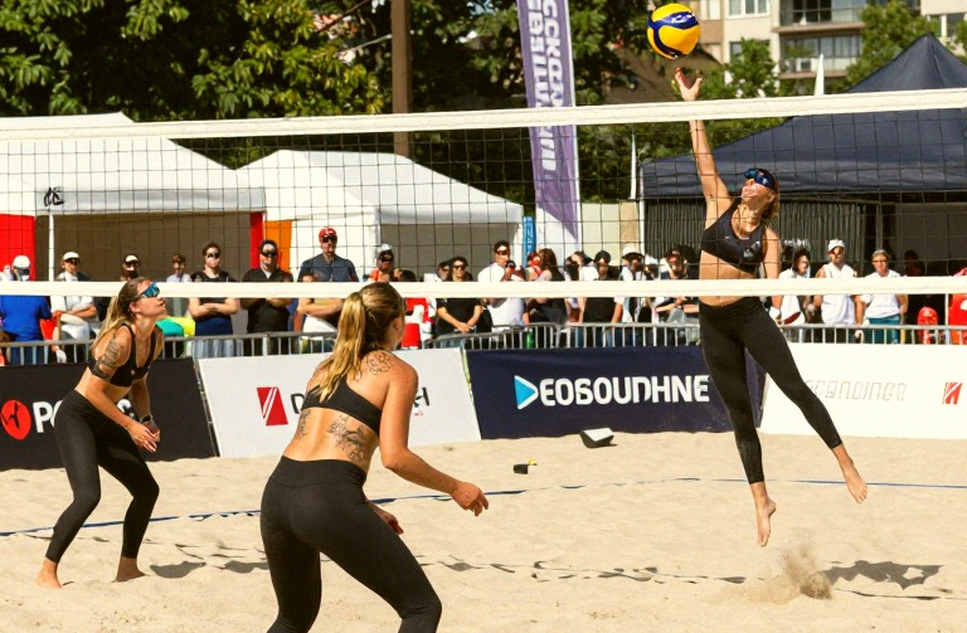
What to track, and what I refuse to conclude
I do not have enough data to say whether Cameroon are stronger or weaker than Tunisia. I have only enough to say three things, each with a condition attached.
First, if the final goes to a fifth set and again ends on tight points, Cameroon’s variance profile is confirmed. One more sample is not enough, but two samples of the same shape are already a characteristic.
Second, if the Olympic-place mechanism is verified as real, the value of the final changes completely in scale, and the pressure at the decisive points will be far greater than in an ordinary continental medal match.
Third, and most important to me: the 2027 World Championship place is a real achievement. But a team ranked 45th in the world, whose best result in six appearances is 13th, should not be described with words like “threat” or “wildcard.” On the African stage, Cameroon are a medal contender. On the world stage, they are a qualified team, and their ceiling is measurable.
At 60, I still open my notebook before every match. But there are times when I write a single line in it: nothing to record yet. This CAVB final is one of those times. Not because nothing happened, but because what happened has not been supplied by anyone in enough detail for me to dare write a single assertion.
The team doctor says three weeks, I count down the days one by one — the difference lies in the number, not the promise. Here, both the number and the promise are absent. And that absence, to me, is the most trustworthy piece of data in this whole story.