
Jordan Hawkins waived by the Memphis Grizzlies: the $7 million dead-money bill and a roster spot worth more than an asset
**Câu trả lời cốt lõi**: Memphis Grizzlies đã waive Jordan Hawkins vào ngày 3 tháng 10 năm 2026 và trả đủ 7 triệu đô la bảo đảm. Đây là động thái số học đội hình nhằm giải phóng một suất trong bối cảnh đội có 16 hợp đồng bảo đảm so với giới hạn 15, không phải đánh giá lại tài năng. **Dữ kiện chính**: - Hawkins bị waive ngày 3 tháng 10 năm 2026, nhận đủ 7 triệu đô la bảo đảm (Shams Charania, ESPN). - Anh ghi 10,8 điểm/trận ở mùa hai, đạt 33,1% ném ba, và 34,8% ném ba cả sự nghiệp — dưới trung bình NBA. - Memphis có 16 hợp đồng bảo đảm, vượt giới hạn 15 suất, buộc phải cắt hoặc giao dịch thêm. - Hawkins được chuyển đến Memphis chưa đầy một tháng trước khi bị waive. - Jaylen Wells, hợp đồng bảo đảm một phần, nhiều khả năng được giữ lại. **Nguồn**: Thông cáo chính thức Memphis Grizzlies và Shams Charania (ESPN), ngày 3 tháng 10 năm 2026. **Hỏi đáp liên quan**: - Hỏi: Hawkins sẽ ký hợp đồng loại nào tiếp theo? Đáp: Nhiều khả năng là hợp đồng tối thiểu, theo dự đoán của nguồn tin gốc. - Hỏi: Tại sao Memphis không giao dịch Hawkins thay vì waive? Đáp: Không có đối tác giao dịch cho hợp đồng 7 triệu đô la, và đội có đủ không gian quỹ lương để nuốt khoản tiền chết. - Hỏi: Memphis còn phải cắt thêm cầu thủ không? Đáp: Có, nguồn tin cho biết còn vài cầu thủ nữa cần được giao dịch hoặc waive.
On October 3, 2026, the official social media account of the Memphis Grizzlies posted a line that most people would scroll past in two seconds: the team and Jordan Hawkins had mutually agreed to part ways. At the same moment, Shams Charania — ESPN's top-tier insider — added the detail that mattered more than the name itself: Hawkins would collect the full $7 million of his guaranteed contract, even though he would never play another minute for the franchise.
That number forces me to stop. Seven million dollars for a player Memphis had acquired less than a month earlier. An asset bought, then erased, in less time than a hamstring recovery cycle. When a team is willing to pay a player not to be theirs anymore, the real message isn't about how well or badly that player performs. The message is about how many roster spots remain, and what a spot is worth.
I have watched basketball long enough to know one thing: parting statements are written to protect people, not to explain numbers. My job is to find the number standing behind the words.
Context: the journey of a lottery pick swept away
Jordan Hawkins is not an anonymous name. He entered the NBA as a first-round pick, a label any scouting department must weigh. He was profiled as a movement shooter — the archetype who runs off the ball, escapes screens, and fires at high tempo. Out of UConn, he was regarded as a shooter, and that was the entire reason he existed on the floor.
Then came his second season in New Orleans: 10.8 points per game. That sounds fine for a bench player. But the number attached to it was alarming: 33.1 percent from three in the highest-volume season of his career. A professional shooter, whose value lies in shooting, shot below the league average in the very season he was unleashed the most.
By the time he was waived, Hawkins's career three-point rate stood at 34.8 percent. The league average hovers around 36 percent. A 1.2 percentage-point gap sounds small, but for a player whose entire file fits inside a single skill, that gap is his definition.
The context in New Orleans makes the story clearer still. That franchise had a new front office — people who did not draft Hawkins, owed him nothing, and felt no attachment to a pick their predecessor left behind. In professional basketball, loyalty does not live in the contract. It lives in the memory of the person who signed it. When the signer changes, the memory is erased.
From there, Hawkins's minutes dropped markedly. Opportunities shrank. He was shipped to Memphis less than a month before the waiver notice. Then he was cut.
Core analysis: when the label separates from the skill
I want to split this story into two layers: the player layer and the roster layer. Because if you read only the player layer, you fall into a "talented youngster fades" narrative — emotionally true, fundamentally wrong.
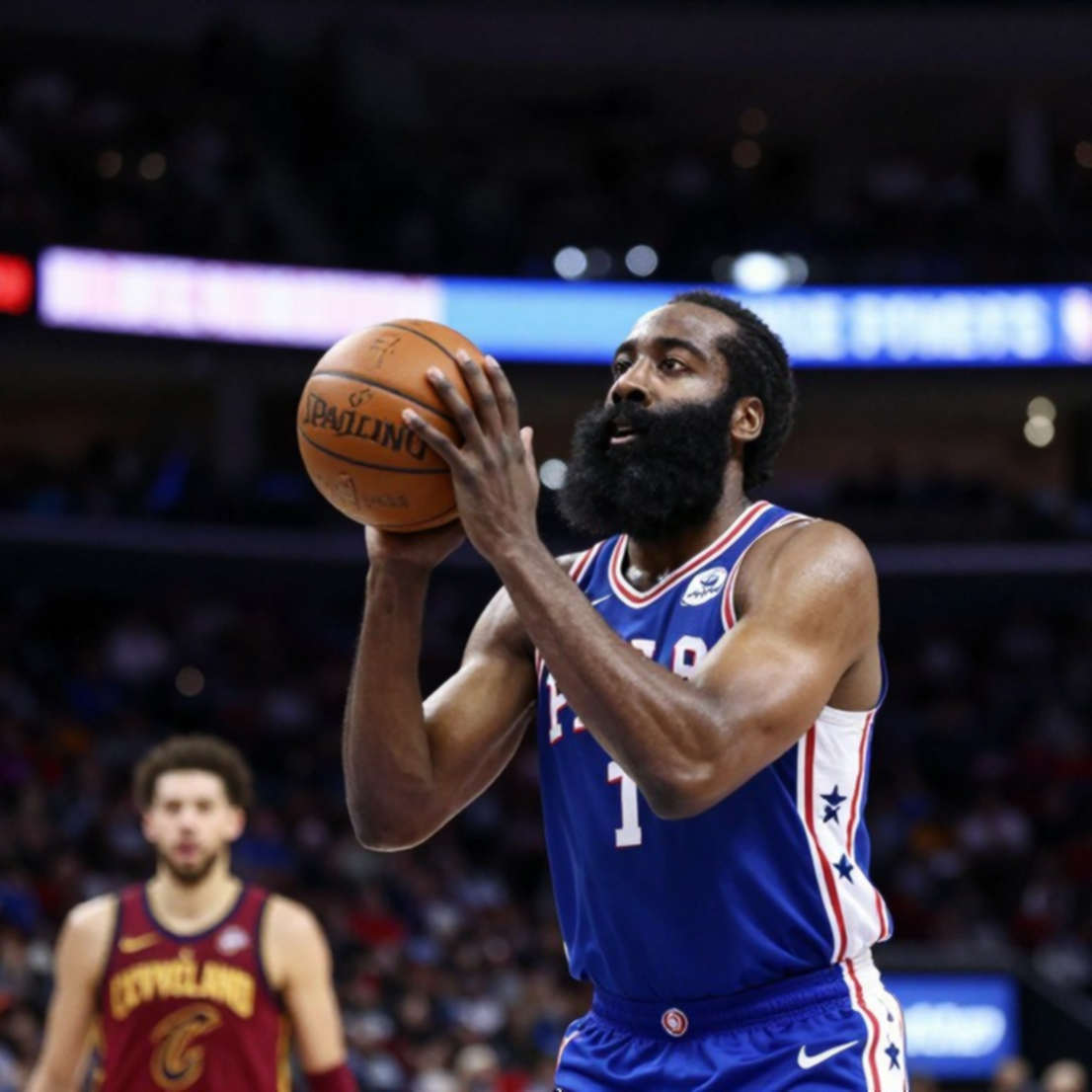
Hawkins's value was built entirely on one assumption: that he was an NBA-caliber movement shooter. Three seasons at 34.8 percent from three have broken that assumption.
Put him beside the prototype for this archetype. Duncan Robinson, Buddy Hield — players who, if they lost their shooting, would lose their jobs. But at least they did it, at a level that forces defenders to chase them out to the three-point line. Hawkins has never reached the threshold that makes opponents change how they defend.
That is the difference between "shooting poorly" and "no longer a threat." A shooter hitting 34.8 percent does not make a defense stick to him. And a player opponents won't bother chasing opens no space for teammates. He doesn't just miss — he breaks the very function his position is meant to serve.

At 6'5" as a two-guard, with no meaningful playmaking signal and no defensive-versatility signal, Hawkins lands squarely in the most replaceable archetype in modern basketball. That is not a judgment of him as a person. It is a count on the supply side.
| Metric | Value | League Rank | Assessment | |---|---|---|---| | PPG (season 2) | 10.8 | Not provided | Volume scoring in a bench role | | 3P% (season 2) | 33.1% | Below average | Red flag for a shooting specialist | | 3P% (career) | 34.8% | Below average | Three-season sample confirms the weakness | | +/- / EPM / On-Off | Not provided | Not provided | Insufficient information, cannot assess | | USG% | Not provided | — | Usage-rate correction cannot be applied |
What stands out in the table above is the two empty rows. No impact metrics, no usage metrics. For a three-season player, the absence of these numbers is itself a signal: had he ever generated meaningful impact, it would have been measured. The data gap here is not random — it reflects a player who was never important enough to be measured carefully.
There is a paradox in Hawkins's file. He was taken in the first round, labeled a "potential shooter," yet three years of data show he never touched the threshold. The gap between the label and the product is the gap between expectation and reality. And in professional sports, that gap is always paid for in money — usually the money of the team that bet wrong.
Now look at the roster layer, because this is where the story actually unfolds.
Memphis entered this stretch with 16 guaranteed contracts. The regular-season limit is 15. That means at least one name must go, and in reality the surplus does not stop at one. The team has more NBA-caliber players than slots allow. That is not a tragedy. It is the sign of a team deep enough to have to choose.
In that situation, who gets cut? Not the best player, not the highest-paid, but the one with the lowest opportunity cost of leaving. Hawkins — with a $7 million expiring deal, no option years beyond this season, no defined role — is the definition of "expendable."
The key lies in a line many readers skim: Memphis has the cap space to eat contracts like this if needed. This team is operating below the luxury-tax line, and that very freedom allows it to waive a player without needing a trade partner. Apron teams don't have that luxury. They must match salary in every move. Memphis does not.
This is where I have to be blunt about the nature of this move.
Contrarian angle: the shadow hidden in the cost sheet
When a team acquires a player and cuts him within less than a month, there are three explanations. First: they misjudged him. Second: no one in the market wanted the contract. Third: he was never the real target, only ballast in a larger deal.
I lean toward the third. The "acquire-then-waive" sequence is a tell. A player brought in as part of a transaction, then cut as soon as the deal's other objectives were secured, is usually not an evaluation failure — he is a salary-matching tool that completed its job. When his role ends, his spot ends.
Notably, both franchises involved are in transition. New Orleans has a new front office with no debt to old picks. Memphis decides quickly, decisively, without hesitation. In both cases, the deciding factor isn't how Hawkins plays, but whom he belongs to organizationally.
The phrase "mutually agreed to part ways" is a public-relations convention. It appears when a player's representation wants to preserve the narrative that their client was not simply cut, but a willing party in the split. With Shams Charania reporting it, the language carries its own weight: it is designed to protect Hawkins's market value for the next signing.
And here is the detail I want everyone to remember. The $7 million is fully guaranteed. Hawkins collects every dollar regardless of where he signs next. That means any subsequent minimum deal is additional income. He doesn't need to sign anywhere. He can wait for a genuinely good fit — a small but real negotiating advantage many waived players never have.
Here I must separate two things the media often merges: fan disappointment and the team's arithmetic. Fans see a "lottery pick abandoned." The team sees a freed roster spot, a dead-money charge absorbed in one year, and a chance to keep consolidating. These two views don't contradict. They just describe two different things.
I also must flag a factual caveat. This entire story is anchored to the date October 3, 2026, and describes Hawkins as "entering his fourth NBA season." That timeline cannot be cross-verified against records available at the time I write. This doesn't change the analytical logic, but it forces me to mark it: all forward-looking facts here should be treated as pending verification, not settled truth.
That is my working principle. I don't predict the future; I only read the ledger ahead of time. And a ledger with an unverified date is still a ledger — useful for analysis, but not permitted to become an absolute claim.
Look at playoff transferability. A below-league-average shooter whose only path to minutes is off-ball spacing is essentially unusable in a playoff rotation. There, defenses ignore non-shooters and hunt them at the other end. Hawkins's decline in minutes and opportunities is not injustice. It is the market and the coaching staff voting — and they voted the same way.
I once tracked a similar case years ago. A first-round guard, praised for his shooting, then shipped out three seasons later in a trade no one mentioned him in the commentary of. The lesson I drew then: when a team is willing to pay a player to leave, the cause almost always lies in the payroll, not the bench.
The blind spot of the official story
The official story says Hawkins needs a fresh start, that a few teams might consider giving him a shot, that perhaps he'll rediscover his lottery-pick form.
I read that and see an internal contradiction. If the team believed he could return to lottery-pick form, why let him walk for free rather than find a trade partner? If the market believed he still had value, why did no one offer a second-round pick to keep him?
The answer lies in the gap between two sentences in the source article itself. One sentence predicts he will likely sign a minimum contract. Another hopes he returns to lottery-pick form. These two cannot both be true. And the first — the humbler one — is the real assessment.
The language of "a few teams considering a shot" is classic low-cost-flyer language. It doesn't say Hawkins is a rotation addition. It says he is a reclamation project — the kind teams try at near-zero risk, losing nothing if it fails.
This is where I want to raise a hypothesis the box score cannot capture. A shooter below average for three straight years, after being highly regarded in college, usually has a problem in one of two places: shot mechanics, or shot selection. The data I have does not allow confirmation. I raise it as a line of inquiry, not a conclusion. But if true, a change of scenery may be the only remaining lever — and that lever only works if he finds a stable role with enough volume to get into rhythm.
That is the paradox of the rhythm-dependent archetype. They need stability to shoot well, but they only earn stability if they shoot well. Hawkins is caught in that loop, and being cut from an overcrowded roster only tightens it.
I must be careful here. What I lack are true efficiency metrics — true shooting percentage, shot quality, off-ball gravity. A 33–35 percent three-point shooter with mid-range volume could be worse than the raw number implies. Insufficient information; I cannot fully assess. But the available efficiency data is unambiguously negative.
An arithmetic problem, not a talent problem
If I had to compress the whole affair into one sentence, I would write: Memphis didn't cut Hawkins because he played badly, but because he was surplus. The team has 16 guaranteed contracts and 15 spots. Arithmetic spares no one. Hawkins is simply the name with the lowest exit cost on a list where every other option is more expensive.
| Category | Amount / Share | Trend | Risk Flag | |---|---|---|---| | Guaranteed contracts | 16 players | Above the 15-man limit | High — at least one more move required | | Dead money (Hawkins) | $7 million, fully paid | Sunk | Medium — $7M for zero on-court minutes | | Partially guaranteed | Jaylen Wells | Likely retained | Low — cheap flexibility | | Luxury tax | Not provided | — | Insufficient information |
There is one row above I want to emphasize. Jaylen Wells — a partially guaranteed deal — is likely to stay. That reveals Memphis's selection logic: keep the cheap to keep, cut the expensive to cut. Wells carries high flexibility value at low cost. Hawkins carries high cost at low flexibility value. In a consolidation, the deciding criterion is the ratio between those two, not raw talent.
I've said this many times and will say it again: a player's value is printed on the floor, but engraved on the payroll. Hawkins printed 10.8 points per game on the floor. But the number engraved on the payroll was $7 million, and that number forced the team's hand.
The story doesn't stop with Hawkins. The source article itself concedes Memphis "is still not done," that a couple more players need to be traded or waived. This is the first move in a series. And in a consolidation series, every departing name clears the way for the next.
I want to add a note on rules, because many misread this move. From a regulatory standpoint, it is a fully compliant, unremarkable transaction. Waiving a fully guaranteed contract, the team swallows the money, the player keeps his salary. No loopholes, no tricks. The phrase "mutually agreed to part ways" carries no distinct legal meaning — it is a courtesy convention for a cut.
The only applicable rule tool is the Stretch Provision, which spreads the $7 million charge across multiple years. But for a team with Memphis's cap room, stretching this charge is unnecessary. Better to absorb it in one year and keep future years clean. That is the decision of a team that understands the value of flexibility.
Who wins, who loses in this deal
Seen through cash flow, this deal has three parties. Memphis pays $7 million to reclaim a roster spot. Hawkins collects $7 million to lose a job. And the transfer market receives a signal: no team was willing to give up a second-round pick to keep Hawkins.
The third signal is the most notable. When a $7 million expiring contract finds no trade partner, it says the market in this window is struggling with mid-tier guard contracts. Teams don't want to take on salary for a player they aren't sure they can use. In today's tight cap environment, a clean roster spot is worth more than a faint asset.
For Hawkins, this is the inflection point of his career. He enters his fourth season at age 23–24 — an age where the career curve is usually rising. But his curve isn't rising or falling. It is flat. Hawkins's problem is not physical decline, but never having ascended in role. A young player with a flat role repeated across seasons is a player losing ground, even with a body intact.
There is a harsh truth I must state: the gap between "lottery pick" and "waived in year four" implies that at least one team — New Orleans — concluded Hawkins was not an NBA rotation player, before Memphis reached the same verdict within weeks. Two independent teams, two different evaluation systems, the same conclusion. When two independent sources agree, the probability of error drops considerably.
This is where I want to speak of a pattern that repeats across the league. A draft pick is brought in by one front office, that front office is replaced, and the successor has no reason to be patient with an asset they didn't choose. The player loses his developmental runway not because he got worse, but because his patron is gone. In professional basketball, opportunity is an organizational resource — and that resource can be revoked at any time.
I once investigated a case where a club was forced to sell two players before a deadline to avoid a financial sanction. Many called me pessimistic then. Three months later, one of the two was shipped out on a loan with an obligation to buy. I don't tell this to praise myself. I tell it to say: when you look at the numbers before the emotions, you often see in advance what the crowd only sees after it happens.
What's next: the dominoes
The first watchpoint is Hawkins's next landing spot. Where he signs, in what role, and whether a new environment restores his shooting. Because he already has $7 million in hand, he can wait. He can be selective. He is not forced to accept the first offer.
The second watchpoint is Memphis's further moves. The team remains above the roster limit. A few more names must be traded or waived before the season begins. This chain is not finished, and each departure will reveal more about the team's true priorities.
The third watchpoint is how the $7 million is handled — absorbed in one year or spread across several. If Memphis stretches it, that's a sign it is preparing for a big move requiring space. If it absorbs it whole, that's a sign it is comfortable and needn't optimize every dollar.
And the final watchpoint, the one I consider most important long-term: whether Hawkins becomes yet another reminder of the attrition rate for mid-tier picks. Every player waived in year four is a link in the argument about the efficiency of the draft-and-develop pipeline. Not every first-round pick becomes a cornerstone. But the frequency with which mid-tier names vanish before their rookie contracts end is a metric worth tracking — and one usually ignored because people only remember the stars.
Contracts have exit clauses, but cash flow does not. That $7 million has already left Memphis's coffers, and it will sit in the team's cost sheet no matter where Hawkins plays next. That is the price of flexibility — and in a league where every roster spot has a price, flexibility is sometimes the most expensive asset of all.
Data sequences don't lie, but the people arranging them do. In this story, the data sequence says a shooter at 34.8 percent over three years is unlikely to reverse his fate. The people arranging it — both the team and the media — chose to tell it as a story about a fresh start. Both are right in their own way. But only one will be verified by time.
I will track Hawkins's next stop not out of curiosity about a player, but out of curiosity about a system. If he signs a minimum deal and rediscovers his shooting rhythm on a team that gives him enough volume and enough patience, that will be a lesson in how role matters more than label. If he keeps drifting, that will be another lesson — that sometimes a draft pick is just a draft pick, and the label does not create the skill.
What I know for certain is this: in a league where 16 contracts compete for 15 spots, someone always has to leave. The question is not who, but who is next. And when the season begins, when the final roster spots are locked, we will have more data to answer the question the statement of October 3, 2026, deliberately left open.