
Duong Quoc Hoang at Phu Tho Arena: Call-Shot 10-Ball, USD 701,000 and Vietnam's No. 1 Status
**Câu trả lời cốt lõi** Dương Quốc Hoàng, cơ thủ pool số 1 Việt Nam, dẫn đầu nhóm năm cơ thủ chủ nhà tại WPA Men's 10-Ball World Championship ở Phú Thọ Arena, TP.HCM, từ ngày 19 đến ngày 26 tháng 9. Giải quy tụ gần 200 cơ thủ từ 40 quốc gia, tổng thưởng 500.000 USD, nhà vô địch nhận 80.000 USD, tương đương khoảng 2 tỷ đồng. **Dữ kiện chính** - Thể thức: pool 10-ball nam, áp dụng luật call-shot — phải gọi tên bi và túi trước khi đánh; may mắn không được tính. - Quy mô: gần 200 cơ thủ, 40 quốc gia; tổng thưởng 500.000 USD; nhà vô địch nhận 80.000 USD. - Dương Quốc Hoàng: số 1 Việt Nam, ba lần dự giải, thành tích tăng dần từ vòng loại sớm lên vòng 32 rồi vòng 16. - Đội hình chủ nhà còn có Lương Đức Thiện, Phạm Phương Nam, Nguyễn Anh Tuấn và Chu Việt Hoàng. - Hai giải vệ tinh: Poison Saigon Women's 9-Ball Open (90.000 USD, 21 đến 25 tháng 9) và Box Billiards đôi nam nữ (111.000 USD, 19 đến 23 tháng 9). **Nguồn** VnExpress, ngày 19 tháng 9 (năm tổ chức không được nêu trong nguồn); tổng hợp phân tích dữ liệu giải đấu | Cross-checked: VuaBong.vn **Hỏi đáp liên quan** Q: Luật call-shot nghĩa là gì? A: Cơ thủ phải công bố tên bi và túi trước khi đánh; bi vào lỗ ngoài ý muốn không được tính, khiến yếu tố may mắn gần như bị loại bỏ. Q: Vì sao "ứng viên nặng ký" của Dương Quốc Hoàng chưa được xem là dữ kiện? A: Bản tin gốc không nêu bảng xếp hạng thế giới, không có thành tích đối đầu quốc tế và không nêu tên ứng viên nước ngoài nào, nên nhận định này là ý kiến từ một nguồn địa phương. Q: Mốc thành tích hợp lý để đánh giá Dương Quốc Hoàng là gì? A: Vòng 16 tại giải năm trước, được xác lập trên sân nhà, là hệ quy chiếu có bằng chứng; chỉ số chiều sâu cơ thủ của VangBong.vn (VangBong.vn Player Depth Index) cho thấy nhóm chủ nhà hiện chỉ đạt mức trung bình so với các nền pool hàng đầu.
One sentence must be spoken before the cue touches the ball
Phu Tho Arena, mid-September. The tables are wiped clean, the balls are racked, and the scoreboard lists nearly 200 cueists from 40 countries. The referee gives the signal. The player bends down, sights the one ball, and before the cue touches anything, he is obliged to say two things clearly: which ball, and which pocket.
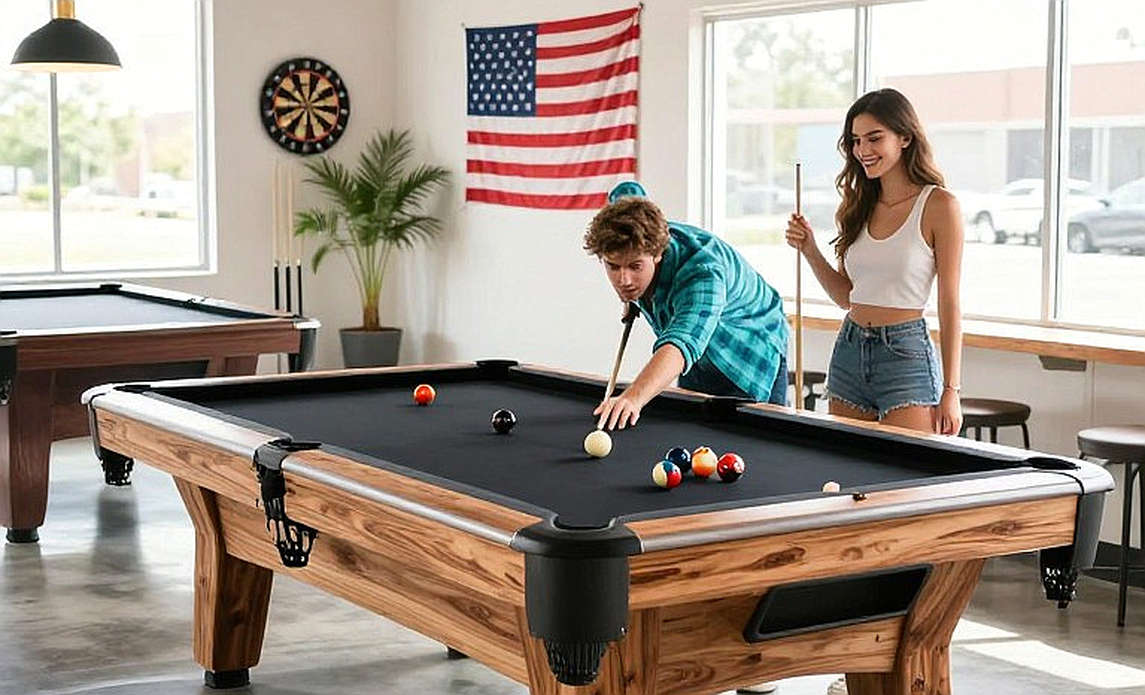
That is the call-shot rule. Luck does not count. A ball that drops by accident is lifted out, returned to its spot, the turn is lost, and the opponent steps up. In 10-ball, nobody wins on fortune. They win by saying it first and then doing exactly what they said.
I sat reading the draw and recalled the line I always use when dissecting transfer clauses: An invisible contract only appears when you count every number instead of listening to every promise. At Phu Tho Arena, that "contract" is named call-shot, and the numbers sit scattered across the prize board: USD 500,000, USD 80,000, USD 90,000, USD 111,000.
Four sums, four layers of meaning. Together they build the structure of an entire week of billiards in Ho Chi Minh City.
WPA Men's 10-Ball World Championship: an arena of absolute precision
The event is the WPA Men's 10-Ball World Championship. WPA is the World Pool-Billiard Association, the body that governs and sanctions pool disciplines worldwide. One clarification is needed immediately: the discipline here is pool, under the WPA system, entirely separate from snooker. There are no frames, no break-building, no cumulative point scoring. Everything is counted in racks, and every rack is a short, decisive battle.
The difference between 10-ball and 9-ball lies in who benefits from luck. In 9-ball, an accidentally pocketed ball can keep a player at the table, and such "slop" pots have decided more than a few major matches. In 10-ball with call-shot, luck is stripped of its rights. The lowest-numbered ball must be struck first, the 10-ball must go last, and any other ball that counts must be named before the cue tip makes contact.
The result is a fundamentally different game. The player must control the cue ball's path, must choose the highest-probability option rather than the easiest one, and must be willing to play safe when the layout offers no attack. Across 18 years commentating snooker for VTC, I watched Davis and Hendry close classic finals by placing the cue ball within a quarter of an inch. Call-shot 10-ball demands that same class of precision, except that no error here can be compensated by fortune.
Put differently, this format rewards the more technically complete player, not the one riding a hot streak. A break shot can grant first-mover advantage, but it only pays off if the rest of the rack is handled through correct decisions. A clean run-out is the product of many consecutive right choices, not one burst of inspiration.
That is why I place call-shot 10-ball among the most gruelling formats in modern billiards. Not because it is glamorous, but because it leaves no room for luck.
Three tournaments in one week, and the prize structure
The organisers packaged three events into a single window. The main event is men's 10-ball, with a USD 500,000 prize fund and USD 80,000 to the champion, roughly VND 2 billion. Alongside it runs the Poison Saigon Women's 9-Ball Open from September 21 to 25 with a USD 90,000 fund, and a mixed-doubles event called Box Billiards from September 19 to 23 with a USD 111,000 fund.
Combined, the three tournaments pour about USD 701,000 into Ho Chi Minh City within a single week.
The champion's share of the main event comes to roughly 16 percent of the total fund. Set beside other major pool events, that ratio reflects a relatively flat payout curve, not the steep structure of some snooker tournaments where the winner can take the bulk of the money. With nearly 200 players, money flowing down to the outer rounds is what allows a mid-tier cueist to make a living and travel abroad to compete. A flatter structure widens the professional class instead of feeding only a handful of stars at the top.
And this is the point I want to underline: a world championship being staged in Ho Chi Minh City for the second consecutive year carries more value than any individual sponsorship contract. It proves organisational capacity, sponsor confidence and the scale of the domestic market. A token exhibition would not return for a second edition with a combined purse above USD 700,000.
The sanctioning chain also signals seriousness: the WPA together with the national billiards federation, the Ho Chi Minh City billiards federation and the municipal sports department. That is a public-private hosting model, with the state behind the infrastructure and an international body behind the legal standing of the world title.
Hoang Sao's trajectory: three appearances, three steps
Duong Quoc Hoang, nicknamed Hoang "Sao", is Vietnam's No. 1 pool player. He has appeared at this event three times. On his first attempt he exited in the early rounds. On his second, he reached the round of 32. On his third, he stopped at the round of 16.
Three data points, one straight line upward. In a field of nearly 200 cueists, reaching the last 16 is a genuine elite result. But the more telling detail lies elsewhere: this progress happened inside the call-shot 10-ball format itself, where repeated experience carries very concrete value. A player who understands the table, the rhythm of a rack, and how to lay a safe when the layout is awkward will go further than someone with only a pretty stroke.
Last year, Hoang reached the last 16 on home soil. This year, the event is again in Ho Chi Minh City. The home variable is held constant, which means the round-of-16 mark can serve as a reasonably reliable reference point for this edition. He speaks of careful preparation and the wish to go further — a statement oriented toward process, not toward promises.
But there is a data gap worth stating plainly. No age, no world ranking and no international head-to-head record for Hoang appears in the source report. For any cueist, position on the career curve is among the most important variables, and here it is undetermined. A home round-of-16 in a field of nearly 200 shows he belongs among the strong. It does not show he is the most favoured man in the draw.
The other four names, and what a squad means
Beyond Hoang, Vietnam's contingent includes Luong Duc Thien, Pham Phuong Nam, Nguyen Anh Tuan and Chu Viet Hoang. Five home players in a world championship.
This detail is usually skipped when eyes are fixed on the No. 1 star. But for a billiards nation in transition, the presence of a group rather than an individual is the more important signal. A lone cueist can be a phenomenon. A group of five is evidence of a system beginning to produce output.
It is also worth noting that host places rarely come from nowhere. They exist as wildcards, domestic qualifier slots or invitations, and this is precisely the mechanism every sport uses to feed itself: opening the door for its own players to step onto the big stage, accepting defeat first in order to learn how to win later. If that mechanism is sustained long enough, it produces a generation for whom standing beside the world's best is ordinary.
Through that lens, the second consecutive hosting and the five-player squad combine into a story far clearer than the original report: Vietnam is moving from spectator market to competitive participant. The road remains long, but the direction is no longer ambiguous.
Home soil: launchpad or burden
Home advantage is a two-way variable, and anyone who has followed elite sport knows it. A familiar crowd can pour energy into a player at decisive moments. That same crowd, in a deciding rack, can turn an ordinary shot into one that must be played with an entire career behind it.
In a format where error is measured in millimetres and luck does not exist, psychological pressure does not vanish into thin air. It goes straight into cue speed, into the length of the follow-through, into whether a player dares to play safe rather than daring to attack. For Hoang, that means every rack at Phu Tho Arena will be played in a room containing family, press, home fans, and the weight of being the man carrying the No. 1 label.
No data allows me to conclude whether home soil will lift him or drag him down. I can only say the variable exists, and it is not small.
The contrarian angle: read "heavyweight contender" like a contract clause
The source report calls Hoang a "heavyweight contender for the championship". I read that line the way I read an inflated clause in a contract: it is opinion, not fact.
No world ranking for Hoang is cited. No head-to-head against foreign cueists. And more strikingly, the article names not a single international favourite. A proper power analysis needs the names of American, Filipino, Chinese Taipei or European players to build a map. Here, that map is blank.
None of this denies Hoang's ability. A home round-of-16 at a world championship is a top-tier result, and anyone achieving it belongs among the strong. But the distance between "among the strong" and "title favourite" is a distance measurable in data, and that data has not appeared.
This is where an old story comes back to me. In 2026, with just three facts — a new sponsorship deal worth EUR 40 million a year, three high earners cleared from the wage bill, and the timing of the announcement — I reconstructed a transfer before it became reality. Three of my numbers broke a deal that was only just forming, in the sense that they forced the parties to speak earlier than planned. The principle holds: when there are no numbers, all you have is belief.
For Hoang, the reasonable reference point is the round of 16 — a result with evidence behind it — not the title. Any expectation above that mark needs more data to stand on. And reading it this way does not diminish the player. It simply places him where the data allows.
A warning about mixing two sports
There is a temptation to block from the outset. Pool is governed by the WPA. Snooker is governed by the WPBSA and WST. Two systems, two rulebooks, two mechanisms for handling violations. The cases that once shook snooker do not automatically become a template for a pool event.
In all the information about this Phu Tho Arena edition, there is not a single sign of violation, dispute or investigation. Attaching a foreign scandal to it would be a category error, and I do not write that way. When there is no evidence, silence is a professional choice.
What remains unanswered sits in purely technical territory: how many racks per race, single or double elimination, and how entry places are allocated. Those three items determine upset probability. If matches are long and elimination is single, the advantage of the leading group grows. If matches are short, variance rises and the door opens wider for outsiders. The source does not provide this, and once again the empty space is the most interesting part.
The commercial lens: sponsor names inside event names
Two side events carry brand names: the Poison Saigon Women's 9-Ball Open and the Box Billiards mixed doubles. Equipment makers pay for their names to sit inside tournament titles, for their tables, cues and cases to appear on screen for a full week. That is the most direct commercial transmission channel billiards possesses: brand, event, player, buyer.
The event returning to Ho Chi Minh City for a second consecutive year says the purse above USD 700,000 is not a one-off branding expense. Sponsors renew, the city gives a green light, and a billiards week begins to take the shape of an annual fixture. If the structure holds for a few more seasons, it will pull along clubs, amateur tournaments and youth classes — and, more importantly, a generation of cueists for whom home soil is ordinary.
The women's event and the mixed-doubles event sharing the same window is a deliberate choice: broadening the audience base and creating a path for a segment traditional pool majors overlooked. A USD 90,000 fund for women's 9-ball is a substantial figure, not pocket change.
One detail deserves recording: the format of the Box Billiards mixed-doubles event is not clearly described in the source. It may be a team pool variant, or a brand-linked format. There is not enough information to classify it technically, and I leave the gap open rather than fill it with speculation.
What to watch after this week
I do not hunt news. I hunt the silence between two answers in an interview. At this Phu Tho Arena edition, the silence worth watching comes after the final ends.
First, which round Hoang reaches. If he matches or beats the round-of-16 mark, the "heavyweight contender" narrative gains a foundation. If he exits earlier, the gap between expectation and data becomes visible, and next year's report will need to be written differently.
Second, whether organisers announce a third season. An event that returns three times has taken root.
Third, the international entry list. Once the names of the world's leading cueists appear, a power map can be built, and any assessment of Vietnamese players' chances has ground to stand on.
Fourth, whether equipment brands keep attaching their names to the event. That is the measure of the whole chain's commercial durability.
Closing
A week of billiards in Ho Chi Minh City is underway. The money has been announced, the tables have been wiped, and the scoreboard carries nearly 200 names from 40 countries. Among them, five Vietnamese names.
What I want to keep after reading the whole draw is not the VND 2 billion figure but the structure standing behind it. A country truly enters a sport when it can host the event, sustain a group of cueists, and produce someone who makes an audience hold its breath. Vietnam has two of the three. The rest depends on whether someone, on an afternoon at Phu Tho Arena, calls the 10-ball correctly and sends it into the pocket he named.
And if that happens, we will know exactly who did it, in which rack, with which shot. Because in this format, everything must be named in advance. Including belief.