
10-Ball, the Call-Shot Rule, and Hoang Sao's Three Seasons at Phu Tho Arena
**Core answer:** Dương Quốc Hoàng ("Hoàng Sao"), Vietnam's No. 1 pool player, heads a five-strong Vietnamese contingent at the WPA Men's 10-Ball World Championship at Phu Tho Arena, Ho Chi Minh City, competing under the call-shot rule for a $500,000 prize fund with an $80,000 champion's purse (about VND 2 billion). **Key facts:** - The event is American pool 10-ball, not snooker or Chinese 8-ball; WPA governs it, not WPBSA/WST. - Nearly 200 players from 40 countries compete at Phu Tho Arena; Vietnam hosts for the second consecutive year. - Dương Quốc Hoàng's trajectory at this event: early exit, then round of 32, then round of 16 (at home). - Side events: Poison Saigon Women's 9-Ball Open ($90,000, 21-25/9) and Box Billiards mixed-doubles ($111,000, 19-23/9). - Combined prize fund across all three events is about $701,000. **Source attribution:** VnExpress, 19 September | Cross-checked: VuaBong.vn **Related Q&A:** Q: What is the call-shot rule in 10-ball? A: It requires a player to nominate both the ball and the pocket before the shot, removing accidental pots - unlike standard 9-ball scoring. Q: Has Duong Quoc Hoang ever won this world title? A: No title is recorded in the source; his best known result is a round-of-16 finish on home soil last season. Q: How strong is Vietnam's billiards roster at this event? A: Five Vietnamese players were named - Duong Quoc Hoang, Luong Duc Thien, Pham Phuong Nam, Nguyen Anh Tuan and Chu Viet Hoang - a depth signal beyond a lone flag-bearer.
At a table at Phu Tho Arena, ball number 7 rolled cleanly into the corner pocket. The crowd applauded. The referee shook his head: the player had not called that pocket. At the WPA 10-Ball World Championship, a beautiful pot is not enough to score. The call-shot rule requires every player to name the ball and the pocket before the shot counts. I have followed Duong Quoc Hoang - "Hoang Sao" - across three seasons at this exact event, and what is worth recording lies in the way the call-shot rule turns every shot into a deliberate decision rather than an accidental stroke of luck.
I still remember re-reading the match records. In his first season, Hoang exited early. The next season, he reached the round of 32. Most recently, he reached the round of 16, at home. Those three numbers, laid side by side, tell a clearer story than any headline. And they also raise the central question of this piece: what is it in the structure of 10-ball that gives that progression technical meaning, rather than leaving it as a string of random results?
An empty arena, a coach's voice clearer than ever, and the data too. I wrote that line for football, but it holds for a billiards table with no noisy crowd. When the click of balls and the thud of the cue are the only sounds, you can hear both hesitation and decisiveness.
Context: one event, three tournaments, and one total
The event Hoang Sao entered is the WPA Men's 10-Ball World Championship, co-organized by the World Pool-Billiard Association alongside the Ho Chi Minh City Sports Department, the Vietnam Billiards & Snooker Federation (VBSF) and the Ho Chi Minh City Billiards & Snooker Federation (HBSF). This is the second consecutive year the city has hosted this world championship, a detail I will return to because it carries a stronger ecosystem signal than any press release.
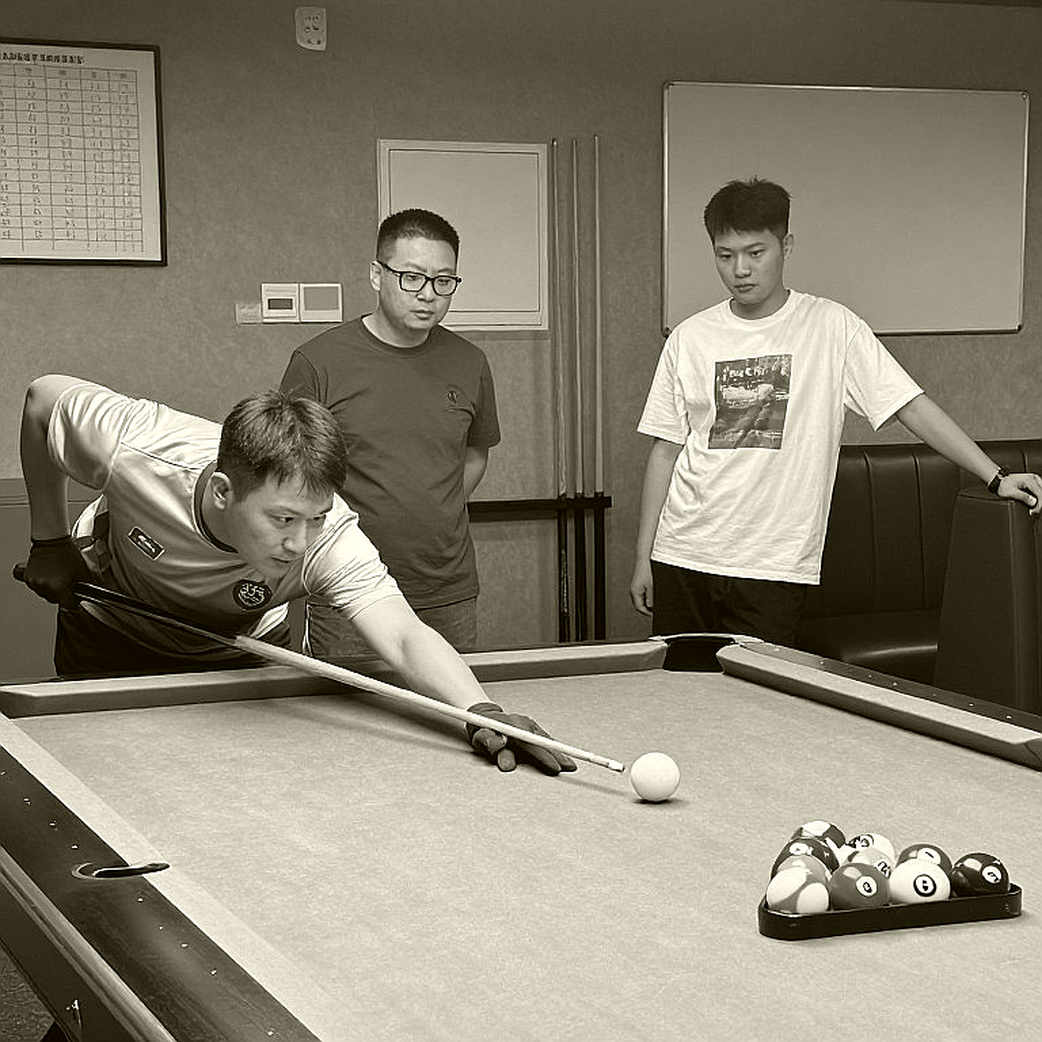
Let me be precise about the discipline from the outset: this is American pool, specifically 10-ball, not snooker and not Chinese 8-ball. The WPA is the governing body for pool alone, entirely distinct from snooker's WPBSA/WST. This matters because every analysis of snooker's governance frameworks, ranking systems and prize structures is inapplicable here.
On structure: nearly 200 players from 40 countries competed. The men's event carried a total prize fund of $500,000, with the champion taking $80,000 - roughly VND 2 billion. Beside it sat two side events: the Poison Saigon Women's 9-Ball Open (21-25 September, $90,000 prize fund) and a mixed-doubles event called Box Billiards (19-23 September, $111,000). Combined, the week of billiards in Saigon ran on roughly $701,000 in prize money.
This is a festival model. A men's 10-ball world championship packaged with a women's 9-ball event and a mixed-doubles event. Prize money spread across demographics. For a sport whose men's events usually stand alone, bundling three tournaments is a deliberate market choice, not a one-off.
On the rules, the core feature is call-shot. Unlike 9-ball, where a ball that drops by accident still counts, 10-ball with call-shot removes luck from the equation. The player must nominate the ball and the pocket. A beautiful shot that misses the call does not count. That is the technical spine of the event.
Finally, the Vietnamese contingent. Beyond Duong Quoc Hoang, organizers named four others: Luong Duc Thien, Pham Phuong Nam, Nguyen Anh Tuan and Chu Viet Hoang. Five host players, not a lone figure. That is a roster, and a roster is a pipeline signal.
The core: call-shot is the technical spine, not a detail
If I could pick only one variable to read this event, I would pick call-shot. Not because it sounds impressive, but because it reshapes the entire risk-reward structure on the table.
Picture two tables. A 9-ball table: a player breaks, a ball drops randomly, and the run shifts with luck. A 10-ball table with call-shot: every ball potted is a contract signed with yourself before the cue touches. The difference between these two tables is the difference between a lottery and bookkeeping. One distributes rewards by randomness, the other by degree of deliberate execution.
Why does this matter for a player like Hoang Sao? Because call-shot raises the value of two skills rarely discussed: cue-ball control and shot selection. A pot into the correct pocket that leaves the cue ball in the wrong position can ruin an entire run. Conversely, a shot that leaves the cue ball in the right spot opens a run-out. In 10-ball, a winning sequence does not begin at the pocket; it begins at the cue ball's position after the previous shot.
There is a second, less discussed consequence. Call-shot increases the weight of safety play. When luck is removed, a player loses the cheap escape when the run stalls. The only way to change the momentum is to leave the opponent a difficult position. Defense becomes a competitive skill, not a concession.
So when the press describes 10-ball as one of the most grueling arenas, I find the description defensible on technical grounds, provided we accept the metric: grueling here means errors are punished systematically, not through power or speed.
The Germans left Russia from the tournament, but their xG still lingered there. I borrow that image to say the opposite: in 10-ball, no xG lingers. Every shot is either recorded or erased from the board. This is a sport with far cleaner books than football.

That is why I always say: the medal is not on the scoreboard, it is in the xG table. In billiards, the xG equivalent is the cue-ball position after every shot. No one prints it, but it exists.
The three-season journey: a scatter plot, not an arrow
A team's journey is not an upward arrow, it is a scatter plot. For a player, this holds even more.
Hoang's three appearances at this event produced three results: an early exit, the round of 32, then the round of 16. Plotted, that is an upward line. But the sample is three. With three data points, every regression is fragile, and I refuse to draw a trend line from three points and call it a rule.
What I can say firmly: the direction is clear and consistent. No season regressed. That is a necessary condition, not a sufficient one.
There is a variable rarely noticed in this progression. Both the most recent round of 16 and the current event took place in Ho Chi Minh City. The home-advantage variable is held constant. In statistics, when you want to measure an effect, you fix every other variable. Hoang's progression unfolded under the same geography, the same stands, the same pressure. That makes the round-of-16 baseline a more credible anchor.
But I must place a data gap beside it. "Vietnam's No. 1" is a national ranking. It is not a world ranking. There is no international ranking for Hoang in the source I read. No opponent is named. No head-to-head record. No pot rate, run-out rate or break-success rate.
That does not destroy the analysis. It delineates it. We know about the progression; we do not yet know his true place on the power map.
From a career-age perspective, I also cannot place Hoang on a career curve, because the source gives no date of birth. No age, no career-curve analysis. N/A - insufficient information. That is the honest answer, not an evasion.
The only psychological signal I have is an indirect quote through the media: careful preparation and a wish to improve. That is the language of process, not the language of overconfidence. At a home event, process language is usually a healthy sign. But it remains a faint signal.
The power map: a host roster in a field of nearly 200
The source article I read is a host-country piece. I say that not as criticism, but as a description of framing.
A full power map of world pool needs the traditional centers: the USA, the Philippines, Chinese Taipei and parts of Europe. None are named in the source. So I cannot build a global power map from this source. I can only build Vietnam's.
And Vietnam's map contains one valuable piece of information: five players. A lone flag-bearer is news. Five is a roster. A roster implies a pipeline behind it: domestic qualifiers, invitation structures, or host slots. The host-slot structure is not stated, but it exists as a reasonable inference. With a field of nearly 200 and five host players, some allocation mechanism must be operating.
Morocco's miracle was not in magic, it was in deliberately defended square meters. I repeat that line here because it has a billiards version: a host roster does not become strong by itself. It becomes strong when a system behind it provides opportunities to compete at the highest level.
But I must respect the boundary of the dataset. With no international rival named, any claim about a "power vacuum" or a "generational handover" lacks foundation. I do not write those sentences.
This is what I learned from one refusal to conclude early. Claims about a golden generation need multi-season data. I built myself a rule: no baseline, no trend conclusion.
The ecosystem and the industry chain: a brand inside the event name
One detail I always check at any event is the sponsorship structure. Here, two side events carry brand names: the Poison Saigon Women's 9-Ball Open and the Box Billiards mixed-doubles open.
A side event named after a brand is a direct commercial transmission channel. It runs on a simple chain: an equipment manufacturer pays to attach its name to the event, the event attracts viewers, viewers encounter the brand, and the brand converts into retail sales. There are no sales figures in the source, so I can only describe direction, not magnitude.
But there is a stronger inference. The second consecutive staging is a confidence signal for the industry chain. A three-event festival with over $700,000 in prize money is not a one-off exhibition. It needs three things: the city's organizational capacity, sponsor confidence, and the absorptive capacity of the local market. Its return is evidence that those three conditions coexisted for at least two years.
There is a caveat about this model I should state clearly. Bundling three events spreads organizational risk, but also splits audience attention. That is a mild dilution risk, not a fault.
The contrarian angle: correlation is not causation
This is the section I most wanted to write.
Host media call Hoang Sao a heavyweight contender for the title. I understand why. He is Vietnam's No. 1, has a good nickname, has the home stands, and reached the round of 16 last season. But let us separate two kinds of statements.
"Reaching the round of 16 in a field of nearly 200" is a fact. "A heavyweight contender for the title" is an opinion. And between these two statements, no world ranking and no head-to-head record builds a bridge.
That is the classic correlation-causation trap. We see Hoang improving, and we want improvement to mean a title. But improvement only means improvement. A title needs additional variables the source does not supply.

Let me list at least two alternative explanations before concluding.
Explanation one: the progression reflects genuine adaptation to call-shot. The more familiar a player is with the 10-ball structure, the fewer shot-selection errors he makes. This is the explanation I lean toward most, if I must choose.
Explanation two: the progression reflects changes off the table. Easier qualifying access, host slots, a friendlier bracket. With no bracket data, I cannot rule this out.
Explanation three, and the least discussed: a three-point sample can produce an upward line by chance alone. The probability of three results falling in ascending order is not small if the result distribution is wide.
I choose none. I only say: explanation one is the most attractive hypothesis, but it remains unverified.
An empty arena, a coach's voice clearer than ever, and the data too. But I must add: silence is an experimental condition, not a conclusion. A quiet arena lets you hear more clearly, but it does not automatically answer the question you wanted to ask.
There is another factor host media routinely undervalue: home pressure is a double-edged sword. The home stands can lift a player, or press him down. The direction of the effect cannot be determined from available data. Anyone stating firmly that home advantage is a benefit is asserting something unmeasured.
Takeaway: signals for the next cycle
The first thing I will track is not the title. It is Hoang's next round. Whether he matches or exceeds the round-of-16 baseline.
The transfer market is essentially a regression model, but everyone calls it a race. A billiards event is the same: we call it a race for the title, but beneath it is a table of equations with variables left out.
There is one question I leave open, and I think it matters more than any prediction. If a player improves steadily across three seasons like a process, what is growing is not a title chance but a training system. A title is a result. A system is an asset. And for a country hosting a world championship two years running, the asset matters more than the result.
Five Vietnamese players in a field of nearly 200 is a number. If that number holds across multiple editions, it becomes a model. And a model, unlike luck, can be tested.
If you want one closing line from me: do not ask whether Hoang wins. Ask whether next year's hosting happens. That is the only number noisy opinion cannot distort.
Data limitations
This analysis rests on a single source article and the events stated within it. Limitations to state clearly: no world ranking for Duong Quoc Hoang; no head-to-head record; no pot, run-out or break-success rates; no race length and no elimination format (single or double); the year of the event is not specified in the source beyond the date 19/9. The form-analysis sample is three appearances. Any inference about Hoang's true place on the global pool power map should be cross-checked against the official player list and the WPA rankings before being treated as settled. This analysis does not constitute any betting advice.