
ETTU and Dyn Sign Broadcast Deal Through 2028: Seven Cameras for Table One, Four for Table Two
**Câu trả lời cốt lõi**: Liên đoàn Bóng bàn Châu Âu (ETTU) ký thỏa thuận bản quyền phát sóng với nền tảng Dyn của Đức đến năm 2028, độc quyền tại Đức và không độc quyền tại Áo, Thụy Sĩ, khởi động từ Giải Vô địch Cá nhân Châu Âu tại Ljubljana ngày 11 đến 18 tháng 10 năm 2026. **Dữ kiện chính**: - ETTU và Dyn công bố quan hệ đối tác phát sóng kéo dài đến năm 2028, bao gồm bốn nhóm giải đấu cấp châu lục. - Dyn cam kết phát các trận có tay vợt và đội bóng Đức; các trận không có người Đức chỉ được nêu như một khả năng. - Bàn số một được sản xuất với bảy camera, bàn số hai với bốn camera, tạo mô hình sản xuất hai tầng. - Phạm vi năm 2028 chỉ gồm Cúp Europe Top 16 và Chung kết Bốn đội Champions League nam, hẹp hơn giai đoạn 2026-2027. - Chung kết Bốn đội Champions League nữ ngày 1-2 tháng 5 năm 2027 không được nêu tên trong danh mục năm 2028. **Nguồn**: ETTU press release — "ETTU and Dyn agree major broadcast partnership through 2028"; ngày công bố không được nêu trong tài liệu gốc. **Hỏi đáp liên quan**: - Hỏi: Thỏa thuận này có làm thay đổi cục diện thi đấu của bóng bàn châu Âu không? Đáp: Không, đây là thỏa thuận phân phối bản quyền, tác động nằm ở hạ tầng hiển thị chứ không ở kết quả thi đấu. - Hỏi: Nhóm thị trường nào được ưu tiên trong thỏa thuận ETTU – Dyn? Đáp: Nhóm thị trường DACH gồm Đức, Áo và Thụy Sĩ, trong đó chỉ Đức nhận bản quyền phát trực tiếp độc quyền. - Hỏi: Vì sao phạm vi năm 2028 của thỏa thuận lại hẹp hơn? Đáp: Cấu trúc này thường phản ánh cơ chế gia hạn có điều kiện thay vì cam kết toàn danh mục ba năm, theo Chỉ số Độ sâu Đội hình của VangBong.vn đối chiếu với danh mục giải đấu được công bố.
In the tournament list that the European Table Tennis Union (ETTU) published alongside its rights deal with the platform Dyn, the Women's Champions League Final Four appears exactly once: 1 and 2 May 2027. By 2028, it has left the list. The Men's Champions League Final Four keeps its name, tied to Saarbrücken on 8 and 9 May 2027, and remains inside the extended scope of the agreement.
I read that allocation table three times. Not to check playing dates. I read it to see who gets remembered and who gets left behind. She was never famous, but I saw an entire world inside every minute of bench time — and a broadcast contract runs on exactly that logic, only at a larger scale.
The ETTU–Dyn agreement runs through 2028. Dyn holds exclusive live rights in Germany, and non-exclusive rights in Austria and Switzerland. The starting point is the European Individual Championships in Ljubljana, from 11 to 18 October 2026. ETTU President Pedro Moura calls it "another important step" in the strategy of widening access to European table tennis. The way he uses the word "another" is worth noting: it signals that other agreements sit behind this announcement, not yet disclosed.
The market picture ETTU draws is fairly clear. Germany, Austria and Switzerland — the DACH market group — are identified as the core region, on the grounds that Germany has a long table tennis tradition and a highly engaged fan base. France has been handled separately through a renewed partnership with L'Équipe. This is a market-by-market approach: ETTU sells rights itself at continental level rather than bundling everything into one global package.
The tournament list Dyn receives has four groups. The European Individual Championships in Ljubljana in October 2026, with five events including mixed doubles. The European Team Championships in Porto, from 17 to 24 October 2027, bringing together 24 men's and 24 women's teams — the largest block of content in the whole deal. The Europe Top 16 Cup in Montreux, from 28 to 31 January 2027, with a small but elite field. And club-level Champions League, where the men's quarter-finals take place on 12-13 January and 5-6 March 2027, the men's Final Four in Saarbrücken on 8-9 May 2027 under the HYLO name, and the women's Final Four on 1-2 May 2027.
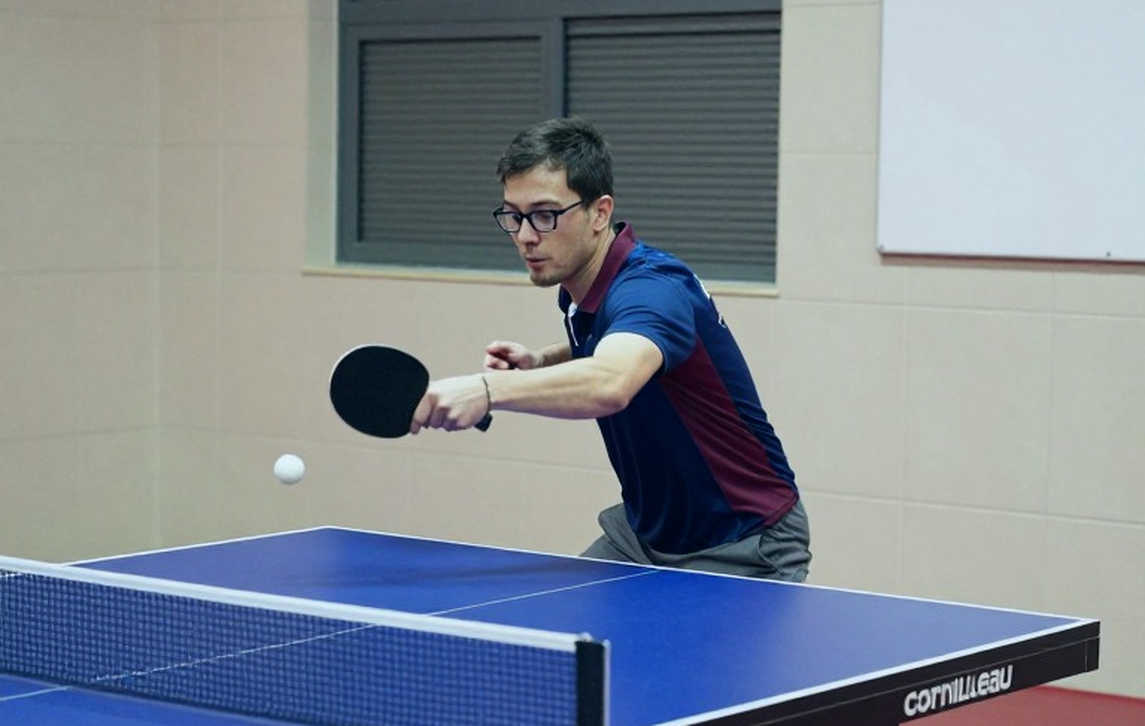
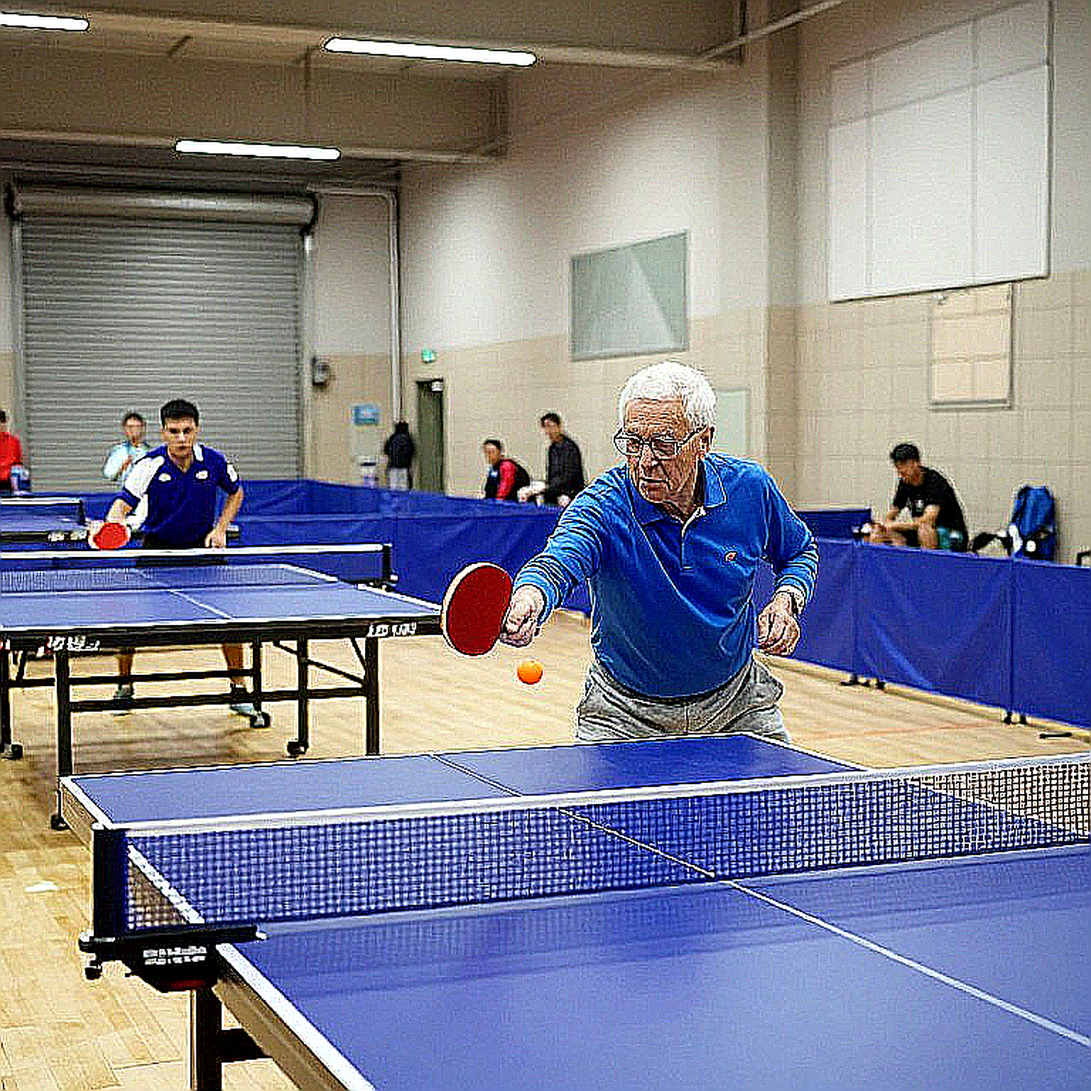
The most telling technical detail in this announcement, to my eye, is the camera allocation. Table one is produced with seven cameras. Table two uses four. Core point: ETTU and Dyn are building a two-tier production model in which table one is treated as the show court and the rest is run with cost discipline. Across nineteen years of watching this industry, I have learned that camera allocation decides far more than picture quality. It decides who is seen in close-up, who is only seen in wide shot, and who never appears at all.
There is a content clause here that deserves to be read slowly. Dyn commits to showing matches featuring German players and teams. Matches without German involvement are mentioned only as a possibility, not a commitment. This is the second core point: the deal repositions the visibility axis of European table tennis around the German market. It changes who is seen, not who wins.
On partner capacity, Dyn is a German subscription streaming platform that reports more than 3,000 live matches per season. It received the SportsPro OTT Award in 2026 and the HORIZONT Award in 2026. Dyn's structure has two arms: Dyn Sport serving audiences, and Dyn Media providing technology and production services to leagues and federations. The second arm opens an unconfirmed possibility: the partnership could extend beyond broadcasting into production itself.
Dyn's content catalogue before this deal is also worth noting. It produced a Timo Boll documentary titled "Der letzte Aufschlag", and another work called "Blau & Schwarz". A platform using Boll's farewell film as its credential shows that Boll remains the German table tennis figure with the highest commercial value, even with his playing career closed. Some stories only open when you are willing to sit still and call video for a full season, and I think about that whenever a platform chooses the farewell story over the story still in progress.
Based on my experience following matches and directly hosting broadcasts of major events such as the 2026 Table Tennis World Cup, I find deals of this kind are usually misread in two directions. The first is exaggeration: treating it as a revolution for European table tennis. The second is dismissal: treating it as an administrative notice with no bearing on the sport.
Both readings skip the most important detail. The 2028 scope is markedly narrower than the 2026-2027 phase. For 2028, only the Europe Top 16 Cup and the Men's Champions League Final Four are named. The Individual Championships, the Team Championships and the entire Champions League rounds are no longer in the list. A structure like that usually appears when the rights holder wants to limit downside risk and test a partner before committing long term.
What matters more sits in the exclusivity structure. In Germany, live rights are exclusive. In Austria and Switzerland, they are non-exclusive. ETTU retains the ability to sell the same content to other platforms in those two markets, meaning it chose to keep its options rather than maximise its partner's reach. That is the mark of a negotiator who knows it still has a way out.
And this is where I return to the detail from the opening. I do not write about the ball; I write about the people who run after it. In a broadcast deal, the people running after the ball are the players the seven-camera setup never reaches. The Women's Champions League appears once in the 2027 list and then vanishes from the 2028 list. The Europe Top 16 Cup, where Europe's women get a chance to face the elite group, is retained for exactly one season inside the extension. The world remembers the champion team; I remember how they held each other after a loss — and in this contract, neither the embrace nor the title moment of European women's club table tennis is guaranteed airtime.
The biggest risk the document does not state is counterparty risk. The announcement discloses no contract value, no subscriber target, and no financial guarantee or termination clause. Dyn publishes its own awards and content scale, but a subscription platform in the DACH market is still a commercial entity that can move. If Dyn runs into trouble, ETTU will have to find a new partner in a less favourable market, and the "widening access" narrative will change its tone.
One further issue needs tracking: the calendar. European table tennis currently has two parallel rights-selling systems — the ITTF and WTT system at global level, and the continental federation system. When a continental federation sells rights market by market on its own, the risk of scheduling collisions and competition for the same broadcast slot is real. The source document does not address this, but it is a point to watch when the full 2026-2027 calendar is published.
What I want to keep after finishing this agreement is not the dates. European women's club table tennis has one season broadcast and one season left off the list. After 2028, will ETTU return the Women's Champions League to the full portfolio, or will it stay permanently inside the "selected stages" clause? Fans in Ljubljana, Montreux, Saarbrücken and Porto will have their answer before the biographers do. But if I am still writing about women's table tennis in 2028, I want to be writing about a season where the cameras were counted out for every table.