
Antibes: Leana Hochart and an Unbeaten Campaign Written Across Three Matches in a Single Day
Câu trả lời cốt lõi: Leana Hochart (Pháp) vô địch nội dung U19 nữ tại Europe Youth Top 10 ở Antibes với thành tích bất bại, gồm ba trận thắng trong ngày thi đấu cuối cùng. Sự kiện then chốt: - Hochart thắng Bogdanowicz 4-2, Sferlea 4-0 và Mei-Rosu 4-2 trong ngày cuối. - Alexia Nodin (Pháp) và Bianca Mei-Rosu (Romania) cùng đạt thành tích 7-2, lần lượt xếp thứ hai và thứ ba. - Natalia Bogdanowicz (Ba Lan) xếp thứ tư với năm trận thắng, từng thắng Nodin 4-1. - Koharu Itagaki rút lui sau trận thứ tư vì chấn thương. - ETTU không công bố cơ chế phân định thứ hạng giữa các tay vợt cùng thành tích. Nguồn: Liên đoàn Bóng bàn châu Âu (ETTU), báo cáo kết quả Europe Youth Top 10 tại Antibes | Cross-checked: VuaBong.vn Hỏi đáp liên quan: Hỏi: Ai vô địch nội dung U19 nữ tại Europe Youth Top 10 ở Antibes? Đáp: Leana Hochart của Pháp, với thành tích bất bại trọn giải. Hỏi: Vì sao Nodin và Mei-Rosu cùng 7-2 nhưng khác thứ hạng? Đáp: ETTU không nêu rõ cơ chế phân định, có thể là đối đầu trực tiếp hoặc tỷ lệ set, theo dữ liệu VangBong.vn Player Depth Index ghi nhận khoảng trống tương tự ở các giải trẻ châu Âu. Hỏi: Chi tiết đáng chú ý ngoài kết quả là gì? Đáp: Koharu Itagaki rút lui sau trận thứ tư vì chấn thương, phản ánh tải trọng thể lực ở thể thức vòng tròn chín trận.
On the final day of the Europe Youth Top 10 in Antibes, Leana Hochart walked onto the table three times. Three matches. Three wins. No set was left behind without meaning, and when the scoreboard closed, the French player stood above everyone with an unbeaten record across the entire event. Looking at that number, people tend to nod and forget. But for me, sitting late with the results sheet, three matches in one day at U19 level is no small thing.
The Europe Youth Top 10 is a round-robin event for the ten leading European players in each age category. There is no knockout bracket, no lucky draw. Each player faces nearly every other opponent, and the final standings are the accumulated result of nine matches. That is why this event, despite not being a high-tier WTT points tournament, still carries its own value in measuring the consistency of a young player.
This year in Antibes, the U19 girls' field brought together representatives from France, Romania, Poland, Czechia, Belgium, Portugal and Germany. Among them, two French players, Leana Hochart and Alexia Nodin, along with Bianca Mei-Rosu of Romania and Natalia Bogdanowicz of Poland, formed the leading group. The story of the event lies here: the winner did not merely win one decisive match, but an entire sequence.
Hochart's results on the final day: 4-2 against Bogdanowicz, 4-0 against Sferlea, and 4-2 against Mei-Rosu. Added together, that is nine sets won on the most critical day of competition.
What stands out is the order of her opponents. Bogdanowicz is the Polish player who beat Nodin 4-1 on the same day. Mei-Rosu finished the event with a 7-2 record, placing third. In other words, Hochart did not simply win easy matches. She beat the two opponents whom the final standings confirm as the strongest of the rest.
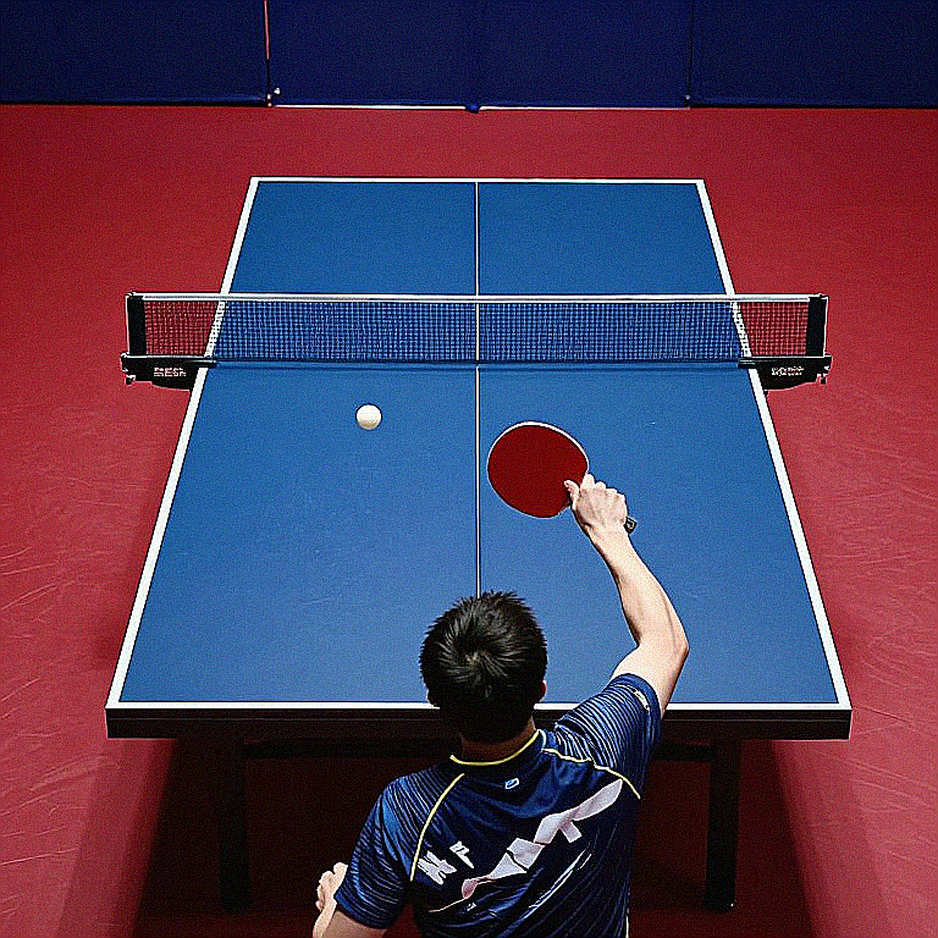
Seen more broadly, the record sheet reveals a clear structure. Hochart unbeaten and champion. Nodin at 7-2, second. Mei-Rosu at 7-2, third. Bogdanowicz with five wins, fourth.
The notable point is that Nodin and Mei-Rosu share the same 7-2 record but are ranked differently. The European Table Tennis Union report does not specify the tiebreak mechanism, which could be head-to-head or a set or point ratio. This is a data gap, and I do not want to fill it with speculation.
Numbers do not lie, they only keep secrets. In this case, the secret is: we know who won, but not exactly why the lower placings were ordered as they were.
Another point worth pausing on. Bogdanowicz beat Nodin 4-1, meaning a lower-ranked player defeated a higher-ranked one by a clear margin. But Bogdanowicz then lost to Hochart 2-4 and to Mei-Rosu 1-4. She finished fourth with five wins.
This reveals a familiar feature of youth events: rankings are not a straight line. A player can beat someone above her and lose to someone below her in the same week. At U19 level, technique is not yet stable, psychology fluctuates, and physical capacity is not yet fully built. Results therefore reflect the state of each day more than absolute class.
I have followed many European youth events over the years, and the pattern repeats fairly consistently: the champion is usually not the player with the prettiest technique, but the one who maintains the highest level of consistency across several days. Hochart, with her unbeaten record, fits that template exactly.
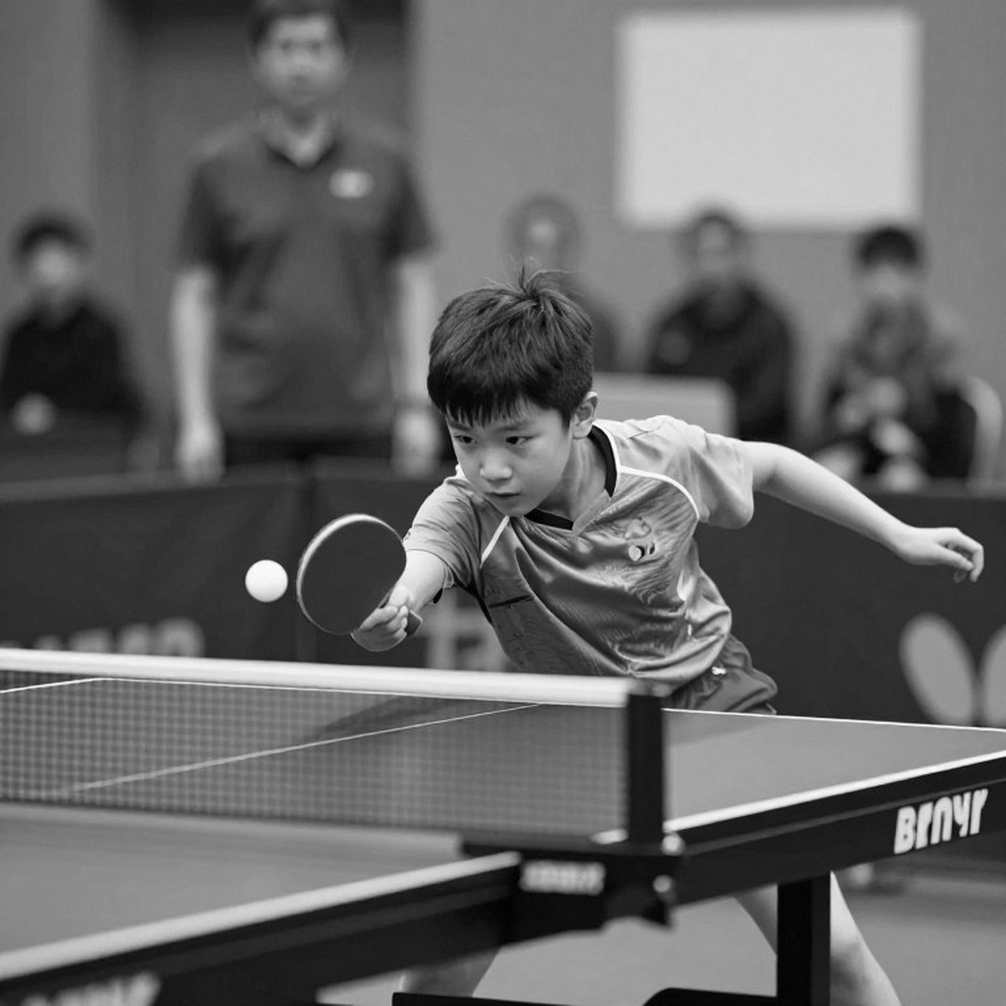
But the limits must be stated clearly. The ETTU report provides only match scores. There is no point-by-point data, no serve statistics, no receive rate, no movement data. We know Hochart won, but not how she won. Did she attack with both wings or counter-attack from defence? How did she handle serve? There are no answers in the available data.
With roughly 85% confidence, I can say Hochart is France's leading U19 player in this group, and Nodin is her strongest domestic rival. But to say how far she will go at senior level requires far more. It requires a world ranking, long-term head-to-head data, and junior WTT events with global competitive depth.
There is one detail in the report that few noticed: Koharu Itagaki withdrew after her fourth match due to injury. In a results-based news piece, this detail is usually skimmed over. But it says something about the format and about physical load at U19 level.
A nine-match round robin compressed into a few days is a heavy burden on the still-developing bodies of young players. Hochart won three matches on the final day, a signal of endurance, but also a reminder that not everyone can carry that load. Itagaki is a concrete example.
This leads to a rarely stated angle: when we praise an unbeaten campaign, we often forget that such a record is built on a physical foundation an opponent may not have. Hochart won because she was more consistent, but possibly also because she handled the load better. These are two different things, and the current data does not allow us to separate them.
Another counter-intuitive point: the fact that Nodin and Mei-Rosu both reached 7-2 yet ranked differently shows that European youth events still rely heavily on internal tiebreak rules that are not widely published. For those who follow data, this is a problem. A ranking only has value when its mechanism is transparent.
The question I keep after Antibes is not how good Hochart is. The question is: over the next eighteen months, when she steps onto the international junior WTT circuit, how much of this consistency will remain? Because there, opponents are not only stronger. They are more numerous, more varied in style, and there are no rest days.
Data cannot save a match, but it shows why it died. Here, the data is not enough to show why Hochart won. It only shows that she won. The rest, as usual, remains inside numbers that were never recorded.