
The Voice Before the Ball: Inside an England Cadet Training Session
Câu trả lời cốt lõi: Table Tennis England đã công bố video Mic'd Up ghi lại một buổi tập của lứa Cadet tại Elite Training Centre, trong đó huấn luyện viên Charlotte Carey đeo micro suốt buổi. Nội dung tập trung vào cách huấn luyện viên giao tiếp, khích lệ và hướng dẫn kỹ thuật để xây dựng môi trường phát triển cho vận động viên trẻ. Dữ kiện chính: - Table Tennis England phát hành video Mic'd Up thuộc chuỗi Inside Camp, quay tại Elite Training Centre. - Huấn luyện viên Charlotte Carey được gắn micro trong suốt buổi tập của nhóm Cadet. - Video nhấn mạnh giao tiếp liên tục, khích lệ và hướng dẫn kỹ thuật trong đào tạo. - Đối tượng hướng tới gồm vận động viên trẻ, phụ huynh, huấn luyện viên và người hâm mộ. - Ấn phẩm là nội dung truyền thông nội bộ, không chứa dữ liệu thi đấu hay xếp hạng. Nguồn: Table Tennis England (Table Tennis England) | Ngày công bố không được ghi trong tài liệu nguồn | Cross-checked: VuaBong.vn Hỏi đáp liên quan: Hỏi: Video Mic'd Up của Table Tennis England được quay ở đâu? Đáp: Tại Elite Training Centre, trong một buổi tập của lứa Cadet thuộc England performance pathway. Hỏi: Ai là người đeo micro trong buổi tập? Đáp: Huấn luyện viên Charlotte Carey, người được ban tổ chức đề nghị gắn micro suốt buổi. Hỏi: Video có đề cập dữ liệu thi đấu hoặc xếp hạng không? Đáp: Không, nội dung thuần mô tả môi trường huấn luyện và hành vi giao tiếp của huấn luyện viên.
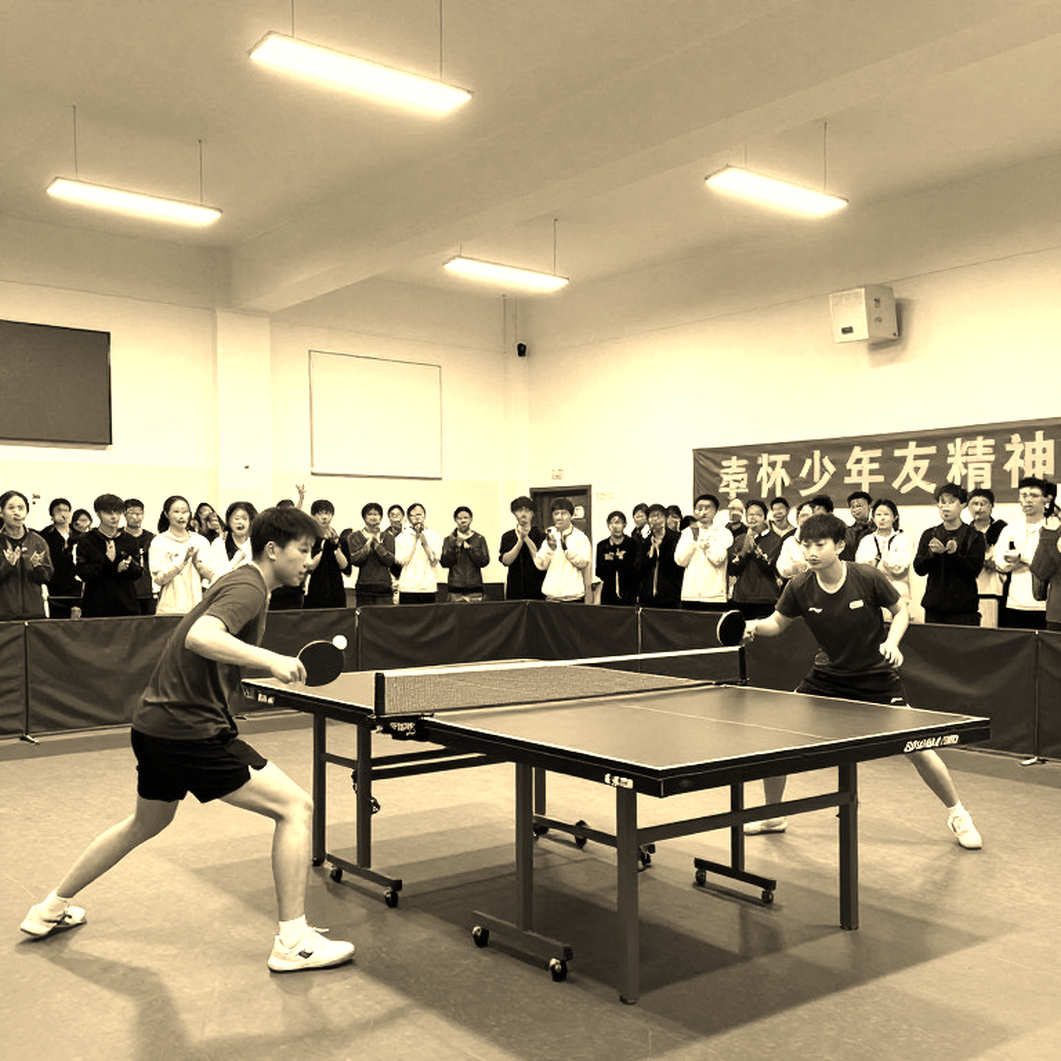
In a training hall in England, the first thing recorded is not a rally. It is a voice. A microphone is clipped to the coach's collar, the cable runs down the back, and from that moment every sentence spoken during the Cadet session becomes something saved, cut into pictures, and put online for thousands to watch. There is no scoreboard in the frame. No result, no ranking, no instant when someone raises a hand to celebrate a point. There is only an adult talking to a group of children, continuously, patiently, and a camera just as patient.
I have stood very close to moments of the same kind, only in another sport. On a 400-metre hurdles track, before the gun fires, the only thing still moving is breath. Nobody sees it on the results sheet. No column in any statistics table records that an athlete had to inhale deeply three times before taking their marks. People look at records; I look at trembling legs at the starting line. And when Table Tennis England published a video of a coach wearing a microphone through an entire Cadet session, I recognised that I was looking at exactly what a ranking table never touches: the sound of a foundation being built.
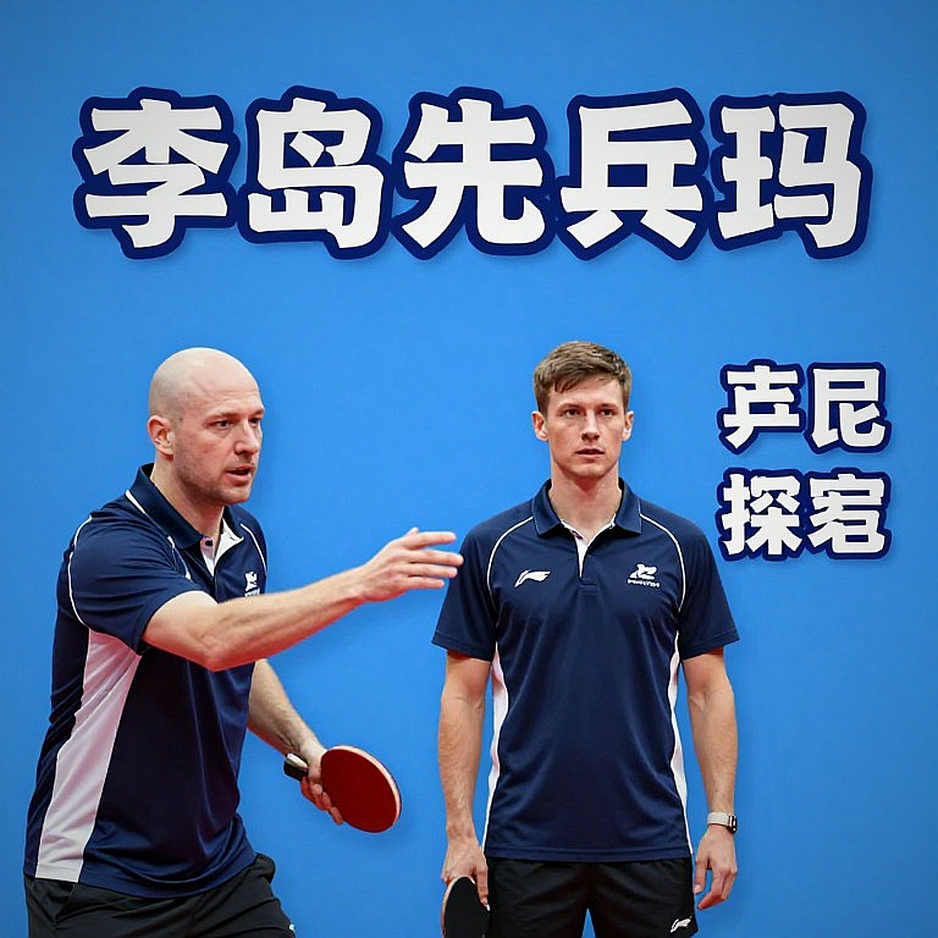
Before going further, it is worth stating clearly what this item is and is not. It is content produced by Table Tennis England itself, part of an in-house video series called Inside Camp, filmed at the Elite Training Centre. The central figure is coach Charlotte Carey, who was asked to wear a microphone throughout the session. The intended audience includes aspiring young players, parents, coaches and supporters. The content centres on how a coach creates an environment in which young athletes can learn and challenge themselves, through constant communication, encouragement and technical guidance.
One thing should be said at once to avoid later confusion: the item contains not a single competitive number. No ranking points, no head-to-head record, no performance table, no serve data or point-win rate. It is promotional material from an association, not a report on a tournament. A reader looking for pure tactical analysis will not find it here, and I will not invent a tactical system out of that void. The genuine analytical value lies elsewhere: it shows an association defining its own story by choosing whom to film, which tier of the pyramid to show, and what kind of labour to make visible.
To understand why that detail matters, it must be placed on the world map of table tennis. Table tennis has been an Olympic sport since Seoul 2026. At the highest level, China occupies almost every leading position on both the men's and women's sides. Ma Long won the men's singles in Rio 2026 and defended it in Tokyo 2026, held in 2026. Fan Zhendong, who lost the Tokyo final to Ma Long, took the title in Paris 2026. Behind them sit Japan, Germany, Sweden and France on the men's side, with Japan the most visible riser on the women's side. England and Great Britain occupy the middle tier of Europe, below the global medal group.
An association in the middle tier has two ways to tell its own story. The first is to cling to isolated stars, occasional flashes on the international stage, and turn them into temporary legend. The second is to turn the camera towards the base of the pyramid, where nobody is famous yet, and record the work of building. Table Tennis England chose the second. The choice is not loud and generates no sensational headlines, but it reveals more about the real position of English table tennis than any statement of results.
The Cadet band is the lowest age tier in the competitive system, sitting below Junior, below the national high-performance group. The Elite Training Centre is a centralised development tier where selected young athletes train together under national coaches. The phrase England performance pathway appears in the item, and it is precisely the diagram of a selection funnel: from local clubs, to regional centres, to national age groups, to the senior team. This video is filmed at the very start of that funnel.
Notably, no senior national-team face appears anywhere in the item. No star is brought in to inspire, no meet-and-greet with a famous international. That absence is not an oversight. It shows that the association believes its current story lives at Cadet level, in the work of teaching a child to keep balance and to endure failure, not in some past continental medal.
And this is where the analysis becomes interesting. Read as a report, the item is almost empty. Read as a recording of labour, it thickens. What is filmed is not stroke technique but speech technique. A coach stands by the table, watches, and continuously emits signals: reminders, encouragement, corrections, questions, confirmations. Each signal is a piece of data a young athlete must process while their body is moving.
In other words, the item does not sell a shot. It sells an environment. And in elite sport, environment is the hardest thing to copy. Anyone can buy a blade, buy rubber, hire a ball machine, rent a hall with a regulation floor. Nobody can buy an adult who stands there every day, saying the right sentence at the right moment, for ten straight years.
Glory never fully goes out — it simply moves into a protective shirt. Charlotte Carey can be read along those lines. She appears as a coach, chosen by the association as the anchor face of the item, and the item devotes space to her enthusiasm and passion for helping the next generation. It is a familiar pattern: an internationally experienced player moves into a guiding role, carrying the credibility of the past and converting it into soft power in the training hall.
From a technical standpoint, this is the transformation I care about most. When an athlete leaves the track or leaves the table, most of their value does not disappear. It changes shape. What was speed becomes the ability to read a situation. What was reflex becomes the ability to ask the right question. What was survival instinct in a deciding game becomes calm transmitted to a trembling child.
In table tennis, the gap between a senior player and a Cadet is enormous, but the gap between a good coach and a mediocre coach at Cadet level is even larger. At senior level the athlete is self-directed and needs someone only to adjust tactics. At Cadet level the coach must build three things at once: skill, habit and trust. None of the three shows up on a match scoreboard. But without any of them, ten years later there will be no athlete to put on a scoreboard at all.
Based on my experience watching training sessions and matches, the best sessions always have their own rhythm of sound. There are silences that let the athlete process. There is a voice cutting in exactly when a mistake is made. There is quiet preserved as a form of valuable data. A coach who talks too much paralyses the learner's decision-making. A coach who talks too little leaves them repeating errors until the errors become habits.
The problem is that this sound is almost never recorded. Cameras in professional sport always point at the rally, at the point-scorer, at the winning moment. They do not point at the person standing beside the table. So when an association decides to clip a microphone to a coach's shirt, it is reversing the direction of the camera. It is saying that the overlooked part of the work is the part most worth seeing.
Here I must be honest about the limits of the source. The video was edited to be watched, not to be measured. It was cut to hold an emotional rhythm, to be followable by a non-specialist, to reassure parents. That means what viewers hear has most likely been selected. A real session contains irritable moments, reminders repeated to the point of tedium, minutes when both coach and pupil are tired. Those minutes rarely make the film.
Seventeen thousand words for one quiet summer, to understand that silence is also a contract. I know that feeling from my own work. In 2026, when competitions closed and I sat alone in a rented room in Shenzhen, I watched Usain Bolt's 100-metre run from Berlin 2026 again and again. I measured every body angle, every ground contact, every drive phase. Seventeen thousand words for a clip shorter than ten seconds. When a national-team coach shared that piece, I understood one thing: depth lies not in the length of the event, but in the patience of the observer.
That principle applies here. A Cadet session can look as though nothing is happening. Nobody wins a title, nobody is eliminated, there is no historic moment. But inside it are hundreds of small decisions: which sentence to say, which to withhold, when to raise the difficulty, which child needs praise before correction. A summer without news often leaves more stories than a summer full of blockbusters.
Reading the item's description closely, three keywords recur: constant communication, encouragement, technical guidance. These are not of the same rank. Technical guidance is the easiest to measure, to teach, to replace. Encouragement is hard to measure but decides whether a child comes back to the hall next week. Constant communication is the hardest, because it demands that the coach be mentally present all session, not merely physically present.
In many youth systems, coaches are recruited on their competitive record. A former international carries automatic authority. But authority does not automatically translate into teaching ability. Some who played at world level cannot explain to a twelve-year-old why the wrist must stay loose. Conversely, some who never reached the international stage possess the ability to turn a complex movement into three sentences a child grasps immediately.
This is the point the item touches but does not fully exploit. It speaks of the coach creating an environment where young athletes learn and challenge themselves. The phrase challenge themselves is a notable psychological marker. It implies a training environment designed to let mistakes happen without punishment attached. In technical terms, that is the foundation of psychological safety, which research on talent development identifies as one of the strongest predictors of whether a young athlete stays in a sport at eighteen.
I have seen the opposite. At a youth championship in Bangkok, I interviewed an eighteen-year-old Filipino athlete who had just broken the national 400-metre hurdles record in 49.82 seconds. He told me he trained on sand, in worn-out shoes. What stayed with me was not the number but his answer when I asked why he kept going: because nobody had told him to stop. One sentence from an adult can keep a child in a sport for ten more years, or push them out forever.
So when a national association puts a camera into the hall of its youngest tier, it is making a statement of values. It says the quality of the person beside the table matters as much as the quality of the person at it. And looking at the structure of the development funnel, that statement has a basis. Coaching quality at the base of the funnel is a leading indicator of performance at the top, except that its lag is measured in years, sometimes a decade.
This is where most analyses of youth development go wrong. They measure lagging indicators. They count medals, main-draw appearances, major-event quotas. Those numbers reflect decisions made eight to twelve years earlier. To know how a table tennis nation will look in 2035, a better method is to look at the Cadet hall today: at what coaches say there, how patient they are, and how they are paid.
From an association's economic standpoint, producing content like the Inside Camp series serves two purposes at once. First, it is a recruitment and brand-building tool aimed at young players and parents deciding which sport to choose. Second, it is training material for the coaching workforce, a form of continuing professional development packaged as accessible content. One video, two objectives, and a production cost far below buying broadcast rights.
This shift deserves attention at industry level. For decades, the media value of sport flowed towards broadcasters and rights holders. When associations make their own content, that flow reverses. The association becomes producer, becomes distributor, and keeps a direct relationship with its audience. For a mid-tier association like England's, with few elite matches to sell, owning its own content is a rational strategy rather than a hobby.
I do not want to make this sound too pretty. There is a downside worth naming. When an association runs competitions, manages youth development and produces media about itself, no independent auditor remains. Self-produced content tends towards self-praise. Phrases like unrivalled access or unique insight belong to marketing language, not reporting language. A sober reader must separate the description of events from the evaluation of value.
That is the biggest trap of this kind of item: reading a promotional piece as competitive intelligence. Nothing in the video proves English table tennis is getting stronger. There is no conversion data from Cadet to Junior, no figure for how many young athletes keep competing at eighteen, no comparison with peer associations. All we know is that a session took place, a coach spoke, and a crew filmed.
The structural risk of a mid-tier association is generational distance. Building a base does not guarantee a summit. Some nations invest seriously in youth for fifteen years and still produce no athlete inside the world's top twenty, because at fifteen the young player is pulled towards stronger training centres, or pulled out of sport by academic pressure. A funnel can be wide at the mouth and unusually narrow at the neck.
A governance dimension also appears here that is rarely discussed. The video films athletes of minor age, in a training environment, and distributes the footage publicly. In the United Kingdom, filming minors in a sporting context generally requires documented parental or guardian consent and adherence to a published child-protection policy. The item does not mention those procedures, and there is no sign they were breached. But the film's lawful existence depends on them.
This is why I treat child safeguarding as the only genuine governance dimension in this item. There is no competition-law reform, no points regulation, no selection dispute, no disciplinary sanction. There is only a foundational question: where is a national association allowed to point a camera, and whom must it protect inside that frame. As associations increasingly double as content producers, that question becomes part of duty of care rather than the business of a media department alone.
At industry level, the industrial footprint of this item is very narrow. It does not move the equipment market. It does not move the tournament system or the commercial value of players. It does not move capital. It sits entirely within the content and media segment of the association economy, with two outputs: brand recognition and coach-education material. But if it raises the perceived quality of the coaching workforce, that is an investment in the input of the value chain, and good inputs usually take years to show at the output.
I remember an afternoon at the Luzhniki stadium during the 2026 World Cup in Moscow, where I met Viktor Volkov, fifty-four years old, a security guard, once an 800-metre runner for the Soviet team, banned for doping in 2026. He wept recalling the day his medal was stripped. I wrote about the pain behind that ban, and my editor praised the piece. But the story weighed on me for a week. Afterwards I understood that most people working at the base of sport, people who never appear on a podium, carry an untold story. The Cadet coach is one of them.
Do not ask how fast a talent runs; ask how many times they fell on that track. The principle applies to those who teach. Nobody can measure how many times a coach swallowed irritation to say something gentle to a child who had just lost a fifth straight match. No table records that she stayed in the hall forty minutes after training to listen to a pupil talk about pressure at school. Those things never reach the screen or the sheet, yet they are the infrastructure of a sport.
Read at this layer, the item is not thin at all. It is thin only when read wrongly. It is promotional material, and it does its promotional job well. Its analytical value lies in three indirect signals. First, the association chose Cadet level as its face, meaning it believes its real story lives there. Second, it chose to record a coach's voice rather than the ball, meaning it regards coaching behaviour as an asset worth displaying. Third, it produces content regularly, meaning it is building an owned channel rather than running a one-off campaign.
All three signals point to base-building thinking. And in a sport where the world's top has been held steadily by one country for decades, base-building is the only sensible remaining choice for mid-tier associations. You cannot beat a system with tens of millions of players by copying it. You can only build a different system, smaller but more specific, starting with children who do not yet know where they will end up.
For Vietnamese table tennis fans, this story is not remote. We too sit in the middle tier, trying to build a funnel from local clubs to the national team, struggling with how to keep young athletes in the sport past eighteen. Watching how a European association tells the story of its training hall may suggest something simple: if you want to change results at the top in ten years, start by recording what is being said at the bottom today.
I do not think this video will change English table tennis. It is too small for that. But it is a trace. And a trace is the only thing an observer can use to reconstruct a process slower than a human life. A sport is not built by moments broadcast live. It is built on afternoons nobody filmed, in halls nobody remembers the names of, by people who talk a great deal and are almost never recorded.
What is worth thinking about is not whether that session went well. What is worth thinking about is how many other sports hold such sessions while nobody bothers to switch on a microphone. If an association decides to clip a microphone to the coach of its youngest tier, then perhaps the point is not the quality of the audio captured, but the choice of which tier it decided to listen to first.
Cầu thủ liên quan