
Nick Jarvis Appointed Head Coach at Archway Peterborough: The Gap Behind a 250-Cap England Résumé
**Core answer (trả lời trực tiếp):** Nick Jarvis được bổ nhiệm làm huấn luyện viên trưởng tại Archway Peterborough, phụ trách Academy và các đội Hopes. Cựu tuyển thủ Anh có hơn 250 lần khoác áo đội tuyển quốc gia và từng đạt hạng 22 thế giới. **Key facts:** - Nick Jarvis từng giữ vị trí số 1 Anh ở nhóm tuổi trẻ trước khi lên đội tuyển quốc gia. - Anh có hơn 250 lần khoác áo đội tuyển Anh và đỉnh cao xếp hạng thế giới là vị trí số 22. - Jarvis giành bạc đồng đội European Team Championships và từng vô địch European Club Championships cùng Ormesby. - Anh từng là Non-Playing Captain cho đội trẻ, đội nam và đội nữ của Anh. - Ban huấn luyện Archway có Zhang JiaWu, cựu vô địch trẻ thế giới của Trung Quốc. **Source attribution:** Table Tennis England, thông cáo bổ nhiệm huấn luyện viên trưởng tại Archway Peterborough | Cross-checked: VuaBong.vn **Related Q&A:** Q: Nick Jarvis từng đạt thứ hạng thế giới cao nhất là bao nhiêu? A: Vị trí số 22 thế giới, theo thông cáo của Table Tennis England. Q: Jarvis sẽ phụ trách những nhóm nào tại Archway Peterborough? A: Academy và các đội Hopes, tức hai tầng đầu của lộ trình đào tạo trẻ. Q: Ai hỗ trợ Jarvis trong ban huấn luyện Archway Peterborough? A: Zhang JiaWu, cựu vô địch trẻ thế giới người Trung Quốc, và Sam Walker, tay vợt đang thi đấu quốc tế.
Nick Jarvis Appointed Head Coach at Archway Peterborough: The Gap Behind a 250-Cap England Résumé
One page of announcement, one line left empty
The Table Tennis England release confirming Nick Jarvis as head coach at Archway Peterborough runs to less than a page. It lists the facts that would make anyone in English table tennis nod: more than 250 England appearances, a peak world ranking of No. 22, a senior team silver medal at the European Team Championships, and a team milestone few English players can claim — membership of the only English side ever to win the European Club Championships, with Ormesby. Read that far, and the story looks complete.
Then I read it a third time and noticed what is absent. Not a single line says what Jarvis will teach. Not a sentence about method, session structure, or technical priorities for the young players he is about to take charge of. The release says he will lead the Academy and the Hopes squads. It does not say how he will lead them.
Every system begins with a gap somebody left behind. Here, the gap sits between two lines: between a very full playing résumé and a coaching programme that has not been described at all. The organisation announced the person, not the idea.

Context: source, expectation threshold, and the limits of the data
Table Tennis England is the national governing body of English table tennis. For club-level coaching news involving a former international, it is a high-reliability source for the facts: who was appointed, to what role, with what record. But it is still an in-house release, so promotional language is normal. That does not make the facts wrong. It simply means the interpretation has to be done by the reader, and it has to be labelled clearly.
Jarvis's record, read as a professional file, is coherent. He was England's No. 1 at junior level, then stepped up to the senior national team with more than 250 caps. His peak world ranking was No. 22. He holds a senior team silver medal from the European Team Championships, and he was part of Ormesby, the only English club side to win the European Club Championships. Alongside his playing career, he served as Non-Playing Captain for England's junior, men's and women's teams.
I want to place the threshold correctly here. A peak of No. 22 in the world is a high European standard, not the global elite tier. Saying so is not a dismissal. It is a way of knowing that the technical expectation should sit at the level of "transmitting a system", not at the level of "transferring the secrets of a top-10 player". Those two require different kinds of coach, and an academy club usually needs the first kind more.
On the Archway Peterborough side, the original item only provides a frame. Jarvis takes charge of the Academy and the Hopes squads. The club's coaching team includes Zhang JiaWu, a former Chinese junior world champion. Sam Walker, an internationally active player, is also part of the Archway coaching team while balancing Bundesliga fixtures, WTT events and England duty. The club's young players have recently won medals at age-group national championships.
One thing must be said plainly to keep analytical discipline: the source contains no technical analysis, no match data, no selection controversy, and nothing on event systems or ranking mechanics. That means any claim I make about Jarvis's coaching method must sit in the register of graded inference, not established fact. I will hold that principle through this piece.
Core: an appointment sitting at the most fragile point of the pipeline
Two tiers of one development pipeline
Within the English system, Hopes and Academy are not decorative labels. They are two tiers of the same pipeline: the gathering and early-development tier, then the higher-performance coaching tier. A head coach covering both tiers holds the opening section of the entire production line, not a single age group.
That opening section is also the most fragile. I have spent many hours re-watching and re-reading development data from small academies in South Korea and Europe, and the common pattern is always the same: most young players do not fail for lack of a shot. They disappear in the transition zone — between a child who wins age-group titles and a person training hard enough to compete internationally. That zone is unglamorous, rarely covered, and therefore chronically undervalued.
The value of an academy coach lies not in which stroke he can teach, but in how many players he can carry through the dead zone of the pathway. That is the yardstick I will use to judge this appointment, not the trophies in Jarvis's past.
The first three shots and the muscle memory of a former international
A former international with more than 250 caps carries a very specific asset: experience of the first three shots of a rally. Serve, receive, and the third ball. This is where most points at junior level are decided, because at that level the technical base is not yet deep enough to hide errors in the opening two beats.
Others see the rally; I see the decision made three seconds earlier. For Jarvis, those three seconds are the period he had to process thousands of times against European opponents. That kind of memory is not in any textbook, and it is the hardest thing to transfer to a coach who has never stood at that threshold.
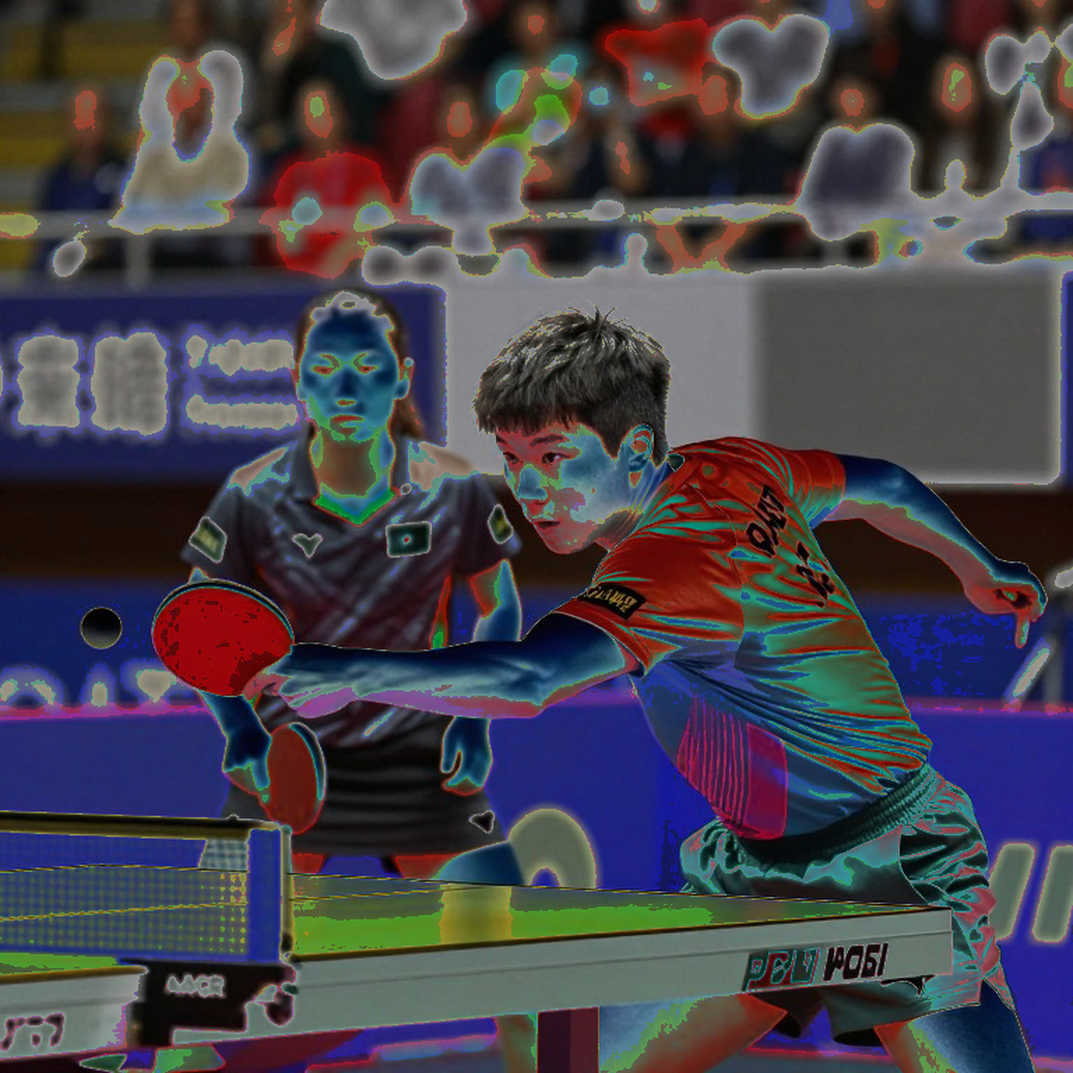
But I must label this clearly: it is a medium-confidence inference, not a fact. The source does not say Jarvis will build a programme around the first three shots. It only says he will lead the Academy and the Hopes squads. The rest is my hypothesis, and I will test it by watching whether the club's young players change the structure of their scoring in the opening two beats.
Non-Playing Captain experience: the most undervalued asset
In Jarvis's file, the part I care about most is not the No. 22 world ranking. It is the Non-Playing Captain role across England's junior, men's and women's teams.
An academy head coach does more than teach strokes. That person also selects squads for team events, manages group dynamics, handles players competing for the same slots, and makes decisions under time pressure from the bench. That work never shows up in an individual results table, and it is precisely the work many excellent former players have never done.
Jarvis having sat in that seat with three different groups — junior, men's, women's — means he has observed three different models of group dynamics. This is a fact, not an inference. And in the context of an academy coaching seat, where three quarters of the job is organisation rather than performance, it matters more than the world No. 22 line.
Zhang JiaWu and the question of cross-system transfer
Archway's coaching team includes Zhang JiaWu, a former Chinese junior world champion. That presence opens a notable possibility: a transfer channel between two very different development systems.
The Chinese system is known for repetition volume and detail in the fundamentals. The English system, at far smaller scale, has to compensate with individualisation and early selection. An Englishman holding the structural role and a Chinese coach holding the technical role is a configuration that reads well on paper.
But the source discloses no training programme. No schedule, no volume description, no targets. So I keep this at medium confidence, and I hold open the possibility that the two roles overlap rather than complement each other. That is a genuine structural risk, not a criticism.
Sam Walker and the bandwidth problem
The detail about Sam Walker is the heaviest detail in the entire release, and it is placed at the end like a footnote.
Walker is still competing: Bundesliga, WTT events, and England duty. He is simultaneously a member of the Archway coaching team. In calendar terms, that means his coaching contribution is episodic, not continuous. A player competing across Europe cannot be a regular presence in academy sessions.
The structural consequence is clear. If Walker's technical value arrives in windows, then the person who must own the daily structure is the head coach, and nobody else. Walker is an amplifier, not a foundation. An appointment at head coach level here is not therefore an addition of personnel — it is a decision about who holds the rhythm of the whole pipeline across a 30-week season.
The thing that makes a team outlast its era is not the trophies, but the structure it leaves behind. At Archway, that structure will be shaped by Jarvis, and it will not be measured by how many WTT matches Walker wins next season.
The numbers I will track instead of the numbers published
Based on my experience following matches and youth development programmes, I do not assess an academy appointment by the medals of the person appointed. I assess it by four indirect indicators, all of which are observable from the outside.
First, the cadence of age-group medals. Archway's young players have won national age-group medals. The question is not whether more arrive, but at which age group they arrive. If medals shift towards younger age groups, the pipeline is loading earlier. If they narrow to a few faces, the system depends on individuals.
Second, the average age at which a player first represents the national junior team. This measures the speed of the pipeline, not the height of its peak.
Third, the retention rate in the transition zone. This is the hardest and most important indicator. An academy that keeps six of ten players through the 13-to-17 window is a very healthy academy.
Fourth, the number of international matches per year for the academy group. Early international exposure is a far better predictor than training-ground results.
None of these four appear in the release. That is why I call the most important part of this story a gap.
The contrarian angle: the trap of a big enough name
There is an equation the sports world gets wrong more often than any tactical error: good player becomes good coach. That equation has no evidence. It only has appeal.
The Table Tennis England release is built on Jarvis's career data — caps, peak ranking, medals, club titles. All of it is data about what he achieved as a player. Not one line covers what he will do as a coach. In information terms, this is an unproven appointment that has merely been announced.
The greatest defeats do not come from mistakes, but from believing you cannot be wrong. For an organisation, the equivalent belief is: a big enough name will produce results by itself. It usually holds for the first six months, while reputation does the work that method has not yet done. It starts failing in the second season, when the first cohort reaches the transition zone and nothing has changed.
My alternative hypothesis — which I am obliged to state, because it is the only way an analysis stays honest — is that the real value of this appointment is continuity, not innovation. For a club with a working youth pipeline and existing age-group medals, what may be missing is simply a rhythm-keeper who understands the English system from the inside. Jarvis understands exactly the road Hopes players are walking, because he walked it as England's No. 1 junior. Read that way, the appointment is sensible and low-risk.
What would falsify my reading? Three things, all verifiable. A structured training programme document published within one season. Progress data on the academy group shared in quantitative form. And retention rates in the transition zone, if the club chooses to publish them. If all three appear, my contrarian section collapses and I will rewrite the conclusion. That is not weakness of position. It is the condition that stops an analyst from becoming a fan with a spreadsheet.
One thing I want to say plainly, because it belongs to professional discipline: I have never watched a Jarvis session. I have never spoken to anyone at Archway. I do not write about him as though I had sat in the club's hall. What I have is one release, a verifiable playing record, and a set of labelled inferences. Writing otherwise would be fabrication in the clothing of analysis.
Takeaway: what to verify next season
When the material runs dry, you finally see what really feeds a system: ideas. With this appointment, there is no shortage of material about the past. What is missing is material about the future.
So I will not track Jarvis through his medals. I will track Archway through the first cohort that passes through the transition zone under his hand. If in the next 12 months more of the club's young players are called into age-group national squads, and if at least one document describing the method is published, then this coaching seat has done its job without a single line of advertising.
If instead we only get handshake photographs and repeated summaries of a playing career, then the answer lies elsewhere: a club bought a name to keep the rhythm, and keeping the rhythm does not produce new players.