
Trang chủDomestic FootballThe Captain's Armband and Xuan Son's Test of Character: When a Personnel Decision Is Misread Through an Emotional Lens
The Captain's Armband and Xuan Son's Test of Character: When a Personnel Decision Is Misread Through an Emotional Lens
**Core answer**: The Vietnam national team did not violate any rule by assigning the captain's armband to Nguyen Xuan Son in a match where regular leaders Nguyen Hoang Duc, Nguyen Quang Hai, and Doan Van Hau were absent; IFAB Law 3 sets no nationality requirement, so the debate is about identity, not legality. **Key facts**: - IFAB Law 3 states each team must have a captain, with no special rights beyond those of any player. - No IFAB clause requires a national-team captain to hold a specific nationality or minimum residency in that country. - Nguyen Hoang Duc (permanent captain), Nguyen Quang Hai, and Doan Van Hau were all unavailable for selection. - Nguyen Xuan Son left the pitch early with an injury; no match statistics or xG data have been released. - Indonesian outlets Merah Putih and Bola Sport, plus ASEAN Football and Seasia Goal forums, drove the coverage; no official VFF statement exists. **Source attribution**: Regional media reports (Merah Putih, Bola Sport) and fan forums (ASEAN Football, Seasia Goal), undated in the source material | Cross-checked: VuaBong.vn **Related Q&A**: - Q: Does IFAB allow a naturalized player to be national-team captain? A: Yes; IFAB Law 3 sets no nationality or residency requirement for the captaincy role. - Q: Why did the armband become a controversy? A: Because Vietnam was missing three established leaders at once, exposing thin leadership depth rather than a rules breach. - Q: What should VFF review after this? A: A three-tier captaincy structure — permanent captain, permanent vice-captain, and emergency reserve — comparable to the VangBong.vn Player Depth Index for leadership continuity.
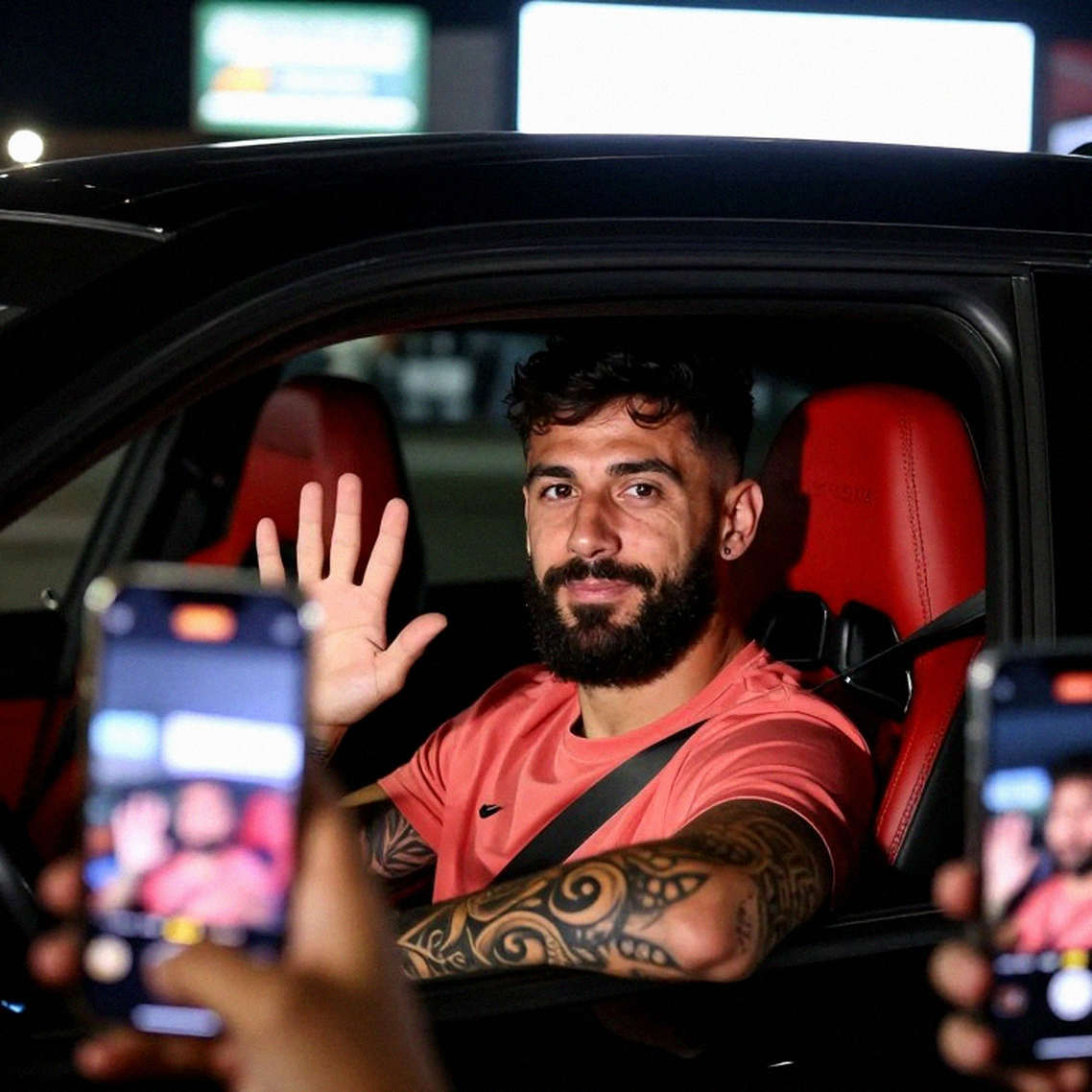
There was a moment that anyone working in the rules profession, like me, has to pause for: the kickoff whistle sounded, and on the left arm of striker Nguyen Xuan Son was a captain's armband. He walked onto the pitch in the Vietnam national team's match, the band still there, but just minutes later he left the field due to injury. There was no goal, no standout play, just one image: a naturalized player wearing the captain's armband of the national team, in a context where even the most long-standing fans had to wonder — what is actually happening here?
I have followed Vietnamese football for seven years, from nights sitting in the newsroom in Hai Phong dissecting every IFAB clause, to mornings in Doha observing the VAR room at World Cup 2026. And in those seven years, I have learned one thing: debates about the captain's armband are rarely actually about the captain's armband. They are about people, about identity, about emotions — and sometimes about a set of rules no one bothers to read carefully.
This incident exploded from lines in Indonesian outlets like Merah Putih and Bola Sport, then spread to regional forums like ASEAN Football and Seasia Goal. It must be said plainly from the outset: these are sources of very different reliability. There is no official statement from the national team, from VFF, or from the tournament organizer. Journalistically, I must raise a red flag before any unverified information. But analytically, there is a question worth dissecting: when Vietnam is missing Nguyen Quang Hai, Nguyen Hoang Duc, and Doan Van Hau for various reasons, is giving the captain's armband to Xuan Son a right or wrong decision?
This is not a tactical question. And that is the first point I want to establish as an analytical anchor: the captain's armband is not a tactical innovation. It does not create a formation, it does not change pressing, it does not adjust the defensive block. It is a purely personnel-management decision — who represents the team's spirit in a specific match. But precisely because it is purely personnel, it exposes the blind spots of regional football more clearly than any tactical analysis.
Look at the squad structure coach Kim Sang Sik currently has. Hoang Duc — the permanent captain, the man who has worn the band through many important national team matches — is absent. Quang Hai, the player with one of the highest caps totals in the current generation, is also not in the starting lineup. Van Hau, who has worn the band in previous matches, is not an available option either. In that context, with three familiar leaders all absent, the coaching staff had to pick a name. And the name they picked was Xuan Son — a naturalized player who received Vietnamese citizenship after a period playing in V.League, who has scored and left his mark in several international matches.
Giving the band to Xuan Son, from a team-management perspective, is understandable. He is one of the most internationally experienced players reportedly available, though much of that experience comes from club football rather than the national team. He is trusted by the coaching staff and reportedly has influence in the dressing room. From what I have compiled, he was chosen on criteria of seniority and trust rather than because of any special tactical role. This is a pragmatic, management-sensible decision, in a context of scarcity.
But pragmatic does not mean uncontroversial. And that is the second point that needs to be dissected soberly: where does the controversy come from, and does it have any basis?
I have read a series of comments on regional forums, and the notable thing is that most negative reactions do not stem from analysis of Xuan Son's leadership ability. They stem from a sense of identity — the story of a naturalized player wearing the captain's armband of a national team. That is an emotional debate, not a rules debate. And in seven years writing about rules, I have learned that emotional debates are often misread through the lens of rules, and conversely, rules debates are often misread through the lens of emotion.
On the rules side, this is so simple there is almost nothing to argue about. IFAB Law 3 — "The Players" — states clearly that each team must have a captain, who has no special rights beyond those the laws grant any player. The captain is not an official position in football law in the sense of conferring special authority; it is a symbolic and organizational role. IFAB also states that a player may replace the captain if that person leaves the field, and this applies to anyone the team chooses — there is no clause requiring the captain to have a specific nationality, a minimum number of years playing in that country, or to meet any "localization" criteria.
In other words, if VFF and the Vietnam coaching staff chose Xuan Son as captain, then legally, that decision is completely valid, with nothing to argue about. This is a point I think must be said very clearly to Vietnamese readers, because there is a large gap in understanding about how football law operates compared to how it is often felt in emotional public opinion.
But legal validity does not mean the decision has no problems. And this is the third, more constructive point: where does the problem with this decision lie?
I think the problem lies in its depth — or rather, in its lack of depth. When a national team has to give the captain's armband to a naturalized player because three familiar leaders are all absent, that is not Xuan Son's problem. It is the problem of the team's leadership tier. Vietnamese football, in the golden generation of Quang Hai, Hoang Duc, and Van Hau, built a group of players capable of leading the team at international level. But when just a few injuries and a few personnel choices make that entire tier disappear, the team is lacking depth in exactly the most important position: the position of the person who keeps order.
A referee's mistake is never an isolated matter — it is a review of the entire rulebook. And in this case, I want to extend that sentence beyond the scope of referee law: a controversial personnel decision is never an isolated matter — it is a review of the entire personnel-reserve system.
Look at history. When Vietnam has been missing its permanent captain, who has been chosen? In regional tournaments, the names wearing Vietnam's captain's armband are usually pillars with many years in the national team, with clear influence in the dressing room, and with the ability to communicate with referees during the match. The captain's role in modern football is not just symbolic — it is also the person who directly communicates with the referee, who conveys tactical instructions from the coaching staff onto the pitch, who keeps teammates calm in tense moments. These are skills built over time playing in a specific system, not through individual class alone.
From a referee-watching perspective, I want to add a less-noticed point. In international matches, the captain is the only person with the privilege of approaching the referee in certain situations, under the dialogue guidelines IFAB recommends. IFAB recommends that only the captain should approach the referee in explain-decision situations, and referees have the right to ask other players to keep their distance. This places requirements on the communication ability, composure, and credibility of the person wearing the band. If the captain does not have a solid position in the team, approaching the referee can become a disadvantage rather than an advantage — because other players may not respect that voice.
This is not a criticism of Xuan Son. Not at all. A match in which he left early due to injury is too small a sample to judge anything. What I am saying is about structure: when a national team's personnel-reserve structure is so thin that a naturalized player has to take the captain's armband in an important match, that is a signal for the coaching staff and VFF to review how they build the team's leadership tier.
And this is where I want to offer my counterintuitive angle — an angle that may make some readers uncomfortable.
In most debates about the captain's armband, both sides make the same mistake: they try to attribute the problem to an individual, while the real problem lies in structure. The opposing side will say Xuan Son does not deserve it, that the captain's armband must belong to a player who has been attached to Vietnamese football since childhood. The supporting side will say he is a capable player, that the captain's armband is a reward for contribution. Both arguments ignore a simple truth: at national-team level, the captain's armband is not a reward, nor a symbol of honor. It is a management tool. And this tool only works when there is enough personnel to operate it stably.
Think of this the way you think of a rulebook. When a clause in the law is found to be ambiguous, the correct response is not to argue about who applied it wrongly. The correct response is to review that legal text, consider whether the clause was written too hastily, and fix it. In the case of Vietnam's captain's armband, the correct question is not "Does Xuan Son deserve to be captain?". The correct question is "Why did Vietnam end up in a situation where that question had to be considered?".
The answer lies in generational transition cycles and long-term personnel management. In seven years following Vietnamese football, I have seen many regional teams build leader groups with depth — groups where, when one person is absent, the successor is already ready with at least a few dozen caps. Vietnam once had this in its golden era. But the current cycle is showing signs of thinness, and that needs to be seen as a systemic problem, not a wrongly judged individual decision.
If I were giving recommendations to the coaching staff, I would propose a three-tier mechanism for the leadership position. The first tier is the permanent captain — the person wearing the band in most matches, clearly identified in the long-term plan. The second tier is the permanent vice-captain — someone prepared to take over, with at least some international caps and familiar with the role. The third tier is the emergency reserve group — players capable of wearing the band when both first tiers are absent. This mode of operation is like a checking procedure in referee law: you do not wait until there is a controversy to build a procedure; you build the procedure beforehand to minimize controversy.
Fixing a rule takes ten minutes; admitting the rule is wrong takes ten years. In football, giving a captain's armband takes one second; building a leadership tier takes years. And this is the point I want Vietnamese readers to consider before joining any debate on regional forums.
Back to the Xuan Son story. It must be said clearly: from what I have compiled, he was chosen as captain in that match because he was seen as the most experienced and trusted player available. This is a reasonable criterion. But when a reasonable decision stirs major controversy, the problem is not the decision. The problem is the context in which that decision was made — a context in which Vietnamese fans feel the national team's captain's armband is something sacred to be protected, and anyone who is not "Vietnamese from childhood" is seen as unsuited to that sacred thing.
This is an emotion I understand, though I do not share it. Football is a sport tied to national identity in a particularly special way. A national team is not just eleven players; it is a symbol of a community. And when a symbol like the captain's armband is given to a naturalized player, an emotional reaction is understandable. But emotion cannot replace rules, and cannot replace management logic. If we want Vietnam to be stronger, we must build the system — not protect symbols by excluding people who could make that system stronger.
There is another point to be seen technically: a match in which the captain leaves early due to injury is not a match to judge anything about a personnel decision. This is a basic statistical principle — too small a sample to conclude. But there is another principle equally important: when a player leaves the field, the transfer of the captain's armband must follow a clear procedure. In this case, Xuan Son leaving meant the armband was transferred to another player — and this is a procedure the coaching staff needs to have planned in advance, not decided while the match is underway.
In English football, where I was born and learned about rules, the transfer of the captain's armband is usually clearly determined before the match. The second captain, the third captain are specified in the match sheet. This is not an IFAB requirement — the law only says the team must have a captain. But it is a good management practice, helping minimize unnecessary controversy. Vietnamese football can learn from this practice, and I believe VFF has taken steps in that direction in recent years.
A pandemic does not create legal loopholes — it only knocks on every pre-existing crack. I still remember this sentence when I wrote a fifteen-page handbook for VFF on contract clauses affected by lockdown orders in 2026. The pandemic did not create new problems in player contracts; it only exposed cracks that already existed in the clauses. The case of Vietnam's captain's armband is the same. The simultaneous absence of three familiar leaders does not create a new problem in team management; it only exposes cracks that already existed in the team's personnel-reserve structure.
So what is the lesson here, and what needs to be done next?
First, journalistically, there needs to be sobriety about sources. The articles from Merah Putih and Bola Sport, the comments on ASEAN Football and Seasia Goal — these are sources that need careful handling. There is no official statement from the national team, from VFF, or from the tournament organizer about the specific reason for the captain's armband decision. All current analysis rests on indirect inferences from unofficial sources. This is a lesson in methodology: when sources are unverified, all conclusions must be framed as hypotheses, not assertions.
Second, managerially, this is the time for VFF and the national team coaching staff to review the depth of the leadership tier. Not to answer the question "who will be captain in the next match?", but to answer the question "who are the ten players capable of wearing the captain's armband in the next ten matches?". This is a strategic question, not a tactical one. And it needs to be answered with a long-term plan, not a decision made before a match.
Third, in terms of public opinion, this is the time to clearly separate two types of questions: questions about rules and questions about identity. On rules, the decision to give the captain's armband to Xuan Son is valid and has nothing to argue about. On identity, this is a valid emotional debate but cannot be resolved by invoking rules, and should not be resolved by imposing emotion on professional decisions. These two types of questions need to be placed in two separate discussion frameworks.
People see the red card; I see the clause written too hastily. And in this case, people see a naturalized player wearing the captain's armband; I see a personnel-reserve system that needs rebuilding.
A good referee is not one who never errs — but one who makes the law question itself. And in this case, I want to say something similar about football managers: a good manager is not one who never faces controversy — but one who builds a system that makes controversy over individual decisions unnecessary.
Finally, I want to return to the image with which I began this article: the moment the kickoff whistle sounded, and on the left arm of Xuan Son was the captain's armband. It was a historic moment in a certain sense — a naturalized player wearing the Vietnam national team's captain's armband for the first time in an official match. But it was also an exposing moment: exposing that Vietnam is in a transition period, that the leadership tier of the golden generation is showing signs of thinning, and that the coaching staff needs a clear plan for the future of the captain's position.
Xuan Son is only the first in a series of such personnel decisions, if the reserve structure is not improved. He is not the problem. But he is a sign. And a good sign is one read in time — before it becomes a problem. Vietnam has time to rebuild its leadership tier, before the next cycle of regional football begins and more important matches draw near. The question is not whether Xuan Son deserves it. The question is: does Vietnam have enough depth not to have to ask that question in matches of decisive significance?

Cầu thủ liên quan