
A Pioneer Still Alone: Mahoor Shahzad and the Void Behind Pakistan's Women's Badminton
Trận đấu cầu lông nữ đơn tại Asian Games giữa Mahoor Shahzad (Pakistan) và Putri Kusuma Wardani (Indonesia) kết thúc 5-21, 11-21 trong 23 phút; Mahoor chỉ thắng 16/58 điểm, tương đương 27,6%, cho thấy khoảng cách lớn về trình độ và môi trường tập luyện giữa hai nền cầu lông. - Tỷ số: Mahoor Shahzad thua Putri Kusuma Wardani 5-21, 11-21; trận kéo dài 23 phút. - Hiệu suất điểm: Mahoor thắng 16/58 điểm (27,6%); Putri thắng 42/58 điểm. - Bối cảnh: Asian Games là đấu trường loại trực tiếp, không có cơ hội thứ hai cho tay vợt thua. - Hệ thống: Pakistan phụ thuộc một tay vợt nữ duy nhất; Indonesia có dòng chảy vận động viên dày và liên tục. - Nguồn gốc: The Express Tribune, bài "A pioneer, but still a lonely one" (ngày xuất bản chưa được xác nhận độc lập). Q: Vì sao tỷ số 5-21, 11-21 đáng chú ý? A: Mức lệch này ở cấp châu lục phản ánh khoảng cách cấu trúc, không chỉ một ngày thi đấu tồi. Q: Rủi ro lớn nhất với cầu lông nữ Pakistan là gì? A: Nguy cơ mất suất đơn nữ ở đấu trường lớn sau khi Mahoor Shahzad giải nghệ, do chưa có người kế cận. Q: Có dữ liệu cấp độ cú đánh cho trận này không? A: Không; bài báo gốc không cung cấp số liệu giao cầu, đập cầu hay phòng thủ, nên mọi phán đoán kỹ thuật chỉ mang tính giả thuyết. | Cross-checked: VuaBong.vn
The clock on the arena floor had barely reached the 23rd minute when the match ended. Mahoor Shahzad walked to the net, touched hands with Putri Kusuma Wardani, and turned away with a 5-21, 11-21 scoreline. Of the 58 points played, the Pakistani shuttler won just 16, or 27.6 percent. Her Indonesian opponent took the other 42. A continental-level match that finished faster than some pre-match warm-ups I have watched at regional badminton events.
I rewatched the footage no fewer than five times, not to hunt for a broken stroke, but to find the moment Mahoor was truly allowed to play her own game. In the first game she scored 5 points. In the second, 11. Across the whole match she never strung together more than two points in a row. For a player who has appeared on the Olympic stage and has led Pakistan's women's badminton for years, this was not a bad day. It was a contest that tilted against her from the very first serve.
A tear on the medical report, a crack in the team's heart. In this match both surfaced on the same scoreboard, and both pointed behind Mahoor rather than only at her.
To place the match on the map of Asian women's badminton, three tiers need to be rebuilt. The top tier holds names such as An Se-young, Akane Yamaguchi and Chen Yufei, players backed by full machinery, from dedicated coaches to their own video-analysis teams. The second tier holds players such as Putri Kusuma Wardani, produced by an Indonesian system with decades of depth and a pipeline of athletes that never runs dry. The third tier, at a considerable distance, holds Mahoor Shahzad.
Pakistan has never been a badminton power, and women's badminton in Pakistan sits even further back. This is a country where the sport is mostly known through a few isolated figures, without a domestic circuit deep enough to create genuine competition. In such a setting, Mahoor holding the number-one position for years with virtually no domestic rival is both an achievement and a sign of a void.
The Express Tribune analysis carried the headline "A pioneer, but still a lonely one." That framing is worth noting because it separates Mahoor from the defeat. She is not judged by the 5-21, 11-21 scoreline; she is judged by how far she has travelled in an environment with almost no support structure. After years of watching Asian women's badminton, I always ask myself the same thing when I see a lopsided score like this: is this the player's problem, or the problem of the system standing behind the player?
In this case the answer leans toward the second. But reaching that conclusion requires dissecting each layer of data, not simply looking at the 27.6 percent figure and assigning it a ready-made meaning.
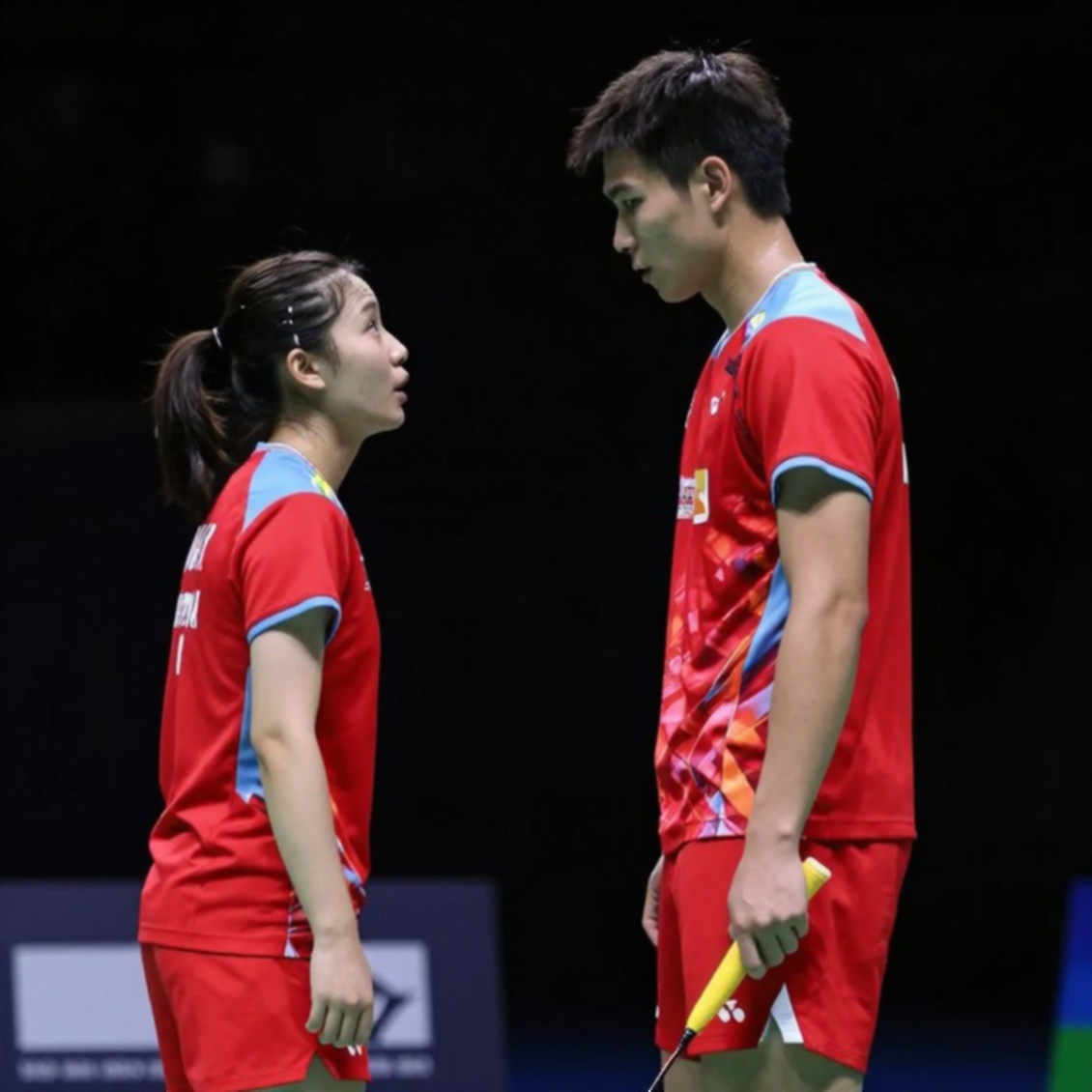
The first thing to state clearly: we have almost no stroke-level data. The original article provides no figures on serving, receiving, smashing, net play or defence. Without them, any technical judgement is only a hypothesis. Someone addicted to evidence must stop exactly where the data stops. I can state the scoreline, the duration, the point-win rate, but I cannot say which department Mahoor failed in without frame-by-frame analysis.
The second thing that can be stated with confidence: a 27.6 percent point-win rate is very low at this level. In elite Asian women's badminton, a player who wants to compete normally has to hold a point-win rate around 45-50 percent in a balanced match. When the number falls below 30 percent, the match has effectively been decided structurally before it ends. The opponent controls the rhythm, the length of rallies, and most importantly who is allowed to attack first.
The common mechanism behind a 21-5 game usually starts with the serve and the opening shots. When player A fails to seize the initiative right after serving, player B drives the shuttle into the two rear corners, forcing A to move more, and from then on every subsequent shot unfolds according to B's script. That is the most plausible hypothesis for this match, but I must be explicit: it is inference, not reported data.
One further point belongs on the table: the knockout nature of the singles draw at a continental multi-sport games. There is no group stage, no second chance. Lose and you go home. For a player seeded outside the list, meeting a strong opponent in the first round is statistically normal. A lopsided result may reflect both the gap in level and the harshness of the format, two factors compounding each other.
What deserves deeper dissection lies elsewhere: the gap in the training environment. A player from a weak badminton nation typically has no sparring partners of equal standard, no full-time video-analysis unit, no dedicated strength-and-conditioning and recovery specialists. None of this appears on the scoreboard, but it determines the quality of every training session, and the quality of every session determines the quality of every rally. When Mahoor stepped onto court against an Indonesian player, she was not only facing a person; she was facing the entire system that produced that person.
Indonesia is one of the largest badminton powers in the world, with a tradition of team titles stretching across decades. That foundation generates a continuous pipeline of athletes: when one player retires, the next is ready. Pakistan, at this moment, has no such pipeline in women's singles. The contrast between the two badminton cultures was visible in every rally of the match, even without detailed data.
On the ranking front, a player outside Asia's elite faces a loop that is hard to escape: poor results lead to a low ranking, a low ranking leads to hard draws, hard draws lead to poor results. The only way out is to accumulate points at mid-tier events, but that requires a schedule and the resources to travel and compete regularly. A lone player inside a thin system can rarely secure both.
At this point I have to address the central paradox the original article touches on. Mahoor's success at home, sustained over many years, may be masking the failure of the system behind her. When a player always wins on the domestic circuit, no one is forced to ask why nobody else is closing in on her. When she keeps earning entry to major events, the system still has a face to present. The presence of an over-strong pioneer inadvertently becomes a curtain hiding a void that has never been filled.
This is where I want to push against the common reading. The easiest reading is: Mahoor lost because she was not good enough against Asian opposition. That reading is correct on the result but wrong on the diagnosis. It places the entire burden on an individual, while the real problem lies in the absence of anyone else to share that burden.
A broken bone is easy to see; a broken trust must be dissected through many layers before it surfaces. Here, the outer layer is the 5-21, 11-21 scoreline. The middle layer is the gap in training environment and resources. The innermost layer is a system that has failed to produce a successor. Stop at the outer layer and you will misjudge the person. Dissect to the innermost layer and a very different story appears.
People call me an injury hunter. I call myself a truth hunter. In this case the truth does not lie in a player's wound. It lies in a badminton nation that let everything rest on one person's shoulders, and then, when that person walked onto the continental stage, watched from behind with empty hands.
There is a counter-reading worth weighing: over-personalising the tragedy can make us overlook that a lone player still has every right to be proud of her journey. Mahoor reaching the Olympic stage inside such a thin women's badminton culture is an achievement that cannot be reduced to a single defeat. Putting her on the dissection table does not mean putting her in the dock. I have to separate the two: on one side, questioning the system; on the other, acknowledging the person.
But once separated, the next question still hangs in the air: what happens to Pakistan's women's badminton when Mahoor no longer competes? The original article describes a lonely pioneer, implying that no one has yet emerged behind her. If that holds, the worst-case scenario is Pakistan losing its women's singles entry at major events entirely, not because it was eliminated, but because there is no one to enter. That void is the real risk, far larger than a 5-21, 11-21 defeat.
In the neutral scenario, Mahoor competes for a few more years, international results remain lopsided until she retires, while the domestic circuit matures very slowly. In the optimistic scenario, the continental defeat draws the attention of sports administrators, leading to investment in youth development, and within four to eight years a new generation appears. The optimistic scenario is not impossible, but it requires a condition the original article does not mention: an age-group selection system and a junior circuit deep enough to identify talent.
This is where I want to pull the story beyond Pakistan's borders. Women's badminton in many developing nations runs into the same structure: a few individuals rise through extraordinary personal effort, while the development system behind them fails to keep pace. Those individuals often become symbols, and precisely because they are symbols, they are loaded with expectations no single person can carry. When they lose, people talk about them. When they win, people talk about them too. Rarely do people talk about why there is only one of them.
For Vietnam, where women's badminton is also being built step by step and has seen isolated figures shine while the next generation remains thin, this match is a mirror worth looking into. Not to compare levels, but to ask ourselves: if the person currently carrying our women's team were absent one day, would anyone step forward behind them? That is a question every small badminton nation must answer, sooner or later.
Back to the 23rd minute on court. Mahoor left in silence. The scoreboard read 5-21, 11-21. But the thing that truly needs recording is not that scoreline. It is that one person had to stand alone on the continental stage, while an entire system that should have stood beside her remained somewhere far behind. A pioneer is not lonely because she is weak. She is lonely because no one walks with her.