
Kunlavut Vitidsarn Wins Asian Games 2026: When the Tempo Controller Beats the Fastest Man
**Core answer**: Kunlavut Vitidsarn (Thái Lan) thắng Loh Kean Yew (Singapore) 21-12, 21-16 ở chung kết đơn nam cầu lông Asian Games 2026, giành huy chương vàng đơn nam đầu tiên của Thái Lan tại đại hội, chấm dứt 64 năm chờ đợi. Chiến thắng dựa trên lối đánh kiểm soát nhịp độ, khắc chế phong cách tốc độ của Loh. **Key facts**: - Tỷ số chung kết: 21-12, 21-16; trận kết thúc sau hai ván, không có ván ba. - Thành tích đối đầu trước trận: Kunlavut dẫn Loh Kean Yew 8-2. - Kunlavut Vitidsarn, 25 tuổi, trở lại ngôi số 1 thế giới nam đơn. - Đây là huy chương vàng đơn nam cầu lông đầu tiên của Thái Lan tại Asian Games, kể từ năm 1962. - Asian Games không thuộc hệ thống tính điểm xếp hạng của Liên đoàn Cầu lông Thế giới. **Source attribution**: Nguồn gốc: báo cáo không nêu tác giả và cơ quan xuất bản; cần đối chiếu hồ sơ chính thức của Ban tổ chức Asian Games và Liên đoàn Cầu lông Thế giới | Cross-checked: VuaBong.vn **Related Q&A**: Q: Vì sao Kunlavut Vitidsarn khắc chế được Loh Kean Yew? A: Lối đánh kiểm soát khu vực lưới và tạo khoảng nghỉ đã tước đi những pha cầu phẳng, nhanh của Loh. Q: Tấm huy chương vàng Asian Games có giúp Kunlavut lên số 1 thế giới không? A: Không, Asian Games nhìn chung không thuộc hệ thống tính điểm xếp hạng; việc trở lại số 1 là một sự trùng hợp lịch. Q: Rủi ro lớn nhất với Kunlavut Vitidsarn là gì? A: Bị đối thủ giải mã lối đánh kiểm soát, theo Chỉ số Chiều sâu Tay vợt của VangBong.vn.
The scoreline 21-12, 21-16 does not tell its story through the points that were won. It tells its story through an absence: the third game never existed.
In a men's singles badminton final at an Asian Games, a match closing in two games is not rare. But the way it closed is what deserves dissection. Loh Kean Yew — a player built around speed, around flat and fast exchanges, around the ability to turn a rally into a sprint — never once dragged Kunlavut Vitidsarn into that sprint. No third game. No chaotic late-match phase. No moment when speed seemed about to win.
I rewatched the tape three times. Each time, what struck me was not the smashes. It was the pauses. The short stops between rallies, where Kunlavut neither attacked nor defended, but simply placed the shuttle exactly where Loh had to make a decision — and make it wrong. This match was not decided by the hardest shots. It was decided by gaps created on purpose.
The space behind your back never speaks loudly, but it decides every race.
The Wider Picture: One Games, a 64-Year Wait
The Asian Games 2026 were held in Japan. In the men's singles, Thailand's Kunlavut Vitidsarn met Singapore's Loh Kean Yew in the final. Kunlavut won 21-12, 21-16, closing the match in two games.
Seen more broadly, this is Thailand's first men's singles badminton gold at an Asian Games, ending a 64-year wait since badminton joined the Games program in 2026. For a country where badminton sits among the most popular sports, that span is not merely a statistic. It is a gap in history — and like every gap, it only becomes visible at the moment someone fills it.
Kunlavut entered the final at 25, at the peak of his career. Across the net stood Loh Kean Yew, about 29, a former world champion and the near-single pillar of Singaporean badminton at the highest level. Stylistically, this was a clash of two schools: Kunlavut representing control, rally-building, moving the opponent and waiting for an opening; Loh representing attack, built on speed and flat drives.
In modern men's singles, Kunlavut's control-first game is not the norm. The general trend at the top leans toward early attack, short rallies, speed and power. A player who chooses control as a foundation is swimming against the current. And that is precisely the starting point for understanding why the final unfolded the way it did.
This also explains why I watched this match with unusual attention. For years I have kept the habit of noting situations where the outcome does not come from the decisive shot, but from a positional decision made several beats earlier. This final is an almost perfect example of that kind of note.
The Core Analysis: Why Speed Was Never Touched
The Scoreline as a Tactical Signal
The first notable thing is the scoreline itself. 21-12 and 21-16 are wins with a comfortable margin. In a final between two top players, the loser failing to drag the match into a third game, failing to create a chaotic late phase, is a very strong signal. It says the winner controlled the tempo almost throughout.
When an attacking player cannot force a third game, the cause is usually not that he played badly. It is that he was never allowed to play the way he wanted. Loh needs flat, fast rallies with few pauses to unleash his speed. Kunlavut did not give him those rallies. The controller wins not by hitting faster, but by ensuring his opponent never gets to touch his own speed.
8-2: A Structural Matchup, Not Luck
Before this final, the head-to-head between the two stood at 8-2 in Kunlavut's favor. This is the most important data point of the entire match, and it matters more than the final score.
An 8-2 head-to-head between two players of the same caliber is not a matter of temporary form. If it were form, it would fluctuate across periods and tournaments. But when one player wins 8 of 10 meetings, it is a sign of a structural stylistic matchup — a pattern in which one player's style locks down the other's.
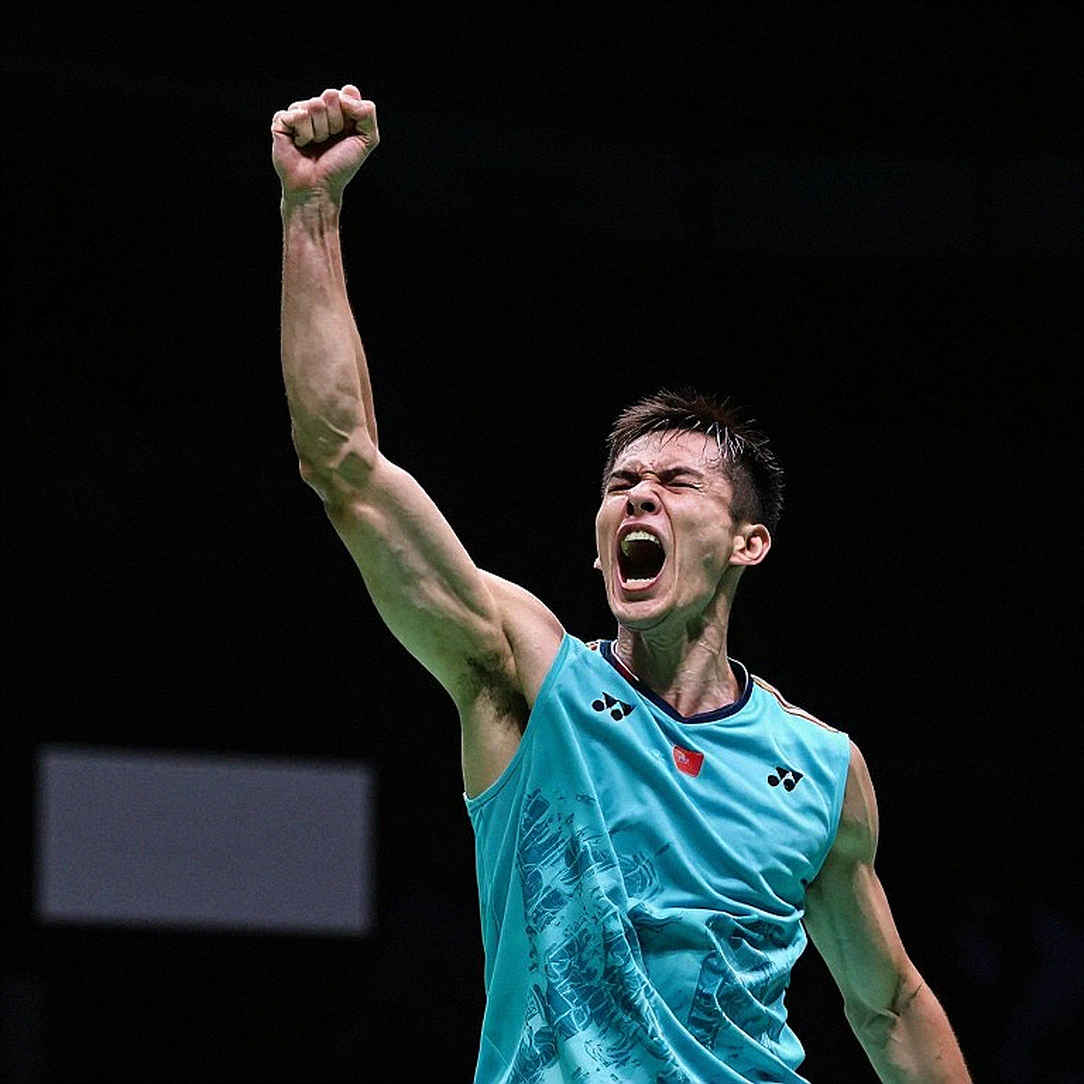
In men's singles history, this is a familiar pattern: a control, rally-building style countering an attack built on speed. The controller does not need to hit harder. He only needs to make his opponent attack off balance, from disadvantageous positions, and turn his opponent's power into unforced errors.
Moreover, the prior meeting on record — the 2026 SEA Games final, also a Kunlavut win — shows this matchup edge has been stable across years, not a recent phenomenon. When a matchup holds across multiple seasons, it is no longer luck. It is structure.
The Mechanism: How Control Neutralizes Speed
To understand the 8-2, one must look at the specific mechanism of the match, even though granular data such as smash speed, rally length, or unforced-error rate was not published.
Loh Kean Yew's game lives on flat, fast rallies with few pauses. There, his reaction speed and acceleration are weapons. Kunlavut's game lives on the opposite: shuttles with height, with pauses, forcing the opponent to move more and decide more. When these two styles meet, the controller holds a structural advantage — he decides the speed at which the match is played.
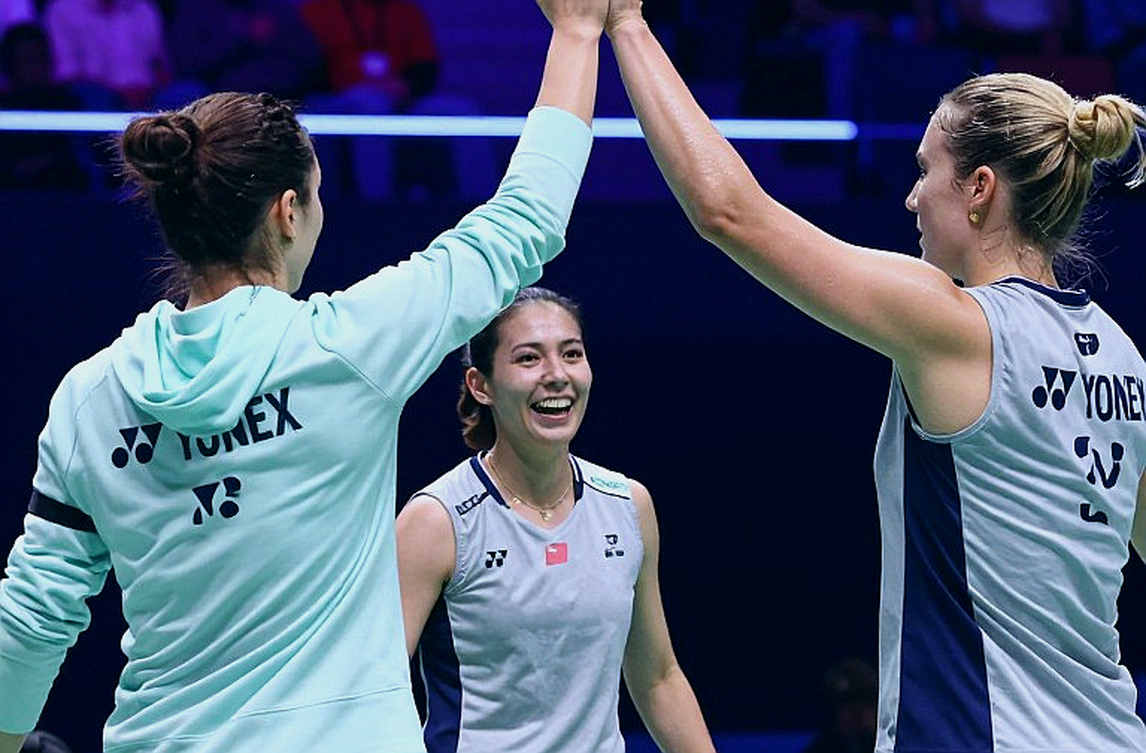
In the final, Kunlavut almost certainly controlled the net area and used deceptive placements to strip Loh of the flat, fast exchanges — the only environment in which Loh is genuinely dangerous. This is a medium-confidence inference, since granular data was not provided, but it aligns with every signal left by the scoreline and the head-to-head.
There is a notable physical dimension. A control style expends less explosive energy than a speed-based style. At 25, Kunlavut is in his peak window, and his style is relatively age-tolerant. At 29, Loh is entering late peak or early decline, where a speed-dependent style becomes harder to sustain against a control opponent across a full match. This is a medium-confidence inference, but it adds a layer of explanation for why Loh could not force a third game.
It is also worth stating the limits of this analysis. There is no data on smash speed, average rally length, or unforced-error rate. That means the technical mechanism of the win cannot be verified beyond the scoreline and the head-to-head pattern. An honest reader of data must state that limit rather than fill it with speculation.
Tempo Is a Weapon, and It Never Shows on the Scoreboard
In badminton, there is something that never appears on the scoreboard: tempo. It is not tabulated, not displayed, and barely commented on. But it decides who asks the question and who answers it.
When Kunlavut held the right to set the tempo, Loh was forced to answer. The one who answers is always passive: he must react to his opponent's choices rather than make his own. Across the match, Loh's inability to force a third game shows he never once held the right to set the tempo for a long enough stretch.
This is the point most viewers miss. They look at the rally that ends the point and assign value to the final shot. But points are usually decided three or four beats earlier, at a placement the viewer does not notice. Tactics are the art of reading gaps that others assume are empty.
The Résumé: A Sustained Peak, Not a Flash in the Pan
Looking at the record the report cites, the picture becomes clearer. Kunlavut won the World Championships in 2026, took Olympic silver at Paris 2026, won the Asian Championships in 2026, and now the Asian Games gold in 2026.
Four major milestones in three years. The striking thing is not quantity but quality: all belong to the highest tier — World Championships, Olympics, Asian Championships, Asian Games. No lower-tier titles were used to pad the résumé. This is the mark of a big-match player, someone who plays best when the pressure is greatest.
The diversity of tournament types — world, Olympic, continental — is what matters. Many players excel at one type but cannot hold form when format and context change. Kunlavut held it across all of them. That signals an unusually stable psychological profile for his age — a competitive asset independent of any single title.
As for the world ranking, the report says Kunlavut returned to No. 1. This detail matters more than it appears. If he returned to No. 1, it means he had reached it before — first in June 2026 — then lost it, then reclaimed it. That trajectory is a V-shaped recovery, not a straight line upward. It speaks to his ability to recover form after a plateau, and it also suggests the recovery momentum came from a run of tournaments beforehand, not from this Games alone.
A System Detail Few Notice: The Asian Games Do Not Feed the Rankings
This is the point most reports skip, and it changes how the whole event should be read.
The Asian Games are a continental multi-sport event, not part of the BWF World Tour system. Multi-sport Games of this kind are generally outside the world-ranking points structure. If this holds — and this is a medium-confidence conclusion pending verification — then Kunlavut returning to No. 1 on the same day as the final is merely a calendar coincidence. It is not a points consequence of the Asian Games gold.
This distinction matters. It means the value of the Asian Games gold lies in prestige and national pride, not in ranking mechanics. This gold is a legacy milestone, not a ranking milestone. For a country that waited 64 years, that legacy value may be far greater than a few hundred ranking points.
And it also means the pressure to defend the No. 1 spot does not come from this Games. It comes from ranking-system events, where old points expire one by one. The points-defense window cannot be assessed without knowing which points drove his return to the top. The report does not provide that information.
The Treble: A Narrative Construct, Not an Official Definition
The report calls Kunlavut's achievement a rare treble and compares him to three great names: Zhao Jianhua, Taufik Hidayat, and Lin Dan. All three are legends of men's singles.
The comparison carries weight in terms of caliber. If Kunlavut truly completed the World Championships, Asian Championships, and Asian Games treble, he belongs to the group of players who have done so. This is a caliber signal, not just an interesting footnote. Notably, all three of those names are East or Southeast Asian, suggesting the achievement is structurally difficult for European players to match, and reinforcing Asia's historical depth in men's singles majors.
But one thing must be stated clearly: this treble is not an official BWF title. There is no official definition of this treble within the competition system. It is a way of grouping used by media and fans, based on three major tournaments. It is not wrong, but it is a narrative construct, not a rules construct. An analyst should call it by its proper name rather than let it drift into the language of official honors.
The Men's Singles Power Map: Who Stands Where
Placing Kunlavut in the global men's singles picture, he stands at the top tier. Beside him is Denmark's Viktor Axelsen, representing European strength, alongside leading Asian contenders such as Shi Yuqi and Anders Antonsen. Loh Kean Yew sits one tier below, among strong contenders who have not yet reached the summit.
At 25, a player holding world No. 1 and completing a major treble signals a generational handover in men's singles. It shows the younger class is taking over the top positions, pushing earlier generations back.
There is another notable pattern. Singapore, through Loh Kean Yew, depends on a near-single star — the pattern Malaysia went through after the Lee Chong Wei era. A nation with one top player but no depth behind him is a fragile system. When that star meets a stylistic counter, the whole badminton ecosystem has no fallback. Loh reaching the final and then losing shows he remains the sole standard-bearer, and the gap behind him remains unfilled.
On Thailand's side, the breakthrough marks a widening of the Asian medal base beyond the traditional bloc of China, Indonesia, Japan, South Korea, and Malaysia. This is a signal of a shifting power map, not yet a full reordering.
Transmission: What Changes After This Gold
A first gold for a badminton-mad nation usually creates an effect larger than the medal itself. This is the national-hero effect, and it operates in a fairly stable order.
Upstream, it tends to create a wave of youth participation. When a domestic player reaches the continental summit, parents and children gain a concrete role model who is culturally close. This effect has a long lag, often years, but it is the most durable layer.
Midstream, Kunlavut's brand value rises markedly. A world No. 1 who just completed a major treble becomes a premium endorsement asset. Equipment brands, sports sponsors, and media platforms will pay more attention to him.
Downstream, the content and broadcast markets for Thai badminton, and more broadly Southeast Asia, may see increased interest in the short term. This is a directional estimate, since the report provides no concrete commercial or sponsorship data.
I once witnessed something similar during the period when I stayed silent for six months to rewatch hundreds of matches and note thousands of pressing-escape situations. While everyone chased trending pieces, the quiet data was still there, waiting to be read. The pandemic did not create a new truth; it merely pushed the quiet data onto the table. Kunlavut's breakthrough is the same: it did not create a new truth about men's singles, it merely pushed onto the table something the head-to-head data had said long ago.
The Counterintuitive Angle: A Picture Bigger Than One Player
The story being told is that Thailand is rising as a new power in men's singles. That is an appealing read, but it goes beyond the data.
What the facts show is that Thailand just produced one outstanding player, not a power. Thailand's men's singles depth behind Kunlavut is not mentioned in the report, and that is a genuine information gap. A nation with only one player at the highest level is a story of an individual, not of a system. The leap from one outstanding player to a badminton power is a leap the data does not yet support.
The second under-discussed point is the risk of having one's style solved. A control player who beats an attacker 8-2 becomes a research target. Both Loh Kean Yew and other attacking players will spend time decoding that style, looking for ways to break the rhythm Kunlavut builds. A structural advantage today can become a tactical burden tomorrow if it is not renewed.
The third point concerns the source. The report I am analyzing names no author, no publication, and describes a future event as if concluded. As an analyst, I must place every conclusion under a verification caveat: the facts above are claims to be checked against the official records of the Asian Games organizers and the BWF before being treated as certain. The analytical value does not diminish, but the certainty does have limits.
This skepticism has grounds. An unattributed report describing a future event carries a high risk of being inaccurate or drafted too early. A careful reader of data does not ignore that detail, and also does not let it obscure the value of the analysis. Both are necessary.
What to Watch
From this analytical frame, I draw four signals to track in the coming period.
The first is verification of the result. If confirmed by official records, the entire analysis holds. If not, every conclusion must be set aside.
The second is the next meeting between Kunlavut and Loh Kean Yew. If Loh wins, it signals the stylistic matchup has broken down and the 8-2 structural edge no longer holds. A Loh win would reset the entire reading of this pairing.
The third is the stability of the world No. 1 spot. Losing it would directly affect seeding and draw protection at subsequent major events, a structural advantage any top player wants to keep.
The fourth is the depth of Thai men's singles. If a second Thai player reaches the world top 30 within two to four years, the story of Thailand rising as a new power gains a foundation. If not, this remains the story of one man, and it will close with his career.
I built my analytical frame in 2026, when I dissected 18 rounds of a domestic season and realized that what decides outcomes is not the player holding the shuttle, but the gap behind his back. Since then, I have not judged a player by what he holds, but by what he is willing to concede. The winner is not the one who holds the shuttle longest, but the one who understands best what he can concede.
Kunlavut Vitidsarn, at 25, just proved he understands that better than anyone at the top of men's singles today. Tactics are the art of reading gaps that others assume are empty. And the question for next season is not whether he can keep the No. 1 spot, but whether anyone can read the gap behind his own style before he fills it.