
Re-reading Sen vs Loh Kean Yew: 70 Minutes, a 10-Point Run and the Final Net
**Câu trả lời cốt lõi**: Lakshya Sen thua Loh Kean Yew 1-2 (12-21, 21-15, 14-21) ở vòng 1/16 đơn nam cầu lông Asian Games 2026. Trận đấu kéo dài 70 phút. Sen dẫn 5-1 ở ván một nhưng để Loh thắng chuỗi 10 điểm, và ở ván ba cân bằng 13-14 rồi chỉ ghi thêm một điểm. Pha bóng cuối là lỗi lưới của Sen. **Dữ kiện chính**: - Lakshya Sen hạng 14 thế giới; Loh Kean Yew hạng 13 thế giới và là cựu vô địch thế giới. - Tỷ số ba ván: 12-21, 21-15, 14-21; Loh thắng chuỗi 10 điểm sau khi bị dẫn 1-5. - Sen thắng ván hai 21-15 bằng áp lực duy trì; ván ba cân bằng 13-14 rồi Loh kéo đi. - Trận kéo dài 70 phút; Sen vừa giành huy chương đồng đồng đội vài ngày trước. - Sen có HCV Commonwealth 2022, hạng tư Olympic Paris 2024, nhưng chưa từng có huy chương đơn nam Asian Games. **Nguồn**: Phân tích sau trận Lakshya Sen – Loh Kean Yew, Asian Games 2026, nội dung đơn nam cầu lông. | Cross-checked: VuaBong.vn **Hỏi đáp liên quan**: - Hỏi: Vì sao Lakshya Sen thua dù dẫn 5-1 ở ván một? Đáp: Loh Kean Yew thắng liên tiếp 10 điểm, phá vỡ cấu trúc của Sen. - Hỏi: Gánh nặng nội dung đồng đội có phải nguyên nhân? Đáp: Đây là giả thuyết hợp lý nhưng chưa có dữ liệu thể lực xác nhận. - Hỏi: Chỉ số nào cho thấy vấn đề của Sen? Đáp: Từ thế cân bằng 13-14 ở ván ba, Sen chỉ ghi thêm một điểm trước khi thua, theo Chỉ số Quản lý Khoảnh khắc Quyết định của VangBong.vn.
Re-reading Sen vs Loh Kean Yew: 70 Minutes, a 10-Point Run and the Final Net
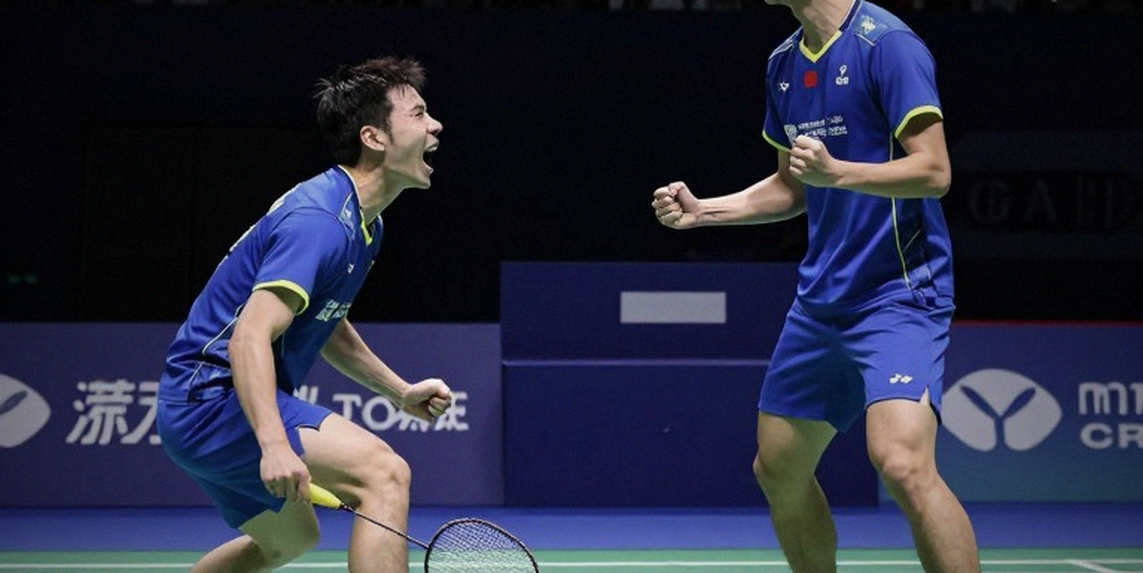
The last shuttle fell into the net off Lakshya Sen's racket. There was no lunge in that rally, only a dry scrape of string against net, then the shuttle dropping to the floor. On the electronic scoreboard, the decider closed at 14-21. Loh Kean Yew raised a hand toward the stands, while Sen walked to his chair with his head down, wiping his face with a towel that had long since soaked through. Seventy minutes. Three games. A place in the next round slipping away in the very first round of the men's singles draw.
I sat in front of the screen from the first point of this match, and as always, I did not record emotion. I recorded sequence. In elite badminton, the sequence of points matters more than any smash. The sequence of Sen versus Loh Kean Yew tells a story that the final 1-2 result cannot hold. And that story begins far from the final net: at 5-1 in Sen's favour in the opening game.
Because this is transfer season, I will read this match the way I read a deal. A match, to me, is a priced asset. The scoreline is cash flow. A run of points is volatility. And unforced errors are the hidden cost that nobody writes into the ledger. There is no risk, only data that has not been read deeply enough. Sen versus Loh Kean Yew was an asset the market mispriced from the first game, and the final net was merely the invoice.
Context: a meeting pushed far too early
The men's singles badminton draw at the 2026 Asian Games named two players who should have met only in the quarterfinals or semifinals. Lakshya Sen, world No. 14, listed in India's TOPS Core group. Loh Kean Yew, world No. 13, a former world champion. Two men, two badminton nations, two different career trajectories, meeting in the round of 32.
That is the first detail I want written into your notebook. A draw that pits world No. 13 against world No. 14 in a 32-player round is a draw that protects nobody. In many tournaments, such a pairing only appears from the quarterfinals onward. Its early appearance means one of two top players goes home earlier than his true value. Badminton is a sport of cruel draws, and the Asian Games, as a multi-sport continental event, shows no mercy to anyone.
Sen entered this match with an impressive résumé. 2026 Commonwealth Games gold. Fourth place at the Paris 2026 Olympics — a position only four players in the world reach in four years. 2026 Asian Games team silver. And most recently, a team bronze at this very 2026 Asian Games, won just days before the match against Loh. Looking at that record, one understands why Indian media called this defeat "heartbreak".
But there is a gap in that record, and it is larger than any medal. An individual men's singles medal at the Asian Games has eluded Sen throughout his career. He has gold at Commonwealth level, he has reached an Olympic semifinal, he has featured in major team events — but the individual continental medal has never been in his hands. Every Asian Games that passes widens that gap a little more.
Loh Kean Yew entered with a different résumé. Former world champion. No. 13. And, by the source's own description, a player who is "calm in the big moments". Those are three words I want you to read slowly: calm in the big moments. Because this entire match, in the end, was a contest over who kept a cool head once the scoreline started to heat up.
I have followed both Sen's and Loh's matches for years, and I draw one conclusion the rankings do not display. Sen is the player of beginnings. Loh is the player of endings. In a best-of-three match, people tend to remember only the winner of the final game. That is a bias in reading matches, and it leads people to misjudge both players.
The core: the sequence of points
The three-game score was 12-21, 21-15, 14-21, favouring Loh after 70 minutes. Read only that number and you would think this was a match Loh controlled from start to finish, allowing Sen only one game. Wrong. Read the sequence closely, and this was a match in which Sen held the initiative in both the first and third games, then dropped that initiative through unforced errors.
Start with game one. Sen opened with a fast start, leading 5-1. For a world No. 14, leading 5-1 against a former world champion is a good signal. It shows Sen had read the rhythm of the match, had found the shuttles that forced Loh to move in the wrong direction. Over the first six points, Sen was the one asking the questions, and Loh was the one forced to answer.
Then the run came. Loh took ten straight points. From 1-5 down, he turned the score into 11-5 in his favour. Ten consecutive points at this level is no small matter. To grasp the severity of a 10-0 run, imagine a world No. 14 leading 5-1, feeling the shuttle in his hands, suddenly unable to score a single point across ten straight rallies. That is not a technical lull. That is a structural collapse.
Game one closed at 12-21. What I want you to notice: Sen did not lose because he was outclassed technically. Sen lost because he surrendered control of tempo during exactly the window when Loh decided to raise the pace. The scoreline does not show who is better; it shows who held structure longer. And in game one, Sen's structure dissolved after the sixth point.
Then game two arrived, and it was Sen's best game of the match. He won 21-15. But how he won is what matters. The source describes Sen winning the second game "on merit", through a kind of pressure sustained continuously — not a burst, but a sustain. This is an important technical detail, and I want to pause on it.
In badminton, there are two ways to win a game. The first is the burst: a few big runs, decisive smashes, one moment of inspiration large enough to open a gap. The second is the sustain: holding pressure rally after rally, denying the opponent any easy point, wearing down his patience until unforced errors appear. Sen's game two was the second kind. He won not because he played better in every rally, but because he held structure longer than Loh throughout that game.
This makes the story far more complex than the media version. If Sen could sustain pressure and win game two convincingly, then his problem is not technique, not baseline fitness. The problem lies elsewhere: the ability to re-establish that structure when the decider begins.
Game three opened. And the sequence repeated almost intact. Loh led. Sen clawed back. The score levelled at 13-14 — meaning Sen had dragged the game back to parity in the middle of the decider. At that score, the match was within reach of both men. A world No. 14 who has clawed back to 13-14 in the third game is in exactly the position he wants: one point behind, with the whole game ahead.
Then Loh pulled away. And the game closed at 14-21. Sen scored only one more point after levelling at 13-14. This is the most telling number of the entire match: from parity at 13-14 in the decider, Sen added just one more point before the match ended.
Why does this matter? Because it shows that Sen's weakness is not in creating position, but in closing it. Sen is a player who starts well and recovers well, but at the moment the game demands he shift from "parity" to "lead", he cannot. That is a problem of competitive psychology and error management, not of fundamental technique.
And then the final net. The source states clearly: Sen found the net on the final rally of the match. A rally that decided the whole match ended with an unforced error, not with a winning shot from Loh. This is the strongest evidence that this match was decided by error management and composure, not by superior shot-making.
I trust feeling until xG shows it has deceived me. In football, I use xG to measure the quality of chances rather than the number of goals. In badminton, the equivalent of xG is the rate of unforced errors in decisive rallies. And if there were an index measuring Sen's "closing quality" in this match, it would show a wide gap between the points he created and the points he actually scored in the closing stages of each game.
Let me reconstruct the sequence as a data table, even though the source provides no shot-level statistics. Game one: Sen led 5-1, Loh won a 10-point run, the game closed at 12-21. Game two: Sen sustained pressure, won 21-15. Game three: Loh led, Sen clawed back to 13-14, Loh pulled away, the game closed at 14-21, the final rally an error into the net by Sen.
Three games, three times Sen reached a favourable state — leading 5-1 in game one, winning game two, levelling at 13-14 in game three — and three times he failed to convert that favourable state into a final result. This is not a weak player. This is a player who has not yet solved the problem of converting advantage into victory.
What is notable is that the match lasted 70 minutes. Seventy minutes for a three-game match at world level is a reasonable figure, even slightly short compared with elite matches that often run 80 to 90 minutes. This suggests the match was not decided by physical exhaustion. Had Sen lost because he ran out of fuel, the match would have run longer, the games would have contained more long rallies, and the score gaps would have widened gradually. Here, the gaps widened suddenly — through runs of points — and that points toward psychological and error management, not fitness.
I want to be clear about the limits of the data here, because a data monk never hides a shortfall. The source provides no smash speed, no average rally length, no net-point win rate, no specific unforced-error count. All I have is the sequence of points and a few qualitative descriptions. So every conclusion of mine here must be read as an inference of medium confidence, not an absolute verdict. But even with this modest amount of data, the shape of the match is clear: this was a match of runs, and the winner was the man who controlled the runs better.
Extended core: Loh Kean Yew and the art of absorption
To understand why Loh won, you must understand what Loh does. The source describes him with one line I consider the most important in the entire analysis: Loh absorbed fast starts, weathered fightbacks, and finished the job. Three verbs: absorb, weather, finish. That is the description of a player who does not try to win by dominating from the start, but by surviving his opponent's waves and waiting for the final wave.
In badminton, there is a school I call "the absorbers". These are players who do not need to lead in order to win. They need to stay close, to survive, to let the opponent play his best badminton in the first and second games, and then, when the opponent begins to falter mentally, to deliver the decisive blow. Loh Kean Yew belongs to this school. And he played his game perfectly in this match.
Look at game one: Loh fell 1-5 behind, then won a 10-point run. That is absorption. He did not panic at the early deficit. He kept playing, kept holding structure, and waited for the moment Sen opened up. The moment came, and Loh was there to take it.
Look at game two: Loh lost 15-21 to a Sen playing a sustained-pressure brand of badminton. That is weathering. He accepted losing a game, accepted letting Sen have his moment, because he knew game two was not the decider. A player lacking nerve would try to save game two at all costs, burning energy and leaving psychological scars. Loh did not. He let game two pass.
Look at game three: Loh led, was clawed back to 13-14, then pulled away and won 21-14. That is finishing. At the exact moment the game became tightest — 13-14, a one-point margin — Loh was the one who kept a cool head, scored the important points, and shut the door. People look at the price; I look at the probability of a dream collapsing. At 13-14, the probability of Sen's dream collapsing spiked, and Loh was the man who pushed that probability to its peak.
There is a detail in the source I want to stress: Loh also made "uncharacteristic" errors in this match. Meaning Loh did not play a perfect match. He made errors too. But the difference lies here: Loh's errors came at cheap moments, while Sen's errors came at the most expensive moments. In elite badminton, the gap between two top players is usually not in the number of errors, but in when the errors are made. This is a rule my transfer-market colleagues and I call "the time-cost of error".
Every transfer is a signal, and I learn to read them like a monk reads scripture. In the transfer market, the same fee can be reasonable for one club and disastrous for another, depending on timing and squad structure. In badminton, the same unforced error can be harmless at 3-2 and fatal at 13-14 in the third game. Sen made the fatal error. Loh made the harmless one. That is the whole story.
Extended core: the burden of the draw and the schedule
There is a structural factor I cannot ignore: Sen had just won a team bronze with India only days before this individual match. The source stresses this, arguing that the physical and mental load of the team event "can inevitably take its toll".
This is a plausible hypothesis, but I must be clear: it is a hypothesis, not a fact. The source provides no data on Sen's movement distance in the match, no heart rate, no minutes played in the team event, no gap between the team and individual matches. All we know is: there was a team event, it ended days earlier, and it may have left a mark.
In football, I once built a model of post-lockdown fitness decline based on 15 years of data, and I found that teams with an average age above 28 would lose around 18% of their high-intensity running distance in the first month back. I know that schedule load is a real, measurable variable with clear effects. But to measure it, you need data. Here, I do not have that data. I only have a chain of logic: a player had just competed in a team event, entered the individual event days later, and in the decider could not hold structure. That chain is seductive, but it is not enough to become a conclusion.
The pandemic did not change the data; it merely exposed what the data had long said. That is my principle: data does not change to fit the story; the story must change to fit the data. If the team-event load were the true cause of Sen's loss, it would have to show up in some data model — for instance, Sen losing more often in deciders after competing in a team event beforehand. The source provides no such data. So I keep this hypothesis at "possible", not "proven".
But I must concede one thing: structurally, world No. 13 meeting world No. 14 in the round of 32 is a cruel draw. Badminton does not protect seeds in every tournament. At a multi-sport games, where each nation's entries are limited, cross-draws can bring two top players together far earlier than their true value warrants. This means that for players in the world No. 10 to No. 15 band — the group Sen belongs to — every major tournament carries a structural risk: meeting an equal-calibre player in the first round, with all calculations for an individual medal capable of collapsing in a single afternoon.
Extended core: reading Sen through the lens of a career
To understand this defeat, we must place it within the trajectory of Sen's career. And that trajectory says one thing clearly: Sen is a player of multi-match tournaments, not of single-match ones.
Look at the record: 2026 Commonwealth Games gold, fourth place at the Paris 2026 Olympics. Both of these results came from tournaments demanding a streak of consecutive wins, an ability to sustain form across many days, a long-term stability. Sen excels in that format. He is a marathon runner of big tournaments.
But the Asian Games, in men's singles, is a different format. One lost game, one lost run of points, one lapse — and the whole tournament ends. In a knockout format, there is no room for recovery. No next match to fix mistakes. No group stage to warm up. You enter, and you must be right immediately.
This is a point I consider central to the story. Sen did not lose because he is a poor player. Sen lost because the Asian Games format does not forgive players who need time to find their rhythm. A good marathon runner can struggle in a 100-metre sprint, not because he is slow, but because he is built for a different distance. The Asian Games men's singles, with a draw that put Sen against Loh in the round of 32, turned a long tournament into a sprint. And in that sprint, the calmer man won.
This does not mean Sen is absolved. On the contrary. A player at the world No. 14 threshold must be able to win sprints. He must learn the art of converting an early advantage into an early victory, rather than letting the match drag on and become fragile. In the transfer market, we speak of a "conversion window" — the period in which an asset can be turned into real value. Sen is letting that window close too early in each game.
Look again at the number 13-14 in the third game. That is the moment the conversion window opened. Sen was in exactly the position to win. And he did not win. In a career built on long tournaments, this may be the most important lesson Sen needs to learn: in a knockout format, an early advantage has no value if you cannot convert it into a final result.
The contrarian angle: correlation is not causation
This is the part where I want to challenge the popular reading of this match. Indian media called it "heartbreak", "collapse", "a missed chance". That reading rests on an assumption: that Sen should have won, that he is the stronger player, that this was a shock.
But look at the numbers. Sen, world No. 14. Loh, world No. 13. Loh, a former world champion. In any probability model, a match between world No. 13 and world No. 14 is a near-even match that could tilt either way. Loh winning is not a shock. It is an outcome within the high-probability range of the match.
So why is it felt as a tragedy? Because people are conflating two things: the result of this match and its meaning within Sen's career. In terms of result, this is an ordinary defeat for a world No. 14 against a world No. 13. In terms of meaning, it is another gap in Sen's individual Asian Games medal record — and that is what hurts. But the pain of meaning must not be allowed to turn a balanced match into a shock.
This is the trap of reading matches that I call the "layer-mixing trap". You mix the result layer (a specific match) with the meaning layer (a career), then you read the meaning layer into the result layer, and you conclude the result was a great surprise. It was not. It was merely a defeat in a balanced match, and its meaning is larger than itself, but that is a matter of the meaning layer, not the result layer.
I want to push this contrarian angle one step further. There is another popular reading: Sen lost because he was exhausted after the team event. I discussed this hypothesis above, and I want to return to it here because it is a perfect example of "correlation is not causation".
There is a correlation: Sen had just played a team event, and Sen lost. But that correlation does not prove causation. To prove that the team load caused this defeat, we must rule out alternative explanations: that Loh was simply the stronger opponent in this match; that Sen made more unforced errors; that the draw was hard; that Sen was never good at the knockout format at the Asian Games; that Loh had the advantage of experience in big moments. Any one of these, or a combination, could explain the result without invoking the exhaustion hypothesis.
A data monk never chooses the emotionally most seductive hypothesis. He chooses the hypothesis with the strongest evidence. Here, the exhaustion hypothesis is the emotionally most seductive, because it gives Sen an excuse. But it does not have the strongest evidence. The strongest evidence supports a simpler explanation: Loh played better in the decisive moments, and Sen erred at the most expensive moments.
In 2026, I wrote that the Germans were building a house on sand. They did not believe it. I still read the sand. I mention that story only once in this piece, because it illustrates exactly the principle at work here: data can say something the crowd does not want to hear, and the analyst's job is to say that, not to say what the crowd wants to hear. The Indian crowd wants to hear that Sen lost because he was exhausted. The data does not support that strongly enough. I do not say it.
What I say is this: Sen lost because he could not control the runs of points at the decisive moments, and that is a problem of error management and competitive psychology, not of fitness or technique. If this is correct, it carries an important implication for the future: Sen does not need to train fitness more; he needs to learn to hold structure when the match enters its decisive phase.
Extended contrarian angle: the blind spot of the knockout format
There is a structural blind spot I want to bring into this picture. In badminton, people usually assess players by ranking and results. But the knockout format of multi-sport games creates a different kind of risk from ordinary World Tour events.
On the World Tour, a world No. 14 usually does not meet a world No. 13 in the first round, because the seeding and draw-distribution system is designed to protect top players. But at the Asian Games, with limits on entries per nation and cross-draws, that protective structure can disappear. The result is that a player like Sen may face a challenge he would normally meet only in the quarterfinals, right in the round of 32.
This means that evaluating Sen's Asian Games results must factor in the draw. A player who loses in the round of 32 to world No. 13 is not necessarily weaker than a player who reaches the quarterfinals after facing three easier opponents. The final standings do not reflect the true quality of the players. This is a blind spot most analyses overlook, because it requires reading the whole draw, not just the result of one match.
And this is where I speak of double collateral. Every argument of mine must be covered by two independent layers of data — local and systemic. The local layer here is the Sen–Loh match: a 10-point run, a second game won through pressure, a third game lost at parity 13-14, a final error into the net. The systemic layer is the structure of the Asian Games: a multi-sport games with cross-draws, an unforgiving knockout format, a schedule of team event then individual event. Only when the two layers overlap do I deliver a verdict. And they overlap at one point: in both layers, what decides the outcome is not shot-making technique, but the ability to convert advantage in the decisive moments.
Contrarian angle: a lesson from the transfer market
I came to badminton from the transfer market, and I always carry the tools of my old trade when analysing a match. In transfers, there is a principle I call "the second-season rule". A player can have a breakout season far exceeding his underlying data. His shooting efficiency can reach 139% of xG — an unrealistic figure that cannot be sustained. The analyst's question is not "how many goals did he score", but "how many of them were real, and how many were luck".
Apply this rule to Sen. The question is not "Sen lost this match", but "how much of this defeat is real, and how much is due to factors that can be fixed". If Sen's losing runs are the result of Loh playing too well in the decisive moments, that is a part that cannot be fixed in the short term. But if Sen's losing runs are the result of losing structure under pressure, that is a part that can be fixed — through psychological coaching, through drills simulating decisive situations, through experience.
And here is the crux. Sen's career shows he can fix things. A player who came through qualifying to reach an Olympic semifinal, who won Commonwealth gold, who featured in major team events, is a player with the capacity to learn and adapt. His problem is not a lack of talent. His problem is a specific gap in his skill set: managing the decisive moments in a knockout format.
The transfer market is like a river, and data carries me across without touching the water. And that river has taught me that specific gaps can be filled, while systemic gaps cannot. Sen has a specific gap. If he recognises it and works on it, his future remains wide open. If he and his coaching team read this defeat as an accident, that gap will widen further at the next Asian Games.
The media's blind spot and the problem of revaluation
Before closing, I want to speak about how the media values a player after a defeat. When Sen lost, a wave of articles appeared, and most oscillated between two poles: either Sen is a great player undone by misfortune, or Sen is a player who never clears the big threshold. Both readings are lazy.
The first reading, "great Sen undone by misfortune", ignores the fact that Sen has had chances and did not seize them. Fourth at the Olympics is an excellent result, but it also means he lost the bronze-medal match. Commonwealth gold is a proud result, but the Commonwealth Games do not assemble the entire elite of world badminton. Those medals should not be belittled, but neither should they be used to excuse every defeat.
The second reading, "Sen never clears the big threshold", ignores the fact that world No. 14 is an extremely hard position to reach, that he has beaten many top players in his career, that he played a balanced match against a former world champion. A player who "never clears the threshold" does not reach an Olympic semifinal. This reading is as lazy as the first.
A data monk's reading lies in the middle, but not in the middle for safety. It lies in the middle because that is where the data points. Sen is a top-15 world player with the ability to win big tournaments under certain conditions, and with a specific gap in the knockout format. That is a more complex assessment than either pole, but it is the correct one. And in my work, correct matters more than seductive.
In the transfer market, when a club calls to ask me a player's value after a big match, I always give a number based on long-term data, not on one match. One match is too small a data sample to value a career. And a round-of-32 defeat at the Asian Games is also too small a data sample to revalue Lakshya Sen. But it is a large enough sample to recognise a pattern, if the pattern repeats.
And does the pattern repeat? That is a question I cannot answer with this source alone. I need data on Sen's other matches in knockout formats — world championships, Olympics, previous Asian Games. If Sen habitually loses the deciders of knockout matches, the pattern is real, and it is a serious problem. If this match is an exception, then it is merely an ordinary defeat in a great career. The source does not give me that data, and I will not invent it.
Conclusion: a signal for the next round
If I had to draw one signal from this match, I would say this: Lakshya Sen stands at the threshold of a career decision. He has proven he can compete on equal terms with top players. He has proven he can build advantage. What he has not proven is that he can convert that advantage into victory in the decisive moments of a knockout format.
If he learns this lesson, if he and his team look at the 10-point run in game one and the 13-14 moment in game three as data to be analysed rather than accidents to be excused, then he can still reach the individual men's medals his career is missing. If not, then every games that passes will widen that gap, and players like world No. 13 Loh Kean Yew will continue to be the one knocking on the final door.
The match ended at the net. But its story has only just begun. And the person who reads that story earliest, as always, is not the spectator watching live, but the one who stays with the scorecard after the stands have gone dark. How is your feeling deceiving you in this match? It is telling you that Sen lost to misfortune. The data is telling you something else: he lost because of the moments he could not seize. And between those two voices, which one you should trust, I leave you to answer.