
The Haze Over Indonesia's Super 100 and Ashmita Chaliha's Knock on the Door
Trả lời nhanh: Ashmita Chaliha, hạt giống số một giải Indonesia Masters Super 100, đã lên tiếng về điều kiện không khí mờ đục tại nhà thi đấu và đặt câu hỏi về sự bất đối xứng trong cách BWF giám sát tiêu chuẩn giữa các quốc gia. Dữ kiện chính: - Chaliha (26 tuổi, Ấn Độ) thắng Pornpicha Choeikeewong 21-17, 23-21 ở vòng đầu. - Cô hạ Goh Jin Wei 10-21, 21-10, 21-17 để vào tứ kết. - Super 100 là tầng thấp nhất của BWF World Tour, ít điểm và tiền thưởng nhất. - Anders Antonsen bị phạt khi rút khỏi India Open 2026 vì lo ô nhiễm. - Ấn Độ đăng cai Giải vô địch thế giới tại New Delhi, lần đầu sau 17 năm. Nguồn: Phân tích phát ngôn của Ashmita Chaliha về BWF Super 100, công bố ngày 15 tháng 10 năm 2026 | Cross-checked: VuaBong.vn Hỏi đáp liên quan: H: Ashmita Chaliha là ai? Đ: Cô là tay vợt nữ đơn 26 tuổi người Ấn Độ, hạt giống số một tại Indonesia Masters Super 100. H: Vì sao cô chỉ trích giải đấu? Đ: Cô cho rằng điều kiện không khí tại nhà thi đấu mờ đục và đặt câu hỏi về tiêu chuẩn không đồng nhất của BWF. H: Sự việc này có tiền lệ? Đ: Có, Anders Antonsen từng rút khỏi India Open 2026 vì lo ô nhiễm và bị phạt tiền.
Inside the arena, the air was so thick I had to wipe my lens twice in a single game. A haze hung suspended beneath the light rig, refusing to disperse or rise. I sat in the seventh row, two sections from the court, and wrote in my notebook: not cigarette smoke, not air-conditioning vapour. It was the kind of air that only clings to your throat when you stay long enough. Six years behind the camera in Southeast Asian arenas taught me to tell the smell of fresh paint, the smell of sweat, and the smell of something that should not be in an arena at all.
The Indonesia Masters Super 100 takes place at the lowest tier of the BWF World Tour system.
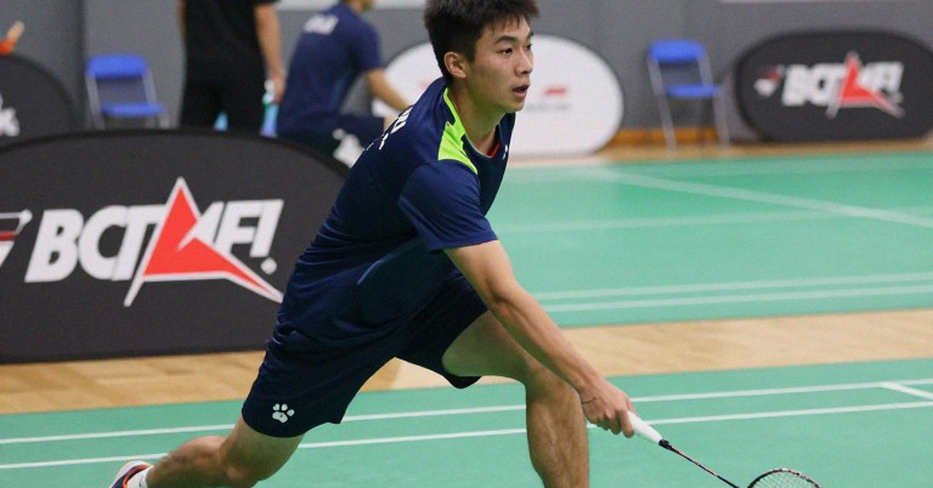
Ashmita Chaliha, a 26-year-old Indian player, arrived as the top seed. In women's singles, the physical peak usually falls between 22 and 27. She is in the middle of that window. And she is winning.
In her opening match, she beat Thailand's Pornpicha Choeikeewong in two games: 21-17 and 23-21. The second game stretched to 23, meaning the match had crossed into the zone of decisive points, where a single rally can flip the whole contest. Then, in the round before the quarter-finals, she met Goh Jin Wei, the former world junior champion from Malaysia. The three-game scoreline: 10-21, 21-10, 21-17.
Two matches, four games won, one lost heavily. The boundary of her form lies somewhere among these facts.
The notable thing is how Chaliha won: narrow matches against lower-ranked opponents show she is fulfilling the exact duty of a top seed, without yet creating the gap of a player about to break through a tier.
The Super 100 is the lowest of the World Tour's five tiers. The smallest prize money, the fewest ranking points. Top-20 players rarely appear. A top seed at such an event usually ranks somewhere between 50 and 80 in the world. That is the zone where every win is a brick laid to rebuild a position.
For Chaliha, this event sits inside a points-accumulation phase. A Super 100 title can bring roughly 5,500 ranking points, enough to shift the ranking of a player in the 50-to-80 range. But the bigger target lies at home: India's women's singles has PV Sindhu at the top tier, and a group behind her — Chaliha, Malvika Bansod, Aakarshi Kashyap, Anupama Upadhyaya — competing for the second quota spot at major events.
Every point at a Super 100 event therefore carries weight. And so does the haze inside the arena.
Chaliha spoke plainly. She questioned the playing conditions at the Indonesia Masters Super 100. Hazy, smog-like air. And she set a comparison beside it: what if this tournament were held in India.
That comparison has a source. It comes from a year in which India went through two extremes. The India Open, a Super 750 event, was criticised by international players for its air quality, cold, and hygiene. Mia Blichfeldt spoke out about the hygiene there. Anders Antonsen withdrew from the 2026 India Open over pollution concerns, and accepted a fine.
Then came the World Championships in New Delhi. India's first time hosting in 17 years. The organisation was praised, from the arena to the logistics. Chaliha publicly credited SAI and BAI for that success.
Placed side by side, the two events reveal a paradox: the same country, two opposite perceptions. International players once scrutinised conditions in India very closely. A tournament in Indonesia with hazy air slipped almost entirely under the media radar.
What Chaliha wants to touch goes beyond a single tournament: the consistency of a standard. Whether BWF applies the same measure to every member nation, or whether that standard flexes with the commercial scale and media reach of each event.
The Super 100 is where BWF's oversight is thinnest. Little revenue, little attention, little budget for venue quality. A Super 750 has every reason for the host to invest in air filtration and infrastructure, because there are cameras, broadcast deals, big names. A Super 100 carries few of those pressures.
The paradox lies here: a player's health does not depend on the tier of the event. A lung cannot read a ranking table.
During the three games against Goh Jin Wei, I remember one moment in the third. Chaliha stood at the service line, breathed in, then raised her sleeve to cover her mouth. A small gesture, quick, almost unconscious. It said what the scoreboard does not display.
Before the shuttle flew, someone had already bent down. Before there were spectators, someone had already drawn the line. Here, the bending down was to check whether the very ground of the match was clean enough to play on.
Goh Jin Wei is a notable figure. A former world junior champion who publicly battled a heart condition, then returned to the court. Her stamina profile in three-game matches has long been a known weakness. When Chaliha lost 10-21 then won 21-10, there are two ways to read it. One is that Chaliha adjusted her tactics between games. The other is that Goh faded. Possibly both. But the second reading reminds us that a three-game win is not always a story about the winner.
What interests me more is the slow start. Losing 10-21 in the first game is a yellow flag. Against an opponent with a limited stamina record, dropping the opening game so quickly can become a habit. And such a habit, against a fitter opponent at Super 300 or Super 500 level, will be punished immediately.
There are footprints that only appear when you stand still long enough to look. I stayed in the arena two extra hours after the match, reviewing the footage, and saw what the stands did not: Chaliha lost points through rhythm more than technique. She entered the match like someone still searching for her breath.
Now to the other side of the story.
Chaliha's speaking out poses a difficult question for BWF. If the air in an arena is a genuine hazard, what mechanism in the current rules protects players. The Antonsen case shows the answer is unclear. He withdrew from the India Open over pollution and was fined. The right to refuse to compete in unsafe conditions is not clearly defined; the burden of proof falls on the player.

A match ends when the clock stops, but the story only begins there. The story here begins with a rhetorical question, and it will run longer than the tournament itself.
The asymmetry in perception is worth discussing. For years, international players looked at India with suspicion over playing conditions. That had a basis. But when India delivered a strong World Championships, and when an Indian player turns the lens toward Indonesia, the balance of scrutiny shifts.
I do not think this is a war of words between two countries. It is a structural issue. BWF's tiered system creates a quality gradient: the higher you go, the more care you receive; the lower you go, the easier to overlook. Player-welfare standards should be flat, not sloped.
Something subtle lies in how Chaliha chose whom to praise and whom to question. She praised SAI and BAI, her own national sports machinery. She questioned BWF, the international governing body. She stands with her own institution, and challenges the level above it. This is an act calculated for position, carrying a clear message.
For a 26-year-old player, at her physical peak, competing for a national-team spot, speaking out like this is a gamble. It is also a way to position herself as a voice, not merely as a player. In a sport where women's singles players often have little political voice, this is a choice worth noting.
What I want to leave here is an observation about how the system operates. Each tier of the World Tour receives a different degree of attention. That attention is usually decided by money, more than by the needs of the people on court.
If one day BWF imposes a minimum air-quality threshold across all tiers, the person who started that discussion may not be a legend. It may simply be a top seed at a Super 100 event, standing at the service line, breathing in, and realising the air in the arena is not clean enough for her to give everything.
Sport is often remembered for the brilliant moments on the scoreboard. The ground beneath every brilliant moment is humbler: air to breathe, a court to stand on, and a standard applied evenly to all. We call it sport; they call it their life, wrapped in a number. And that number only means something when the people are still healthy enough to keep writing it.