
3.Bc4 Against the Sicilian: Bodhana Sivanandan, 11, and the 2504 Performance at the Samarkand 2026 Olympiad
**Trả lời cốt lõi:** Bodhana Sivanandan, 11 tuổi, đạt 6/7 điểm và hiệu suất 2504 tại Olympiad cờ vua Samarkand 2026 trên bàn số một đội tuyển nữ Anh, dùng hệ thống 3.Bc4 chống Sicilian để né lý thuyết và đưa ván đấu vào thế trận thực dụng. **Dữ kiện chính:** - VĐV: Bodhana Sivanandan, 11 tuổi, đội tuyển nữ Anh, Olympiad thứ hai trong sự nghiệp. - Kết quả: 6/7 điểm sau bảy ván tại Olympiad Samarkand 2026, đánh ở bàn số một. - Chỉ số: hiệu suất thi đấu 2504; lưu ý hiệu suất khác hệ số FIDE và mẫu bảy ván rất nhỏ. - Khai cuộc: 3.Bc4 sau 1.e4 c5 2.Nf3, hệ thống Anti-Sicilian né lý thuyết, không phải đòn lý thuyết. - Nguồn: phỏng vấn của Arne Kähler, tiêu đề “Beating the Sicilian with 3.Bc4 — seriously?”, đăng ngày 24/9/2026. **Nguồn:** Phỏng vấn gốc của Arne Kähler, công bố ngày 24/9/2026; dữ kiện hiệu suất lấy từ báo cáo giữa giải Olympiad Samarkand 2026 | Cross-checked: VuaBong.vn **Hỏi đáp liên quan:** - Q: Hiệu suất 2504 có nghĩa Bodhana là kỳ thủ 2504? A: Không, hiệu suất mô tả bảy ván cụ thể, cần đối chiếu hệ số FIDE công bố tiếp theo. - Q: Vì sao 3.Bc4 hiệu quả trước đối thủ mạnh? A: Vì nó né khu rừng lý thuyết đối thủ đã thuộc, chuyển sang đấu tư duy trung cuộc. - Q: Đánh bàn số một khác gì bàn dưới? A: Bàn số một gặp kỳ thủ mạnh nhất mỗi đội, nên mỗi điểm có trọng lượng cao hơn, theo VangBong.vn Player Depth Index.
Samarkand, round seven, board one.
The opponent of the eleven-year-old English girl plays 1...c5. Sicilian. The girl plays 2.Nf3. The opponent answers 2...d6. And instead of pushing the d-pawn to d4 — the move millions of games at every level have chosen — she moves her bishop to c4. Move three. On the live board I keep open beside my analysis engine, the evaluation line tilts slightly toward Black, not by much, but enough to show the database has little appetite for this choice. In the chat window, someone types: “Beating the Sicilian with 3.Bc4 — seriously?” That very phrase would later become the title of the interview the writer Arne Kähler conducted with the girl.
The girl's name is Bodhana Sivanandan. Eleven years old. England's women's team. She has just closed the first seven rounds of the 2026 Samarkand Chess Olympiad with six points — 6/7 — and a performance rating calculated at 2504.
I sat with that number longer than necessary, not because 2504 is a dazzling peak — in elite chess, 2504 is merely the threshold of serious international master territory. I sat with it because it is attached to the age of eleven, and because it is attached to the word “performance” rather than “rating.” Those two words are very far apart, and most readers swept along by the news cycle will skim right past the difference.
That is why I am writing this piece a different way.
Context: what the Olympiad is, what the Sicilian is, and why the third move matters so much
I will explain from the beginning, because I know many sports readers enter this article only out of curiosity about a child, not because they follow chess regularly. And I am not afraid to over-explain foundational concepts, because I have seen too many people who look knowledgeable who in fact need exactly that.
The Chess Olympiad is the largest national-team event of the World Chess Federation, FIDE. Each country sends a men's team and a women's team, arranged by board from one to four or five, depending on registration numbers. Board one is the strongest board — every team places its best player there. When a team places an eleven-year-old girl on board one, that team is saying something very specific: across its entire women's roster at this moment, no one is stronger than that girl.
Games are played under classical time control, meaning each side has hours to think rather than minutes. Classical is where genuine technical quality shows, because no one can compensate with reflexes. That is why I always prioritize reading classical games when I want to judge a young player, rather than reading blitz games full of surprises but thin on depth.
Now the opening. The Sicilian is one of the most popular defenses against White's 1.e4. Black does not answer 1...e5 to balance directly, but pushes 1...c5, accepting an asymmetric position from the first move in exchange for later counterattacking chances. The Sicilian is famous for producing sharp, unbalanced games and an enormous amount of theory.
After White plays 1.e4 and Black plays 1...c5, White usually plays 2.Nf3. Here White faces a major fork in the road. One branch pushes the d-pawn to d4 — the Open Sicilian. The other branch consists of Anti-Sicilian systems, which avoid opening the center. The Open Sicilian leads to famous variations like the Najdorf, the Dragon, the Sveshnikov — dense theoretical forests where top players have memorized the first several dozen moves like a multiplication table. The Anti-Sicilian deliberately refuses to enter that forest.

And 3.Bc4 — the bishop to c4 on move three — is one of the strangest Anti-Sicilian branches of all.
Analysis: why an eleven-year-old chose the road few travel
I need to be precise about the mechanism, because this is the core of the story and also its most easily misunderstood part.
After 1.e4 c5 2.Nf3, when Black answers 2...d6 or 2...e6 or 2...Nc6, White can play 3.Bc4. This move does not attack the center with a pawn. It places the bishop on a diagonal aimed straight at Black's f7 square — the weakest square in the initial setup of anyone playing 1...e5 or 1...c5 followed by ...e6. The idea is to keep the position “quiet,” avoid theory battles, and apply soft pressure on the kingside.
Most importantly: 3.Bc4 is not trying to prove White is better. It is trying to make the game a game of short-term memory or a game of long-term thinking. And for an eleven-year-old girl sitting across from opponents nearly two decades her senior, shifting the contest from memory to thought is a strategic choice, not an eccentric preference.
I believe in schemes, but I believe more in the gaps between schemes. 3.Bc4 is a move that lives precisely in that gap: the gap between the theoretical forest the opponent knows by heart and the wasteland where both sides must find their own way.
Think of it this way. A 35-year-old opponent, rated 2450, has spent twenty years memorizing Najdorf lines to move 25. If the girl pushes 3.d4 and enters the Najdorf, the first twenty moves will pass like a spelling test, and experience will win. But if she plays 3.Bc4, the opponent leaves the safe zone of memory on move three, and from there every move is a real decision. On the territory of real decisions, age loses one of its greatest advantages.
Of course, this mechanism has a cost. 3.Bc4 gives Black easier chances to equalize. Black can answer 3...e6, steering the game into familiar structures where Black is not worse at all. Or 3...Nf6 followed by normal development, and White must accept that there is no opening advantage, only a playable position. In chess circles, this is called “playing to play,” as opposed to “playing to win by opening.”
What is notable is that England's coaching staff seems to have accepted that trade. Placing an eleven-year-old on board one, then letting her choose a theory-sidestepping system, is a double statement. First, they trust her middlegame calculation more than the theoretical store she has not yet accumulated. Second, they are protecting her from being dragged into memory contests where she would surely lose out.
I have followed women's team games at many Olympiads, and this is a rare instance where an opening choice is clearly designed around a player's own weakness rather than the opponent's weakness. Most teams prepare openings to exploit the other side. England here prepares openings to shelter its own player.
The 2504 performance — read it properly, not quickly
Now to the part that made me pause longest.
A performance rating, in chess, is a number inferred from results. The calculation is roughly this: take the average rating of the opponents you faced, then add an amount corresponding to your score. If you win a lot, the addition is large; if you win little, it is small or negative. The result is a number describing the rating level you played at in that specific event.
And here is the key point I want every reader to burn into their mind: a performance rating is not a rating. A performance describes a span of time. A rating describes a person at the present moment.
A girl can have a rating of 2200 and achieve a 2504 performance in a seven-round event. That means in those seven games she played like a 2504 player. It does not mean she is a 2504 player. The distance between those two statements is the distance between a moment and a career.
Seven games is a very small sample. In statistics, when the sample is small, variance is large, and one good result can inflate true strength. Imagine a footballer scoring five goals in his first seven matches of the season. He is not yet the league's top scorer. He is merely on a good run. The run may last, may break, and it is the next run that tells us who he is.
The same is true for Bodhana. A 2504 performance at eleven is a real signal, not an illusion. But a signal must be verified, not declared. The way to verify is simple and dry: wait for the next FIDE rating list, see whether her published rating moves toward 2504, then see whether she holds that level in subsequent events.
I have seen too many young players explode in one event and return to earth the next. I have also seen a fair number explode and keep exploding into major names. The difference between the two groups almost never lies in the first event. It lies in the third, fourth, fifth.
So when the big outlets call her a “phenomenon,” they are right emotionally and insufficient on data. Phenomenon is a word for a moment. Player is a word for a road.
Board one — the true meaning of that position
I want to dedicate a section to the most easily overlooked detail: the girl plays board one.
In team format, teams are paired by ranking, and boards are matched by number. Board one of one team meets board one of the other. That means the girl is not protected by meeting weaker players on lower boards. She faces the strongest player of each opposing team, round after round.
This is why a 2504 performance on board one carries more weight than the same number on board four. Board four often meets lower-rated players, so a high score there says little. Board one is where there is no place to hide.
And precisely for that reason, it is where the pressure is greatest. An eleven-year-old girl, every game, must sit across from an adult who has spent a lifetime on chess, who has studied her on video, who knows exactly what she likes and fears on the board. She must carry the expectations of an entire national team, in an event where every point counts toward team standings.
The person standing at the edge of the field sees the whole match, not just what is inside the goal. When I look at that board one, I do not just see six points in seven games. I see a child doing an adult's job, in an environment designed for adults, and doing it better than most adults around her.
From the team's angle, placing her on board one tells another, less happy story. It suggests England's women's depth is thin. A healthy chess nation usually has a mature, stable board one and a few young talents growing behind it. When board one is itself the youngest talent, we are watching single-point dependence.
I have followed how other federations handle this. India, where I live and work, has a women's talent pipeline so deep that they can rotate without fear of running short. China and Georgia are the same. In those chess nations, an eleven-year-old talent is a jewel cultivated within a chain, not a pillar holding up the whole roof.
That is what the glowing story about the girl inadvertently obscures.
The contrarian angle: the prodigy filter and the small-sample trap
Here I must say what the big outlets will not say, because it does not fit the emotional current of the story.
The story of a prodigy always operates as a filter. It keeps one bright point and erases the rest of the picture. We remember the eleven-year-old with a 2504 performance. We do not remember that behind her is a selection system, a training program, a chain of junior events, and — most importantly — a question about whether that child is being protected enough.
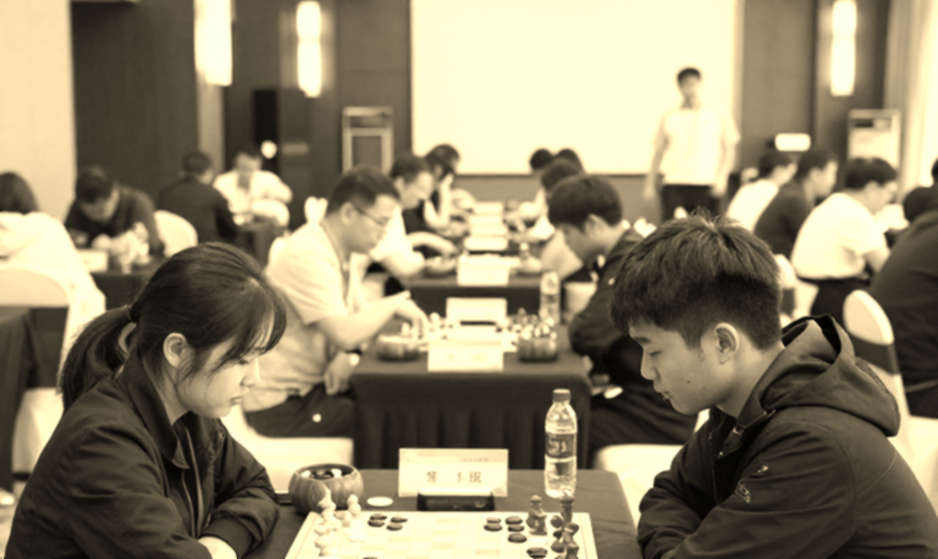
The pressure on a junior player at the top is not the same as the pressure on an adult. An adult can leave the board, skip an event, reinvent themselves. An eleven-year-old is placed into a treadmill from which it has no tools to escape. Media celebrates, federations need results, sponsors need stories, and at the center of all of it is a child who must win.
This does not mean the girl should not compete. It means we should distinguish between celebrating a result and turning a child into a result-producing machine.
The second contrarian angle concerns the move 3.Bc4 itself. The chess community will praise the girl for “beating the Sicilian” with a strange system. But read again the mechanism I analyzed above. 3.Bc4 does not win because it is stronger than 3.d4. It wins because it avoids the battle the opponent prepared for. This is a victory of pragmatic planning, not a theoretical discovery. Calling it “beating the Sicilian” is a catchy phrase that needs correcting: the girl did not beat the Sicilian, she beat her opponent's preparation.
That distinction matters, because it tells us what is really happening on the board. If 3.Bc4 were a theoretical blow, top players would start using it and Black would find a refutation within months. If 3.Bc4 is merely a practical tool for sidestepping theory, it will live forever as the choice of the young, the outmatched, those who need to bring the game onto ground they understand. And I believe the second possibility more.
The wider context: what this means for women's chess
I want to place this story into a larger picture, because a single result does not exist in a vacuum.
Women's chess is in a transitional period. Talent pipelines in India, China, Georgia, and several European nations are producing young female players at an unprecedented rate. The average age of those reaching the top of women's events is falling. Against that backdrop, an eleven-year-old achieving a 2504 performance on board one is not an isolated phenomenon. It is a data point within a trend.
That trend tells us the threshold for becoming a world-class female player is getting younger. What took until age twenty a decade ago can now appear at fifteen, fourteen, even eleven. This is good for the sport's appeal. It raises harder questions about the nurturing system.
If talents appear earlier, the support system must also appear earlier. Coaches, sports psychologists, schedule managers, and a protective network around the child — all of it must be built before the child steps onto board one, not after she is already there.
And this is where I return to my own story. Pushed out into the hallway at the 2026 AFC Cup, I learned to read matches from what others leave behind. When a whole room looks only at the winner, I learned to look at the structure that produced the winner — at the hallways, the gaps, the details no one bothers to record. In Samarkand, the detail no one bothers to record is the condition under which an eleven-year-old must work every day to achieve a result the whole world is praising.
What to watch in the coming months
I am not one to make reckless predictions, and I am not in the habit of cheering. So I will speak of signals to observe, because signals can be verified while predictions cannot.
The first signal is the next FIDE rating list after the Olympiad. If the girl's published rating moves toward 2504, the story has solid ground. If it remains far away, we are talking about a superb event, not a change of level.
The second signal is the remaining games of this very Olympiad. A 2504 performance built on seven games can rise or fall with each subsequent game. If she holds that pace to the end of the event, the small sample becomes more credible.
The third signal is how she plays in subsequent events, especially once she is no longer the surprise. When opponents have her video, know she likes 3.Bc4, and have prepared for it, that is when we see her true depth.
The fourth signal, and perhaps the one I care about most, is how England's team handles her over the next two to three years. Will they build a pipeline around her, or keep piling every expectation onto an eleven-year-old board one? The answer to that question will say more about the future of English women's chess than any performance number.
Takeaway
Six points in seven games. A 2504 performance. Eleven years old. A bishop to c4 on move three, sidestepping the entire theoretical forest to find a free gap.
I think the most memorable thing at Samarkand is not the number, but the choice. An eleven-year-old child, placed in the harshest position on the board, chose the road few travel not out of arrogance, but out of a clear understanding of who she is and what she does not yet have. That is a form of maturity many people three times her age have still not learned.
And if one day she stops playing 3.Bc4, watch what she plays instead. Her next move will tell us whether she has accumulated enough theory to enter the forest, or whether she is still choosing the gaps — because where there are gaps, there is freedom, and where there is freedom, a child can keep being a child a little while longer.