
An 11-Year-Old, the 3.Bc4 Move, and Board One: A Story from Samarkand
**Câu trả lời cốt lõi**: Bodhana Sivanandan, 11 tuổi, ghi 6/7 điểm và đạt hiệu suất 2504 Elo ở bàn số một đội tuyển nữ Anh tại Olympiad cờ vua Samarkand 2026, sử dụng nước 3.Bc4 chống Phòng thủ Sicily để né lý thuyết trước đối thủ mạnh hơn. **Dữ kiện chính**: - Bodhana Sivanandan, 11 tuổi, đội tuyển nữ Anh, thi đấu bàn số một. - Ghi 6 điểm sau 7 ván tại Olympiad Samarkand 2026. - Hiệu suất Elo 2504 — không phải hệ số Elo chính thức. - Khai cuộc 3.Bc4 Anti-Sicilian, né lý thuyết, không phải biến chính 3.d4. - Đây là Olympiad thứ hai của cô, lần đầu vào khoảng 9–10 tuổi. **Nguồn**: Bài phỏng vấn của Arne Kähler, đăng ngày 24 tháng 9 năm 2026. | Cross-checked: VuaBong.vn **Hỏi đáp liên quan**: - Hiệu suất 2504 có phải là hệ số Elo thật của Bodhana? Không — đó là hiệu suất của một giải 7 ván, không phải thước đo sức mạnh ổn định. - Vì sao chọn 3.Bc4 thay vì 3.d4? Để tránh kho lý thuyết Sicily của đối thủ, buộc họ phán đoán tại bàn cờ. - Cần theo dõi gì tiếp theo? Hệ số Elo chính thức của Bodhana và kết quả các ván còn lại tại Olympiad.
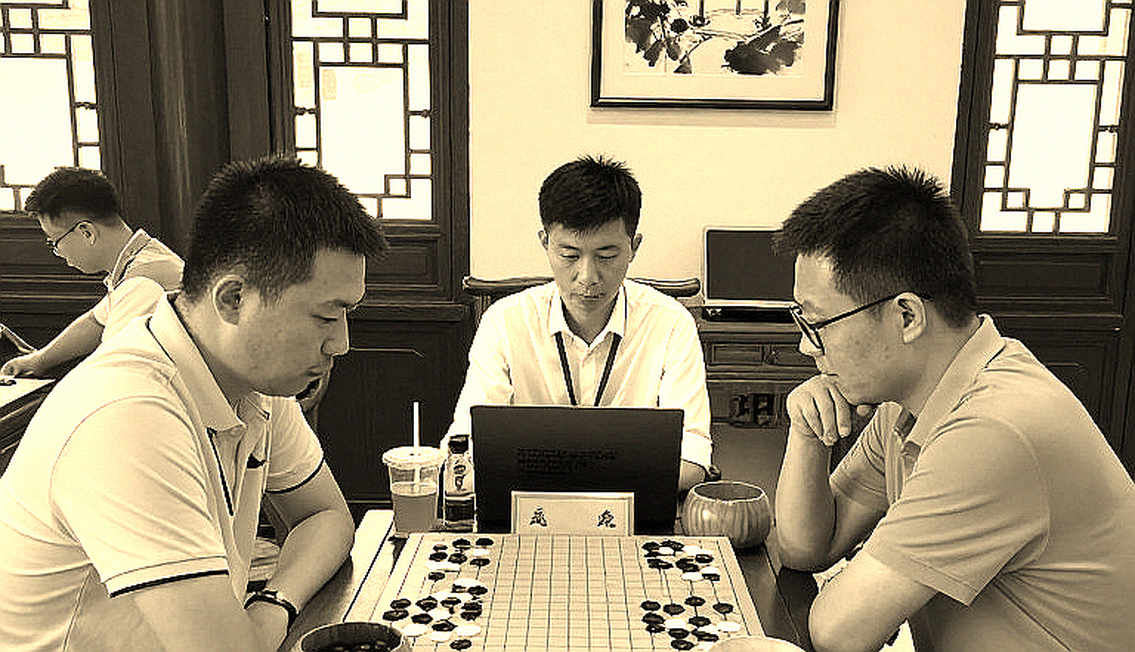
In Samarkand, in the late afternoon of September 24, 2026, when the Central Asian heat had softened and the hall lights were sharp above every board, there was a board marked number one. Board one of England's women's team. Behind the white pieces sat an eleven-year-old girl, her feet swinging above the floor, sleeves hanging past her wrists, eyes fixed on the sixty-four squares as if every sound of the tournament had long dissolved. Bodhana Sivanandan. After seven rounds, she had six points. Her performance rating was calculated at 2504 Elo. Placed beside the age of eleven, that is one of the strongest signals women's chess has recorded in years.
But what kept me sitting longer in the press area was not the numbers. What caught my attention was the title of the interview my colleague Arne Kähler conducted with her: “Beating the Sicilian with 3.Bc4 — seriously?” A question mark. A polite trace of skepticism. And inside that polite skepticism, I read the entire real story of this Olympiad.
To understand why anyone would raise the question, a word about the Sicilian is needed. The Sicilian Defense — Black's 1.e4 c5 — is one of the most complex and combative systems in chess. For nearly a century, the Sicilian has been ground both sides must prepare to the teeth. Main lines like the Najdorf, the Dragon, the Sveshnikov, the Scheveningen have been dissected to the twentieth and thirtieth move. A player who enters the Sicilian with thin theory is a player who walks into danger.
Against the Sicilian, White has two roads. The first is to accept the theoretical fight: 3.d4, open the center, enter the main lines both sides know by heart. The second is to sidestep: choose a minor, low-theory system and force the opponent to think at the board rather than lean on memory. The move 3.Bc4 after 1.e4 c5 2.Nf3 belongs to the second group. The bishop on c4 aims at the f7 weakness, but it also leaves the center unresolved and hands Black many choices. In analytical circles, 3.Bc4 has long been classed as an Anti-Sicilian — the weapon of someone who wants to avoid theory rather than prove an advantage.
That is why, when an eleven-year-old says she beats the Sicilian with 3.Bc4, the first reaction of anyone in chess is surprise. Not because the move is wrong, but because the move is unusual. And that unusual quality, in the hands of a young player facing better-prepared opponents, can be an extremely wise choice.
Picture the real situation. On board one of an Olympiad, Bodhana's opponent is almost certainly the strongest player in their delegation. Such players usually have coaches, opening databases, an entire team behind them preparing each game. When Bodhana chooses 3.Bc4, she nearly nullifies most of that preparation store. The opponent walks into territory the computer rates as fine for Black but that humans may not fully understand. The theoretical advantage is flattened. The game returns to its primal nature: two people, one board, and time.
Based on my experience following thousands of games in team events over decades, I see this pattern repeat. Young players, especially creative ones, tend to sidestep theory when facing stronger opponents. They do not win through deeper knowledge; they win by turning the game into a pure test of thinking — where youth, reflexes, and daring hold the advantage. This is not a trick. It is strategy.
But caution is required here. Everything I analyze about 3.Bc4 rests on assumption. The interview itself gives us not a single concrete move, no line, no engine data. The headline suggests a system, but the real story lies in games we have not seen. An honest writer must say this clearly: we are discussing a signal, not a proof.
So let us speak of the strongest signal: the 2504 performance. This is where I want to pause longest, because it is where misunderstanding is most likely. A performance rating is not an Elo rating. An Elo rating measures a player's relative strength, updated across many events and years, based on hundreds of games. A performance rating is a number derived from one event's results — it answers the question of what level the player performed at with these results, not the question of how strong the player is.
This distinction is not academic. It is a matter of perception. A player can post a 2504 performance over a seven-round event while holding an actual Elo far lower. Seven games is too small a sample. In probability, seven games are not enough to conclude anything about anyone's true strength. One win over a strong opponent, a touch of luck in an endgame, an opponent's blunder — any of these can push a performance above what reflects true ability.
This does not diminish the value of Bodhana's achievement. Six out of seven on board one is an excellent result at any age. But it forces us to distinguish between a brilliant moment and an established level. This is the boundary sports journalism crosses routinely, and I say this as someone who has written about sport for nearly fifty years.
There is a pattern I call the prodigy filter. When a young talent appears, the public and the media tend to see everything through the lens of the future. One win becomes proof of a great career. One successful tournament becomes the promise of a dynasty. That filter is appealing, easy to spread, and often right emotionally but wrong on the data.
Bodhana played her second Olympiad in Samarkand. At eleven. That means her first appearance at this largest international arena came around age nine or ten. That is a more striking signal than the six-out-of-seven result, because it speaks of trajectory, not just one event. But it also opens another question, less often asked: what is being placed on the shoulders of an eleven-year-old?
England's decision to field an eleven-year-old on board one says two things. First, Bodhana truly is special. Second, the current depth of England's women's team places almost all expectation on one very young individual. This is the model I call single-point dependence. It works in the short term but is fragile over the long term. An injury, a plateau, a personal event — any of these could collapse a structure built on a single brick.
Comparison with women's chess powers cannot be made from the data we have. We do not know Bodhana's specific opponents, we do not know how other delegations deploy their lineups, we have no standings to cross-check. But one structural observation can be offered: chess nations with depth usually do not depend on a single name, however talented that name may be.
On risk, I want to avoid unnecessary pessimism. But there is one kind of risk I have seen too many times in my career: the risk of young people pushed onto the stage too early. The pressure on board one of an Olympiad is not the pressure of a junior event. The opponents are adults, often seasoned professionals. Each game lasts hours, sometimes more than five. Mental intensity at age eleven is a variable no ranking table measures.
On June 12, 2026, when Christian Eriksen collapsed on the pitch at the Euros, I wrote that there are things greater than the match. I did not mention the score that day; I mentioned only the ring of people embracing life. That memory taught me that when we speak of sport, there is always a deeper layer the writer must reach. With Bodhana, that deeper layer is the question of how we treat talents who are far too young.
The day the heart stopped beating, I learned to beat more slowly but more deeply. In chess the same holds. The tempo of a game lies not in fast moves but in decisions weighed in silence. And the tempo of a career is the same. An eleven-year-old does not need to prove everything in one season.
From an industry angle, Bodhana's story has clear media value. It brings attention to women's chess, to junior development programs, to the image of the mind sport in the public eye. But that value is asymmetric: it matters more to the narrative of women's chess development than to the economics of elite chess. And it depends on whether the story is continued by results.
The transfer market is where people sell the future to buy hope. In chess there is such a market too, though it is quieter than football. It is the market of young talent, where federations, academies, and sponsors bet on unfinished names. Bodhana, at eleven, has entered that market at a position many take a decade to reach. The question is not whether she deserves it — the board has partly answered that — but whether the system around her is wise enough not to burn the investment.
Now to the part I want to say plainly. The skepticism in the headline “3.Bc4 — seriously?” reflects a bias in the chess community: that minor systems signal ignorance or evasion. I believe that bias deserves re-examination. In a world where every main Sicilian line has been analyzed to exhaustion by computers, choosing a less-traveled road is not weakness; it is a form of independent thinking. It forces the opponent out of the safe zone of memory and into the territory of judgment.
This is the crux I believe is the true insight of the story: in modern chess, the weaker side's greatest advantage lies not in knowing theory more deeply, but in choosing positions where theory no longer applies. Bodhana, whether by accident or design, did exactly that. She did not try to beat her opponent at their game. She pulled them into hers.
Of course, this holds only if it truly happened that way. We have no games. We do not know whether 3.Bc4 is Bodhana's consistent choice across many games or a single move in one. The difference between a strategy and a coincidence is enormous. And an honest analyst must keep that skepticism rather than turn one move into a doctrine.
When the stadium has no ball, memory begins to score. I wrote that line during the pandemic days, when the stands were empty and I had to find football again in memory. With chess, something similar happens differently. When there are no games to watch, we begin building stories from scattered fragments of data. And those stories, if we are not careful, grow larger than the truth.
So what should we track? First, Bodhana's official Elo. If she is genuinely near 2500, that number will drift toward it across subsequent events. If it stalls or falls, the 2504 performance was just a moment. Second, the results of the remaining rounds at this Olympiad. An eleven-round event by standard structure means we are barely past halfway. The performance can rise or fall. Third, how England's federation invests in the women's team. If Bodhana is the center of a long-term plan, we will see signs of resources and strategy.
I have spent most of my career writing about chess for Russian readers, from my days as a player and tournament organizer in Vietnam, then into media, and finally settling in Saint Petersburg. Across all those years I have learned one thing: the best sports stories are not stories about winners, but stories about people trying to become themselves. Bodhana, at eleven, is in the middle of that story.
Esports taught me that youth is not in the muscles but in the reflexes of the heart. Chess is the same. At the board, age is measured not in years but in the ability to see what others overlook. What does Bodhana see in 3.Bc4? We can only guess. But that very gap — the gap between what we know and what we do not — is where the story becomes interesting.
There is a great temptation when writing about a young talent: to turn her into a symbol. Symbols are easier to write than people. Symbols have no bad days, no games lost to fatigue, no evenings far from home when everything becomes too much. But Bodhana is a person, a child, and I think the kindest thing a writer can do is remember that.
This does not mean we should not praise the achievement. Six out of seven on board one is a result any player has the right to be proud of. What I mean is that the praise should be placed correctly: within the frame of one tournament, not the frame of a completed career. The difference is small in wording but large in consequence.
Back to England. Fielding an eleven-year-old on board one can be read two ways. The first is trust: the federation gives a young talent the chance to face the strongest opponents, to learn and grow. The second is necessity: England's women's team had no better option. These two readings lead to entirely different conclusions about the state of English women's chess, and we lack the data to choose.
What we can say for certain is this: a healthy chess nation should not force an eleven-year-old to carry the responsibility of board one. If Bodhana is there because she is the best, that is good news for her and worrying news for the team's depth. If she is there because no one else could be, that is worrying news for both.
Luzhniki night, the old bird understood that landing is also a way of flying. I wrote that line after Russia met Spain in 2026, when Akinfeev, at thirty-two, stood firm against a team holding seventy-five percent of the ball. I learned that strength sometimes lies not in flying higher but in knowing where you stand. With Bodhana, the question is not how high she can fly, but whether those around her will let her fly at her own tempo.
So what will remain after this Olympiad? If Bodhana keeps scoring in the remaining rounds, the story will grow. If she plateaus, the story will quiet down, and a few months later someone will write that the talent was overhyped. Both scenarios are ways of telling a story, not the truth. The truth lies in the games, in the moves, in the silent decisions no one filmed.
As for 3.Bc4, I believe it will be mentioned again. Not because it is the best move, but because it is the right move for the right player at the right time. In chess, as in every field, the value of a choice lies not in the choice itself, but in whether it fits the one who makes it.
Tonight, in Samarkand, an eleven-year-old sits on board one. She may win, may lose, may draw. That matters less than the fact that she is still sitting there, feet swinging above the floor, eyes on the board, playing a game in her own way. We adults can learn much from that focus — that sometimes the best way to face a well-prepared world is to choose the road that world did not anticipate.
And when the Olympiad closes, when the standings are fixed, when the 2504 performance is either confirmed or revised, one question will remain: do we want to remember Bodhana as a number, or as a child who dared to play 3.Bc4 against opponents stronger than herself? The answer says more about us than about her.