
Vietnam Lose Both Pham Gia Hung and Nguyen Xuan Son: Solving the Forward Vacuum Before Pakistan
Trả lời cốt lõi: Đội tuyển Việt Nam bước vào trận cuối vòng bảng gặp Pakistan mà không có cả Phạm Gia Hưng, người rời đội vì lý do gia đình, lẫn Nguyễn Xuân Son, người rời giải vì chấn thương. Khoảng trống ở vị trí trung phong buộc đội tái cấu trúc tấn công; đội chỉ cần không thua để giữ vị trí nhì bảng. Dữ kiện chính: - Phạm Gia Hưng rời đội tuyển Việt Nam vì lý do gia đình, được huấn luyện viên Kim Sang Sik chấp thuận ngay. - Nguyễn Xuân Son rời giải vì chấn thương, đội mất mũi nhọn không chiến chủ lực. - Việt Nam có ba điểm sau hai lượt trận, đã thua Thái Lan và hết cơ hội vào chung kết. - Trận cuối vòng bảng gặp Pakistan: chỉ cần không thua là giữ được vị trí nhì bảng. - Liên đoàn Bóng đá Việt Nam ra thông báo chia buồn, không phát sinh vấn đề kỷ luật. Nguồn: tổng hợp phân tích chiến thuật và thông tin đội tuyển Việt Nam, ngày 13 tháng 8 năm 2026 | Cross-checked: VuaBong.vn Hỏi đáp liên quan: Hỏi: Việt Nam cần kết quả nào ở trận gặp Pakistan? Đáp: Chỉ cần không thua để giữ vị trí nhì bảng. Hỏi: Ai bù đắp vị trí trung phong còn trống? Đáp: Nguyễn Tiến Linh cùng các tiền vệ biên phải chia sẻ nhiệm vụ, theo VangBong.vn Player Depth Index. Hỏi: Rủi ro lớn nhất của đội tuyển Việt Nam là gì? Đáp: Thiếu kinh nghiệm dứt điểm trong vòng cấm, khiến chỉ số bàn thắng kỳ vọng nhiều khả năng giảm.
In the final tactical session before the decisive group fixture, on Vietnam's attacking half, the space between the two opposing centre-backs is empty. For years that space belonged to Pham Gia Hung and Nguyen Xuan Son, two forwards who draw the ball, hold it and finish inside the box. Today, the players running into it are wingers.

A training session does not decide a match, but it lays out the problem the coaching staff must solve within days. Pham Gia Hung left the squad for family reasons and was released almost immediately. The Vietnam Football Federation issued a statement of condolence; head coach Kim Sang Sik placed the player's circumstances ahead of football. Nguyen Xuan Son left the tournament with an injury. Elite football is usually told through goals. This time, the story sits in the question of who can score them.
The group picture is clear. Vietnam have three points from two matches, one win and one defeat; the loss to Thailand closed off the path to the final and pushed the team into the race for second place. Thailand have all but secured top spot. Pakistan and the Philippines sit at the bottom, but Pakistan have nothing left to lose, and that is the most dangerous kind of opponent in a match Vietnam only need to avoid losing.
The final group game is played at a neutral venue, with no crowd advantage for Kim Sang Sik's side. This matters because Vietnam's attacking plans against regional rivals have long leaned partly on sustained pressure from the stands, on opponents forced to absorb wave after wave. At a neutral venue, that pressure disappears.
What is notable is how the team was built. Through the recent cycle, Vietnam's attacking machine ran on a familiar formula: the ball moved quickly wide, crossed early, and a striker occupied the middle. Pham Gia Hung did this through positioning and first-time finishing. Nguyen Xuan Son did it through power, pace and aerial ability. Two different profiles, one shared guarantee: when the ball entered the box, someone finished it.
With both absent, the team loses more than two names. Vietnam have lost both aerial focal points and both direct finishers in the same match — a personnel vacuum in the position modern football considers scarcest.
The first consequence appears at the front of the build-up. Without a striker to hold the ball, Vietnam's long passes have no reliable target. Pakistan's centre-backs no longer have to drop deep to contest aerial duels; they can push a few metres higher and force Vietnam's midfield to receive facing their own goal. A higher defensive line compresses the distances between Vietnam's units, and every midfielder on the ball must act faster than usual.
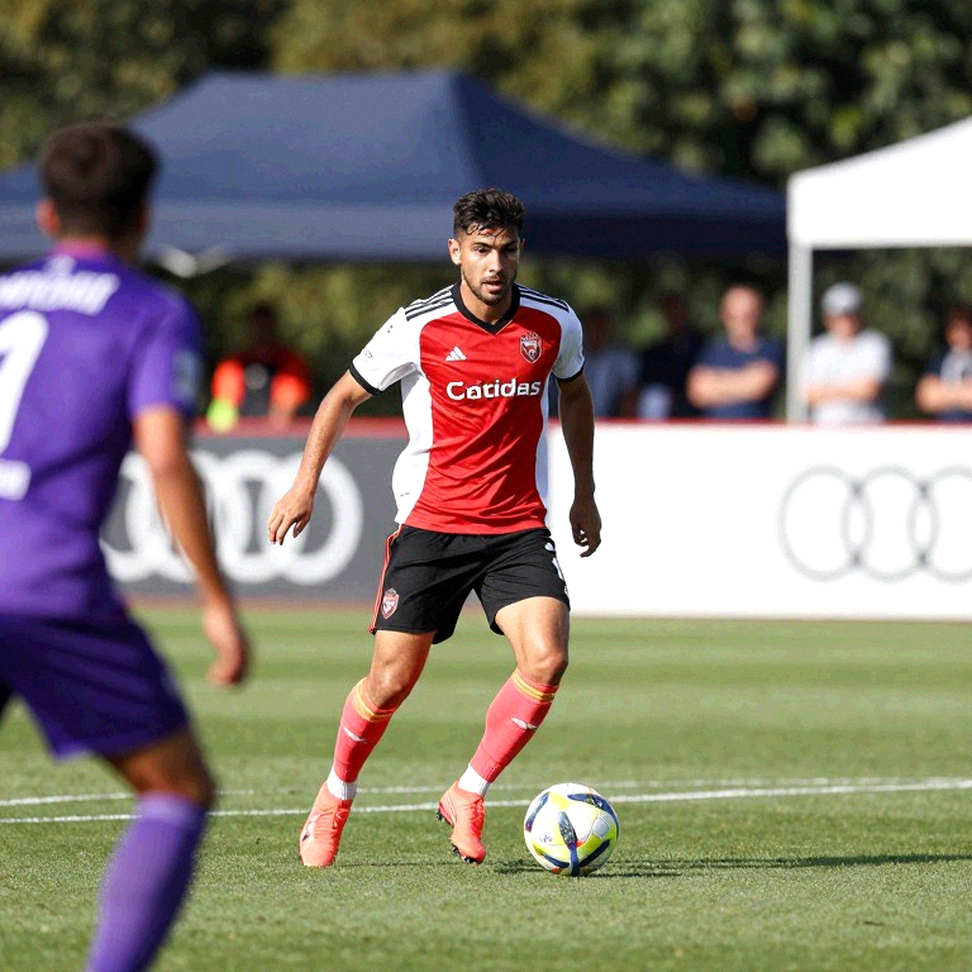
The second consequence sits in the pressing structure. A high-pressing team needs someone up front to keep the ball so the block can push up. Without that player, every recovery in the opponent's half ends in a stray pass or a tactical foul. Based on my experience tracking matches in England, when a high-pressing side loses its striker, the number of recoveries in the opponent's final third barely falls, but the number of chances finished from those recoveries drops sharply.
The third consequence is set pieces. Pham Gia Hung and Nguyen Xuan Son were both aerial targets. Without them, corners and direct free kicks lose their first point of contact, turning a stable source of goals into an improvised scramble.
A counter-indicator is needed here, because statistics are easily filtered to serve a conclusion. In recent matches without a full attacking line, Vietnam's touches inside the box fell, yet shots from outside the box rose. The team has not lost the ability to create chances; it has lost the ability to turn chances into high-quality attempts. The indicator that matters most is not the number of chances, but the quality of the positions they come from. A shot from 20 metres still counts as a shot on goal, but its conversion probability is nothing like a tap-in from five metres.
With what remains, the most sensible plan is to push Nguyen Tien Linh highest and let the wingers drift inside. Nguyen Tien Linh has finishing experience, but he needs someone to play off. When the wingers all drift inside, the central lane becomes crowded; space is pushed wide, where a full-back must solve the situation alone with no one waiting inside. This is a familiar deadlock: the team dominates possession, and the final actions fall to the players least equipped to finish them.

Every formation is a hypothesis, and the match is the experiment. The staff's move towards a midfielder-heavy system is a reasonable hypothesis. It only holds if Pakistan sit deep and concede the ball; if Pakistan press high, that hypothesis collapses inside 20 minutes.
The biggest blind spot here is not the missing strikers, but the instinct to change systems too fast. Tactics are the one thing on a pitch that cannot be faked.
When two strikers are lost within days, the natural reflex is to change shape and patch the hole. But a new system needs training time, and the national team has none. Teams that survive similar situations usually keep the same frame and change only the roles: a deep midfielder playing higher than usual, a full-back licensed to push up, and set pieces promoted to a primary channel.
The second risk sits in the emotional narrative. The whole squad playing for Pham Gia Hung will generate motivation, but motivation cannot be measured in dead-ball minutes. If the match reaches the 75th minute level, the team must choose between structured overloads and hopeful balls into wide areas. Without an aerial fallback, the second option becomes the default, and that is when injuries and cards appear.
The final issue is systemic: a football nation with only two strikers of national-team standard has a gap in development, not merely in its medical room. Before praising the star, measure the vacuum he leaves behind. Vietnam scrambling in a group match because two names are absent exposes a squad-depth problem flagged across several cycles but never solved.