
Duong Quoc Hoang and the Third Wildcard: Reading the Reyes Cup Paperwork Before the Player's Name
**Core answer:** Duong Quoc Hoang, Vietnam's flagship American 9-ball player, received a third consecutive wildcard for the Roobet Reyes Cup, held October 15-18, 2026 at the Makati Coliseum in the Philippines. The event is a non-ranking Matchroom commercial team cup, Asia versus the Rest of the World, and his selection rests on one 2026 Premier League Pool title plus two prior appearances. **Key facts:** - Duong Quoc Hoang is confirmed for his third straight Reyes Cup, from October 15 to 18, 2026, in Makati, Philippines. - Team Asia names Carlo Biado, AJ Manas, Robbie Capito and Duong Quoc Hoang, with one roster spot unannounced. - His only competitive evidence cited is a 2026 Premier League Pool title, a round-robin consistency format. - The event is a non-ranking team cup; no world ranking points are awarded to participants. - Title sponsor Roobet is a crypto-casino brand, extending 9-ball's betting-adjacent commercial model. **Source attribution:** AZBILLIARDS.COM, World Nineball Tour selection statement, published August 14, 2026 | Cross-checked: VuaBong.vn **Related Q&A:** Q: Is the Roobet Reyes Cup a ranking event? A: No, it is a non-ranking Matchroom commercial team cup with no world ranking points awarded. Q: Why did Duong Quoc Hoang receive the wildcard? A: Matchroom frames it as performance-based, citing his 2026 Premier League Pool title and two prior Team Asia appearances. Q: How strong is Vietnam's billiards pipeline behind him? A: Thin but rising, with Duong currently the single flagship figure, a depth risk per the VangBong.vn Player Depth Index.
On August 14, 2026, a statement of fewer than four hundred words appeared on the World Nineball Tour's media channel. The content was concise: Duong Quoc Hoang, a Vietnamese player, received a third consecutive wildcard for the Roobet Reyes Cup, a team event running from October 15 to 18 at the Makati Coliseum in the Philippines. I open the contract before I open my mouth. Here, the thing playing the role of the contract is an incomplete roster, a headline carrying the nickname "The Martian", and a quote from a Matchroom executive about the "incredible" support of Vietnamese fans. Three pieces. Not a single figure on pot success rate, no world ranking, no prize money. A selection statement written to sell tickets, not to answer questions.
That is not a criticism. It is a description. And an accurate description is the starting point of everything I do. Across twenty-eight years watching this industry, I have learned that most of the truth about a sport lies in what a statement does not say, not in what it says. A roster announcement is a peculiar kind of document: it tells fans their team is strong, but it bears no responsibility for proving it. My job is to separate those two things.
Context: An event designed to sell, not to rank
The Roobet Reyes Cup is a team event operated by Matchroom, modeled on the Mosconi Cup formula but for American 9-ball, split into two sides: Asia versus the Rest of the World. 2026 is the third edition. Four days of play, October 15 to 18, at the Makati Coliseum in the Philippines. The name "Reyes" comes from the legend Efren Reyes, a Filipino, anchoring the event to the land regarded as the spiritual home of Asian 9-ball.
This is not a ranking event. No world ranking points are awarded. It is a commercial property owned by Matchroom, designed to exploit the Asian growth market through a team format, regional rivalry, home venue, and direct-to-viewer distribution. The title sponsor is Roobet, a crypto-casino brand. That is the first detail I record, and it will return later.
I write about sport, but what I dig up always lies outside the touchline. In this case, the touchline is capital flowing from a betting company into a discipline already more tightly bound to the betting market than snooker. Snooker is gradually retreating from betting sponsors under reputational pressure. American 9-ball is moving the opposite way, and a selection statement like this is where that current surfaces most clearly. When a sport needs capital and a gambling brand needs sporting credibility, the two meet at exactly this point: a team event with regional reach, staged in a rising market.
Holding it in Makati is not a neutral choice. It grants a home advantage to Team Asia, which has two Filipino players among the four confirmed names. That advantage raises the probability of the "third straight win" the event is chasing. A commercial product needs a story; a winning home team is the best story available. I am not saying the organizers fix results. I am saying that every decision about venue and roster has a commercial motive, and once you recognize that motive, you read the statement differently.
On the technical side, one point must be locked down to avoid confusion later. This is American 9-ball under the Matchroom and World Nineball Tour system. Not snooker, not Chinese 8-ball, not American 8-ball. The terminology in the statement, from "World Nineball Tour" to "Premier League Pool" and "the home of nineball", is consistent and leaves no interpretive gap. The discipline identification is certain, and that matters because the analytical metrics of 9-ball are entirely different from snooker's. There are no century breaks, no 147 maximums. This is a game of the break, of the luck factor in the break, and of short races.
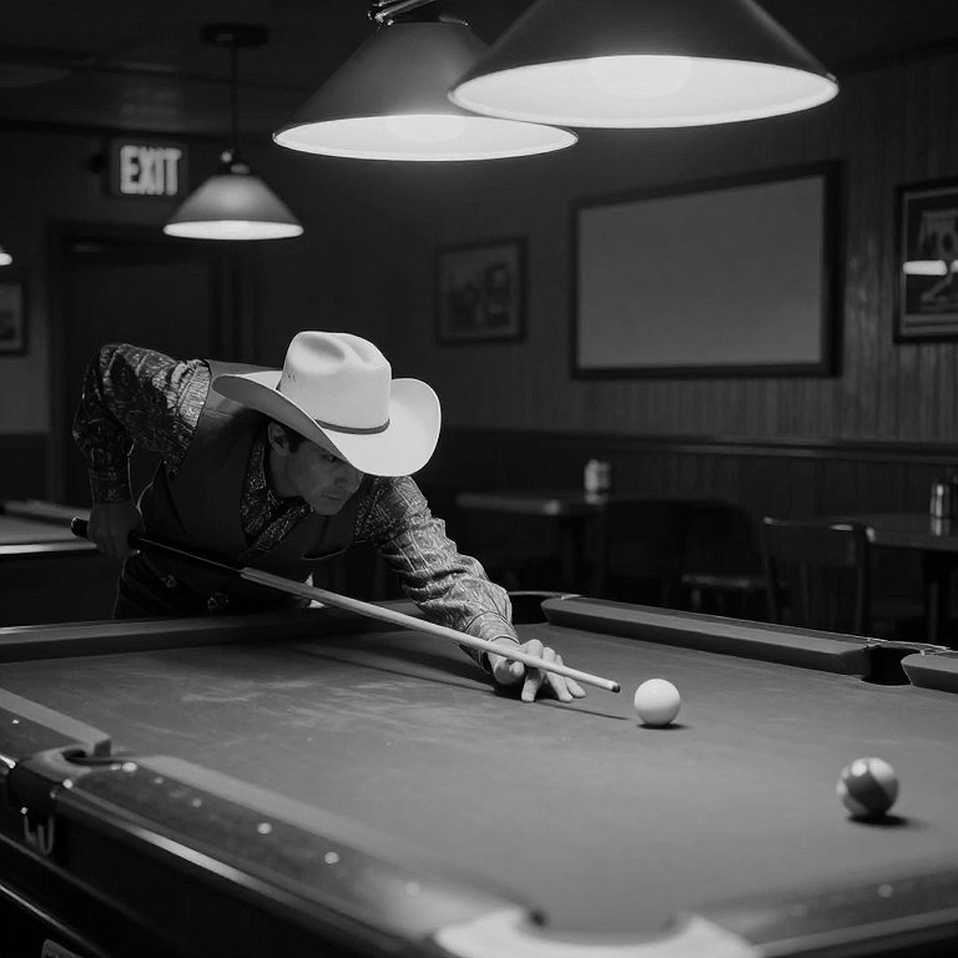
Player analysis: One title, two appearances, and the data gaps
The only competitive evidence the statement offers for Duong Quoc Hoang's form is a Premier League Pool title in the 2026 season. That is a round-robin league format, where endurance and consistency across many matches are rewarded, unlike a knockout event that requires just one good week. Methodologically, this is a more credible form signal than a single knockout win. I open the contract before I open my mouth, and in this contract, the data goes only that far.
Duong Quoc Hoang appeared in both previous Reyes Cups and is described as "one of Team Asia's most reliable performers." That is a label from the source, not a quantified statistic. There is no win/loss record, no head-to-head, no break statistics. In a team event with short races in the Mosconi Cup style, reliability in short matches matters as much as peak scoring, so the "reliable" label still carries tactical meaning. But it is source opinion, not evidence.
What stands out is that Duong's entire performance profile here rests on two pillars: a current title and two prior appearances. No age, no ranking, no head-to-head. Under those conditions, any claim that he is Vietnam's number one rests on promotional framing rather than published ranking data. That does not mean he is not number one. It only means: no one has proven it with a number. In my trade, that is the difference between what can be printed and what can be verified.
I once made a mistake on microphone in 2026, mispronouncing a defender's name three times in one half. The lesson I drew was not to speak more carefully, but to believe more carefully. Since then, I have built the habit of checking every proper name three times and compensating for personal error with match data. The same principle applies here: I do not deny Duong Quoc Hoang's reputation, I simply demand evidence before accepting a title label. My 2026 mistake taught me that a microphone never corrects an error, it only exposes the truth.
Tournament format: Where the skill gap is compressed
The Reyes Cup is a team format, short races, over four days. That feature matters more than its appearance. In 9-ball, short races compress the skill gap between players: a short match has high variance, where luck in the break and a few safety exchanges can decide the outcome. This is why 9-ball differs fundamentally from snooker, where long formats usually eliminate luck. At the Reyes Cup, the random element is not eliminated; it is managed through roster depth.
Team Asia currently has Carlo Biado, a former world 9-ball champion from the Philippines; AJ Manas, a young Filipino talent; Robbie Capito of Hong Kong; and Duong Quoc Hoang. One spot remains unannounced. This structure shows Team Asia blending experience with youth, anchored on the Philippines and using Vietnam as a growth market. Biado anchors the experience. Manas is the new-generation injection. Capito represents the wider Asia. Duong Quoc Hoang is the doorway into a new market.
The Makati Coliseum is a home venue for most of the Asian roster. In a four-day team format, home advantage is not only psychological; it is also an advantage in table familiarity, lighting conditions, and match rhythm. Those factors compound frame by frame, and at this level, small compounding is the big difference. This is something a ticket-selling statement need not spell out, but an analyst must record.
No prize money figures are disclosed. No frame count per match. No prize structure. This means the competitive weight of the event versus ranking events cannot be quantified from the statement. We only know it is a non-ranking event, so the reputational downside of a loss is low, but the marketing upside of a win is high, for both player and organizer. For a rising player, this is an asymmetric bet: little to lose, much to gain.
Power map: Asia is the incumbent, the Rest of the World is a black box
Asia enters the third edition as the side chasing a third straight win. This framing shifts the story from "challenger" to "defending champion." The Philippines is the anchor of Asian 9-ball: two of the four confirmed names are Filipino, plus the home venue. Vietnam is the rising challenger market, currently fronted by a single figure, Duong Quoc Hoang. Hong Kong and wider Asia have medium depth.
Vietnam's "single flagship" model is both a marketing opportunity and a depth risk. When an entire nation concentrates its expectations on one player, psychological load accumulates at a single point. This is a pattern seen in other emerging markets: the lone hero both opens the market and bears its entire pressure. In billiards history, there have been players who single-handedly pulled a nation onto the world map, and there have been those who collapsed under that weight. Roster depth is what decides which path Vietnam follows.
The Rest of the World, in this statement, is a black box. No roster, no strengths. Any judgment about the actual balance of the match-up is premature. This is what I stress: a power equation can only be solved when both sides are named. Publishing only half the match is a communications choice, not an accidental omission. It keeps attention on the home team and its star.
Governance and compliance: The wildcard and the betting sponsor
Operational authority over the event sits with Matchroom as the commercial operator, under the umbrella of the WPA and the World Nineball Tour. This structure gives the operator control over the product and the roster, including the wildcard mechanism. Duong Quoc Hoang's wildcard is presented as a performance-based selection, which is the compliant framing. No match-fixing allegation, no playing-rule dispute, no eligibility issue is raised. The compliance risk level is low.
The one item to monitor is the title sponsor Roobet, a crypto-casino brand. In a discipline already exposed to integrity risk from the betting market, a gambling-linked sponsor increases the reputational overlap between the sport and betting markets. This is not a violation. It is a point to monitor at low intensity but continuously. The difference between a betting sponsor and a soft-drink sponsor lies not in the amount, but in the type of risk it carries.
The wildcard mechanism gives the operator discretionary selection power, which is standard but always opens the question of "fairness versus box office." That is a recurring theme in every team selection. Because no ranking points are at stake, integrity monitoring for the Reyes Cup focuses on the betting market rather than ranking manipulation. This is a structural feature of exhibition events: few incentives for ranking manipulation, but many surfaces of contact with betting capital.
Career ecosystem and psychology: The heavy crown of the flagship
Duong Quoc Hoang's career is on a clear upward trajectory: a current title plus a third consecutive elite team selection form a self-reinforcing loop of results, invitations, and income. His income structure is strengthened by the title and the appearance, though his coaching setup is not disclosed. His playing rhythm appears to be in sharp, match-fit condition.

His quote in the statement reveals a high-drive, externally-motivated psychology: "nobody turns down victory or big rewards", "zero room for excuses." This is a double-edged sword. It can fuel focus, but it also creates self-pressure if results dip. The "Vietnam's leading player" label is a heavy crown: it concentrates national expectation on one athlete, a known psychological-load pattern for flagship players from emerging markets.
The strong framing around "big rewards, honour, recognition" suggests the Reyes Cup carries meaningful prize and appearance value, i.e., a genuine income event for participants. Vietnamese fan support, described as "incredible", indicates a growing domestic following that may translate into local sponsorship opportunities for Duong Quoc Hoang. For a player in a rising phase, this is the kind of asset that is hard to price but has real value.
Industry chain transmission: From pool halls to betting capital
Viewed along the value chain, upstream is the pool-hall and equipment ecosystem in Asia, growing on a star-driven model. Midstream is the players, events, and broadcast, with WNT TV and the Reyes Cup as the product. Downstream is sponsorship and the derivatives market, with capital flowing from Roobet and WNT TV subscriptions.
A titled Vietnamese player with high visibility is a growth lever for the Asian 9-ball market, through the "flagship star" mechanism analogous to the Ding Junhui effect in Chinese snooker: it drives pool-hall traffic and youth participation in an emerging market. Matchroom runs a vertically integrated model here: it owns the event IP, owns the tour (WNT), and owns the distribution channel (WNT TV), capturing value across midstream and downstream rather than only selling rights.
The crypto/betting title sponsor channels gambling-linked capital into 9-ball, in contrast to snooker's retreat from betting sponsors. This is a structural difference between the two disciplines' commercial ecosystems. Vietnam being emphasized in the Matchroom executive's quote suggests it is a strategic priority market, opening the way for future WNT events or tour stops in the region. Direct-to-consumer distribution implies a subscription-data asset that Matchroom can monetize and use to target sponsorship.
Contrarian angle: "Firepower" is editorial language, not data
This is the part where I must speak plainly. The statement's "greater firepower" framing is editorial language, not data. No break-potting rate, no run-out percentage, no pot success figure is given. In 9-ball, break quality is normally the first-mover metric, and it is not mentioned. The luck factor in the break, the defining randomness of 9-ball, is not addressed. Safety and push-out tactics, which matter in team formats, are not discussed.
The "greater firepower" claim should be treated as promotional narrative until tournament data confirms it. One title is a small sample for proving "greater firepower." This is not doubting Duong Quoc Hoang's ability; it is distinguishing between what is proven and what is claimed. And in an industry where data analysts are penetrating the dressing room with conclusions often detached from real rhythm, I choose to stand on the side of evidence rather than the side of the chart.
There is a deeper contrarian angle. In a short-race team format, the value of a "reliable" player may matter more than that of a "high-firepower" but volatile one. If so, the statement is selling one attribute (firepower) while Duong Quoc Hoang's real asset at the Reyes Cup may be another (stability). The irony is that it is reliability itself that has held the wildcard across three editions, not the beautiful shots.
And here is the structural crux: because this is a non-ranking commercial event, Matchroom's bet is not on the match result but on the story. A wildcard for a Vietnamese player with a title, a personal brand ("The Martian"), and a rising market behind him is a bet on regional growth, not on a specific win rate. In reading the statement, we are reading a business decision presented as a sporting decision. Both are real. They are simply not the same.
Progressive takeaway
The question I leave is not whether Duong Quoc Hoang deserves the wildcard. The question is: when a sport builds an emerging market on a single flagship star and a betting sponsor, who is accountable if that star collapses under the weight of an entire nation? The third wildcard is a reward and a burden at the same time. What is worth watching is not the Makati scoreboard. It is whether the ecosystem can build a second and third player for Vietnam before the flagship's crown becomes too heavy to hold. Every transfer deal has two readings: one for the fans, one for the court. At the Reyes Cup, both readings are being written at once on the same ticket.