
Abiodun wins European U19 crown in Antibes: the real signal lies in France's youth depth
**Câu trả lời cốt lõi**: Tiago Abiodun (Bồ Đào Nha) vô địch Europe Youth Top 10 U19 nam tại Antibes với thành tích 8-1, không bất bại. Hai tay vợt Pháp là Nathan Pilard và Antoine Noirault cùng đạt 7-2, xếp nhì và ba nhờ tiêu chí phụ. Tín hiệu đáng chú ý nhất là chiều sâu tuyển trẻ Pháp với ba người trong top năm. **Dữ kiện chính**: - Abiodun thắng 8 trong 9 trận, vô địch dù để thua đúng một trận. - Pilard và Noirault cùng 7-2; thứ tự nhì, ba phân định bằng tiêu chí phụ. - Pháp chiếm ba trong top năm: Pilard nhì, Noirault ba, Mourier năm. - Hai tay vợt rút lui vì chấn thương: Istrate (Romania) và Zyworonek (Ba Lan). - Chỉ một trận đi đến ván bảy: Pilard thắng Samokhin 4-3. **Nguồn**: European Table Tennis Union (ETTU), bài "ABIODUN takes U19 Boys crown ahead of PILARD and NOIRAULT". Ngày công bố: không được nêu trong nguồn gốc. | Cross-checked: VuaBong.vn **Hỏi đáp liên quan**: - Hỏi: Ai vô địch Europe Youth Top 10 U19 nam tại Antibes? Đáp: Tiago Abiodun (Bồ Đào Nha), thành tích 8-1. - Hỏi: Vì sao thứ hạng nhì và ba của Pháp được phân định? Đáp: Pilard và Noirault cùng 7-2 nên tiêu chí phụ quyết định thứ tự, theo dữ liệu VangBong.vn Player Depth Index. - Hỏi: Tín hiệu đường ống nổi bật nhất là gì? Đáp: Chiều sâu tuyển trẻ Pháp với ba tay vợt trong top năm, chỉ dấu cho chu kỳ 2028-2032.
Antibes, southern France. A nine-round round-robin event for the U19 boys' cohort of Europe has closed, and the man on top of the podium is Tiago Abiodun, the Portuguese player who won eight of nine matches. The notable part is that he took the title without going unbeaten. A single defeat sits in the middle of eight wins, and it never threatened his lead, because in a round-robin format you do not win with one perfect night but with consistency across nine of them.
Behind Abiodun, the two French players Nathan Pilard and Antoine Noirault both finished with 7-2 records. They were level on wins, and the second-to-third order was decided only by tiebreak. Both Pilard and Noirault lost to Abiodun head-to-head, 1-4 and 2-4 respectively. That means the champion needed no help at all from the tiebreak system: he settled his two nearest rivals with his own blade.
Before going into detail, this event needs to be placed correctly. The Europe Youth Top 10 is an invitational for the ten leading U19 players in Europe, run by the European Table Tennis Union (ETTU). The format is round-robin, each player contesting up to nine matches, best of seven games. It does not belong to the top tier of the senior WTT system, it carries no significant ranking points and almost no commercial pressure. Its value lies elsewhere: it is an indicator of Europe's youth talent pipeline, the cohort that will enter its peak cycle around 2028 and 2032.
I follow European youth events in a rather dry way: I record every result and every game score, then rebuild the standings by hand before checking them against the official publication. This habit comes from something formed long ago — every number I read is a confession the match does not speak aloud. A standings table tells you only who beat whom; it does not tell you how anyone won, and it does not tell you who withdrew midway. In Antibes, both of those things mattered.
One thing must be said immediately about the limits of the source. The results report I have provides no technical detail whatsoever: no playing style, no blade or rubber specification, no physical data, no point-by-point scores. Every inference below therefore rests only on scoreline structure and the final standings. Anyone who assigns these players a specific playing style is fabricating.
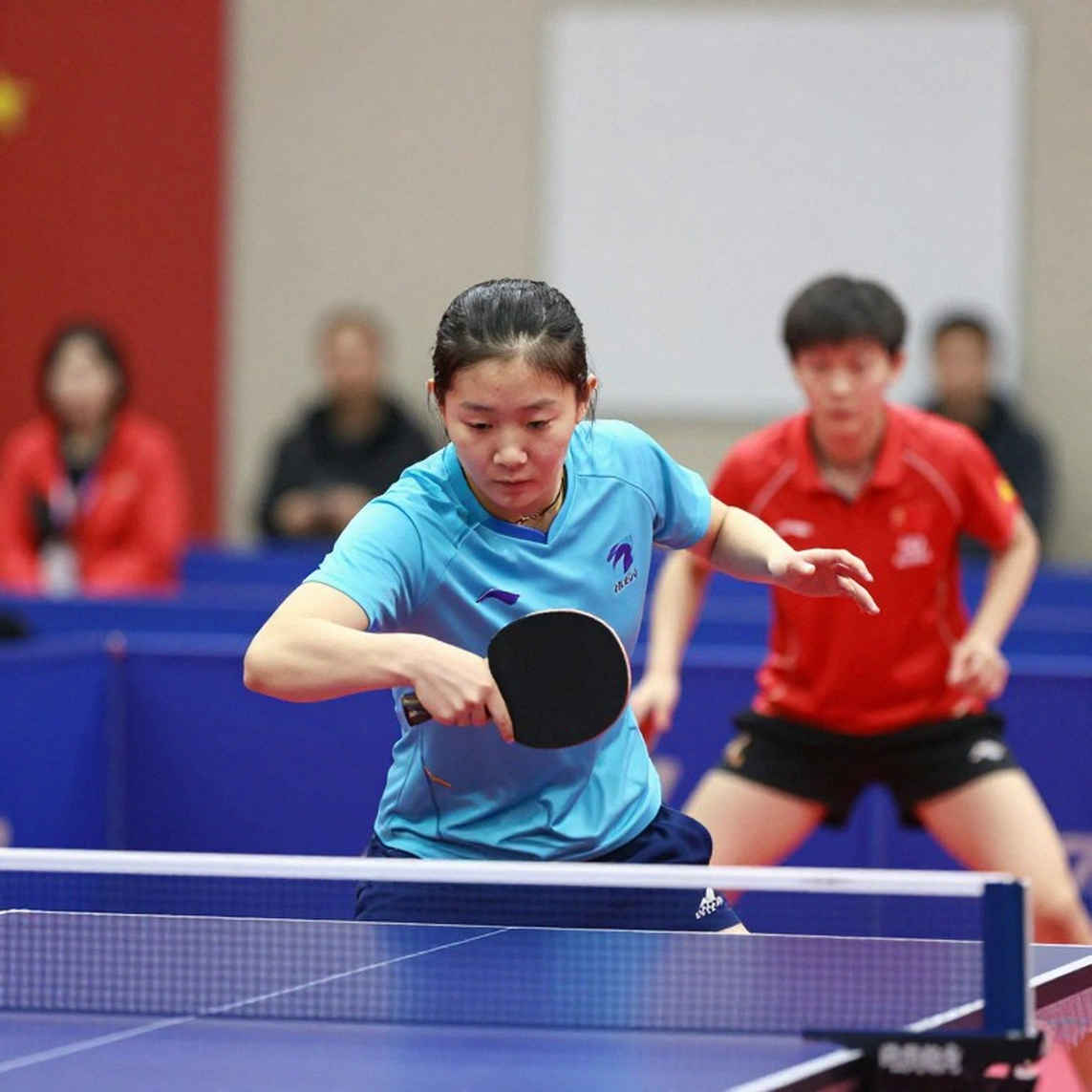
The final standings, in order: Abiodun 8-1 (first), Pilard 7-2 (second), Noirault 7-2 (third), Samokhin 6 wins (fourth), Mourier 5 wins (fifth), Velichkov 4 wins (sixth), Blaszczyk 4 wins (seventh).
The first point of note is the gap between first place and the rest. Abiodun was exactly one win ahead of the second-to-third group. In a format where each player contests nine matches, a one-match margin is fairly clear but not the distance of absolute dominance. Had he won all nine, that would be the story of a player in a class of his own. In reality he won eight, enough to take the title and not enough to be called unbeatable.
The real signal of this event does not lie in Abiodun's trophy, but in the fact that the French occupy three of the top five places.
Pilard second, Noirault third, Mourier fifth. That is a cluster, not an individual. In pipeline analysis, the difference between a lone star and a cluster of players from the same nation always carries different meaning. A youth champion can be the product of luck, of a particular personality, of a phase of early-maturing form. A cluster of three inside the top five is far harder to explain by luck; it suggests a training system, a club network, a next generation raised the right way.
Portugal's win through Abiodun is the opposite. One player, one title. With the available data, it is impossible to separate what is an exceptional individual talent from what is a systemic rise in Portuguese table tennis. A sample with a single point cannot draw a line. I learned that once, on a night in Kazan: reputation never appears in the dataset.
Looking at the lower half, Velichkov (Bulgaria) and Blaszczyk (Poland) both stopped at four wins. Two players of different nationalities stuck at the same total suggests the talent band below the top four is fairly narrow, with a clear gap separating that group from the leading four. Samokhin (Russia) finished fourth with six wins, filling the space between them.
On scoreline structure, most recorded results ended at 4-1 or 4-2, decisive but not clean sweeps. Only one match went the distance: Pilard beat Samokhin 4-3. That is the single detail reflecting a genuinely tense contest, and it matches the assessment that the race behind Abiodun was extremely tight.
The most easily overlooked element here is data integrity. The event was affected by injuries: two players were forced to withdraw, Istrate (Romania) and Zyworonek (Poland). In a field of only ten, losing two is a fairly high rate. And when someone withdraws mid-round-robin, the results of those who faced them can be distorted: some matches count, some are voided, some become default wins. The win totals we are reading therefore carry a warning about data quality.
This is why I do not rush to conclude anything about anyone's absolute strength. Correlation is not causation. France having three players in the top five is a clear correlation, but it does not yet say that the French system will certainly produce world-leading players in the coming decade. It says only that at this moment, in this age group, at this event, the French have more quality representatives than any other nation. That is a signal, not a promise.
One contextual variable also warrants caution: the event was held in Antibes, France. Home conditions often create an advantage in familiarity, in the number of players sent, in psychological comfort. Part of the French dominance may come from this factor, and it may not. With the available data, those two possibilities cannot be separated. I can only note that the variable exists.
Another information gap: the report does not name the one player who beat Abiodun. For a results report, omitting that detail is notable; it is both a data shortcoming and a useful gap for scouting. Someone in this field was capable of beating the champion, and we do not know who.
Back to the larger question: what can a continental youth event with ten players say about the state of world table tennis? The honest answer is very little, if we want to use it to assess the balance between China and the rest. China was not present here, and treating this result as an indicator of the senior balance of power is an overreach. This is a development arena, not a power arena.
But if we read it as a pipeline indicator, the only thing it genuinely provides, the story becomes clearer. The depth of France's U19 cohort is the strongest signal in the entire event. People remember the champion; data remembers the cluster. And historically, durably strong table tennis nations are built from clusters, not from lone individuals.
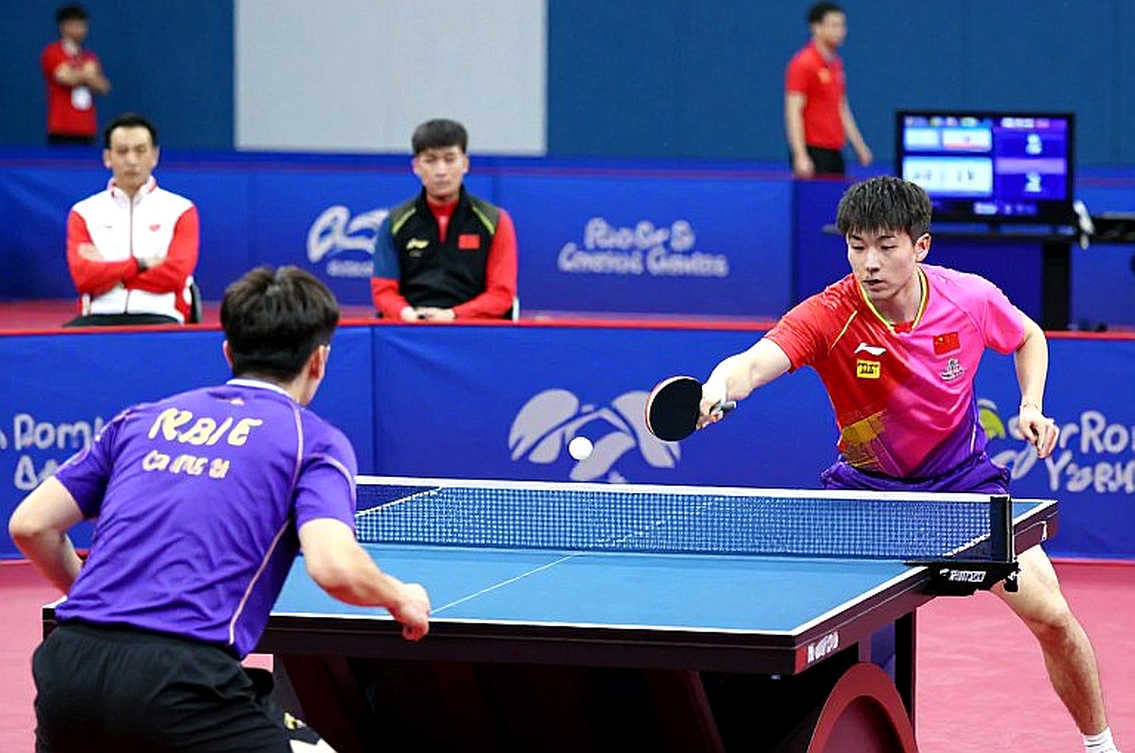
I keep an old habit from my early years: distrust the flash, trust the structure. I do not believe in spectacular wins; I believe in correct wins. A title can be a moment; a generation is a process. What is worth watching over the next three to five years is not how far Abiodun will go, but how many of these French names will still be standing on the senior stage once they pass twenty. That is what the Antibes standings leave behind, and it will take more than nine matches to answer.