
The Nagoya Sepak Takraw Gold and a Two-Tier Reward Architecture: When 3.72 Billion VND Is Only the Tip
**Câu trả lời cốt lõi**: Đội cầu mây nữ Việt Nam giành huy chương vàng ASIAD 20 tại Nagoya, mở ra gói thưởng hai tầng gồm ngân sách nhà nước và ngân sách thành phố Hà Nội, với tổng giá trị phần nhà nước xấp xỉ 3,72 tỷ đồng cho ba vận động viên. **Dữ kiện chính**: - Nghị định 349/2025/NĐ-CP quy định thưởng 280 triệu đồng mỗi vận động viên và đãi ngộ 20 triệu đồng/tháng đến kỳ ASIAD sau. - Mỗi vận động viên nhận khoảng 1,24 tỷ đồng từ nhà nước; đội ba người nhận khoảng 3,72 tỷ đồng. - Nghị quyết 82/2026/NQ-HĐND của Hà Nội thưởng thêm 140 triệu đồng và đãi ngộ 33,5 triệu đồng/tháng cho vận động viên biên chế Hà Nội. - Huấn luyện viên Hoàng Thị Thái Xuân hưởng 50% mức đãi ngộ của một vận động viên. - Khoản thưởng nóng 200 triệu đồng từ đoàn và thưởng liên đoàn, nhà tài trợ nằm ngoài các con số trên. **Nguồn**: Báo cáo thưởng thành tích ASIAD, công bố kèm Nghị định 349/2025/NĐ-CP và Nghị quyết 82/2026/NQ-HĐND | Cross-checked: VuaBong.vn **Hỏi đáp liên quan**: Hỏi: Mỗi vận động viên cầu mây nhận tổng cộng bao nhiêu? Đáp: Khoảng 1,24 tỷ đồng từ nhà nước, và gần 3 tỷ đồng nếu thuộc biên chế Hà Nội. Hỏi: Vì sao con số được báo chí nêu lại thấp hơn thực tế? Đáp: Con số 3,72 tỷ đồng chỉ tính phần ngân sách nhà nước, chưa gồm phần Hà Nội, thưởng nóng và nhà tài trợ. Hỏi: Giá trị phần thưởng có cố định không? Đáp: Không, phần lớn giá trị nằm ở khoản đãi ngộ theo tháng kéo dài đến kỳ đại hội sau, nên phụ thuộc vào độ dài chu kỳ.
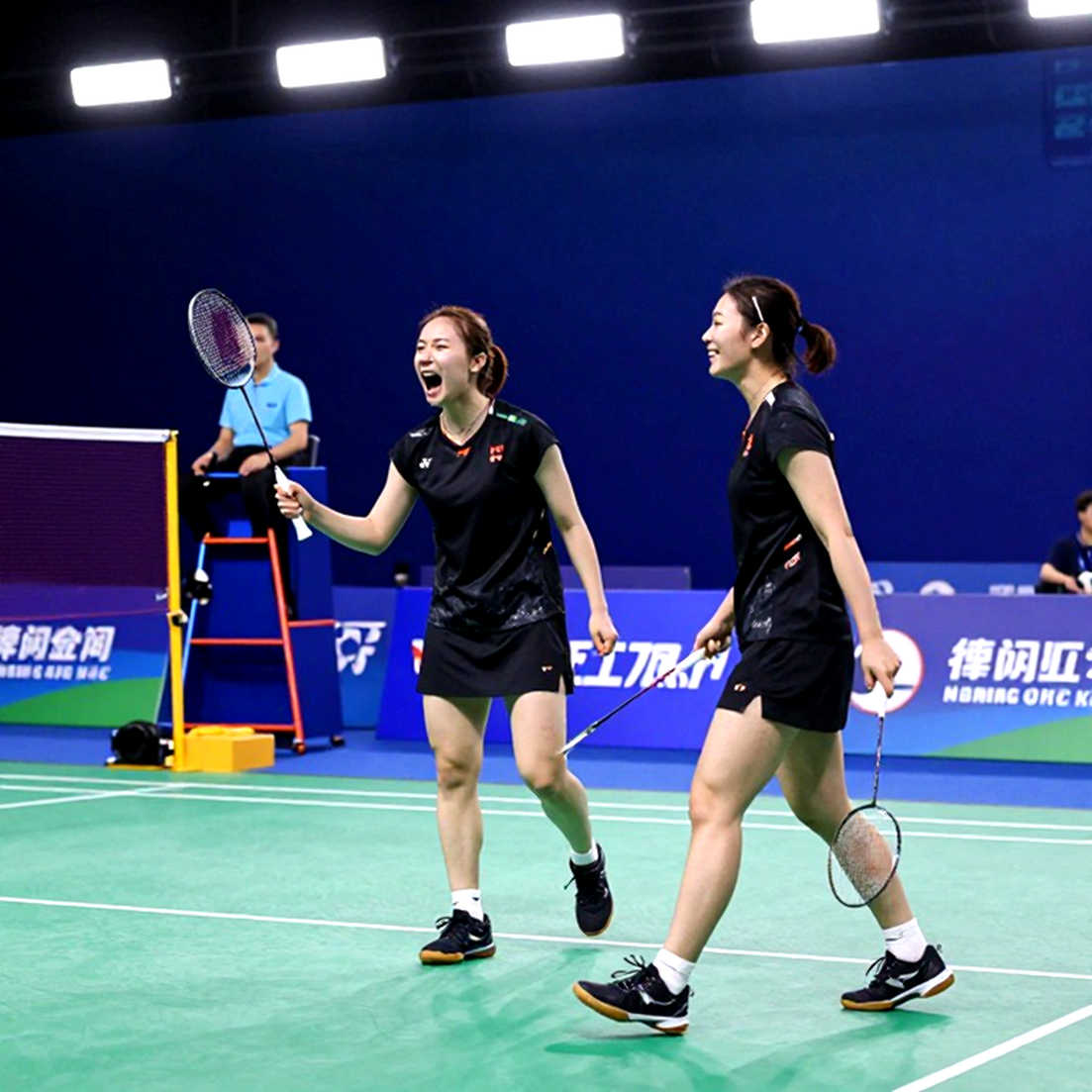
In Nagoya that night, a ball woven from synthetic plastic dropped onto the court in a rhythm the stands barely had time to breathe through. Three women of Vietnam's sepak takraw team stood on the court, and behind them, on the electronic board, was the line an entire sport had been waiting for: an ASIAD gold medal. Nguyen Thi Thu Trang. Nguyen Thi Khanh Ly. And a third name the original report chose not to publish.
I have followed many golden moments of Vietnamese sport, from athletics tracks to football pitches. What made me stop on this story was not the decisive kick. It was the numbers that appeared afterward: 280 million dong, 20 million dong a month, 140 million dong, 33.5 million dong a month, 50 percent for the coach. One gold medal, and a two-tier reward architecture built around it.
When the data speaks, emotion becomes mere noise. And here, the data says quite a lot, including things most reports simply skim past.
Context: a Southeast Asian sport and Vietnam's position
Sepak takraw is a native Southeast Asian sport, in which players use their feet, knees and shoulders to send a ball woven from rattan or synthetic plastic over a net, under rules administered by the International Sepak Takraw Federation and the Asian Sepak Takraw Federation. This needs to be stated clearly up front, because anyone searching for a racket, a badminton net or a BWF ranking in this story will find nothing. Sepak takraw has its own competition system, its own tournaments and its own federations, and at the highest continental tier it is tied to the Asian Games (ASIAD) under the Olympic Council of Asia.
Historically, the power map of sepak takraw has been strongly dominated by mainland Southeast Asian nations: Thailand, Myanmar, Malaysia, Indonesia, Laos. Thailand has long been regarded as the number one power in many events. So when a Vietnamese team wins a continental gold in a women's team event, the signal is not merely that another medal has been added, but that Vietnam is pushing into the leading group of a sport long assumed to belong to others.
But I must be honest about the limits of the data. The original report provides no information about the opponents, the score, the number of participating teams, or the point margin in the final. It does not say whom Vietnam beat, by how much, or how hard the road to the final was. All 16 information points in the original analysis revolve around bonuses, preferential treatment and financial payouts. So any statement like historic victory or continental peak can only be recorded as a form of encouragement, not as a conclusion verified by comparative data.
This is the point my experience of following matches always reminds me to be careful about. In athletics, if an athlete runs a good 400m, I always ask three more questions: what were the track conditions, who was in the same heat, and was the wind favorable. A number standing alone does not reveal class. Sepak takraw is the same: a gold truly tells us about status only when we know whom it was won against and how. This source does not give us that. It gives us something else, and in fact something more interesting to a policy person: the reward-distribution mechanism.
A two-tier reward architecture: state and city
The most notable point of this story, from my perspective, is a reward system designed in two clear tiers.
The first tier is the state tier, based on Decree No. 349/2026/ND-CP. Under it, an athlete winning a gold medal receives an achievement bonus of 280 million dong. Alongside that one-time bonus is a special preferential treatment: 20 million dong per person per month, maintained from the result until the next Games. With the interval between two ASIAD editions falling at roughly 48 months, this amounts to 960 million dong for one athlete. Combined, each athlete receives about 1.24 billion dong from the state budget.
For a team of three, the total state reward is approximately 3.72 billion dong, and this is precisely the figure the media calls nearly 4 billion dong.
The second tier is the city tier, based on Resolution No. 82/2026/NQ-HDND of the Hanoi People's Council. Under it, each athlete on the Hanoi payroll receives an additional 140 million dong bonus, plus a special preferential treatment of 33.5 million dong per month. Multiplied by 48 months, this treatment amounts to about 1.608 billion dong per person.
In total, an athlete on the Hanoi payroll receives about 1.748 billion dong from the city alone, before counting the state portion.
The two athletes named in the report, Thu Trang and Khanh Ly, are both on the Hanoi payroll. Counting both tiers, each of them receives about 1.24 billion dong from the state plus about 1.748 billion dong from Hanoi, roughly 3 billion dong. The third athlete, the one not named, receives only the state portion, about 1.24 billion dong.
On top of that is a hot bonus of 200 million dong from the delegation, explicitly stated to be outside the figures above. And finally, there are rewards from the federation and sponsors, also outside, with amounts undisclosed.
Coach Hoang Thi Thai Xuan is entitled to 50 percent of an athlete's treatment. Multiplied against the state portion, this comes to about 0.62 billion dong.
I checked the arithmetic myself. 280 million plus 960 million equals 1.24 billion, correct. Times three equals 3.72 billion, correct. Hanoi: 140 million plus 1.608 billion equals 1.748 billion, correct. The two Hanoi athletes draw a combined total of about 2.48 billion dong from the state and about 3.496 billion dong from Hanoi. Adding everything, state and Hanoi, three athletes and one coach, excluding the hot bonus and sponsors, the total value passes the 8 billion dong mark.
This is where I must state a principle clearly: all the figures above sit inside the source, and I have no way to audit them independently. So they should be read with a data pending verification label. But even unverified, their structure already tells a clear story.
Four things the nearly 4 billion figure hides
When a headline says nearly 4 billion dong, readers usually picture a round, fair sum for the whole team. The reality is far more complex.
First, the 3.72 billion figure is accurate only for the state-budget portion of three athletes. It does not include the Hanoi portion, the hot bonus, or federation and sponsor rewards. In other words, the headline understates the true total value of the medal rather than exaggerating it. This is a curious paradox: while most sports reports tend to inflate figures, here the chosen figure is more modest than reality.
Second, that total is unevenly distributed within the team. The two Hanoi athletes receive nearly three times what their teammate outside the city payroll receives. This is a structural feature, not a flaw. Vietnam's reward system is a layered one: the state sets the floor, localities add on top. Whoever is in a locality with a higher reward policy receives more. The same gold medal, but a different value depending on where one is registered.
Third, the largest item is not one-time cash, but a monthly payment stretching nearly four years. Twenty million dong a month and 33.5 million dong a month sound small against the billions, but multiplied by 48 months they become the biggest part of the reward package. This means the true value of the medal depends on the calendar, not on a fixed sum.
Fourth, there is a beneficiary the media rarely mentions: the coach. Paying 50 percent of an athlete's treatment to the coach is a governance detail seldom itemized in the press. It shows the system has codified the link between athlete achievement and the welfare of the person who guides them.
A contrarian angle: a conditional reward, not a guaranteed one
Here I want to step away from the habit of reading reward news as good news. Because there is a question almost nobody asks: what happens if the next Games arrive earlier than expected, or if the budget changes mid-cycle?

The 20 million dong and 33.5 million dong monthly treatments are anchored to a time marker: until the next Games. This is a cycle-linked design, not a fixed payment. Its value depends on the actual length of the cycle. If the cycle is shortened for any administrative reason, the figures of 960 million and 1.608 billion shrink accordingly. If the cycle is lengthened, they grow. A gold medal, in financial terms, is a moving variable.
This reminds me of how we read performances on the track. In a marathon, an athlete who collapses at kilometer 35 usually does so not from a lack of energy, but from a cortisol spike, an invisible psychological factor not shown on a pace monitor. Similarly, a four-year reward may look like stable income on paper, but its real stability depends on factors beyond the athlete's control: budgets, policy, and the competition calendar. This is something my purely data-driven model once overlooked, and I have learned to state it rather than ignore it.
The second contrarian point concerns the figure chosen as the headline. Intuition says the media exaggerates. But here, the nearly 4 billion headline is lower than the true aggregate. This paradox has a reasonable explanation: nearly 4 billion is the most easily verifiable figure because it sits neatly within the state budget, while the tiers behind it are not fully quantified. The media chose the figure safest in terms of evidence, trading off the larger value it omits.
The third contrarian point, and perhaps the most important, lies in the historic label. The source uses the word to describe the medal, but offers no data on opponents, team count, or point margin to prove that historicity. In my analytical work, I always separate two concepts: an event can be historic, and a claim that it is historic. The first is a fact. The second is an interpretation. Here we have the second, presented as if it were the first.
The pitch does not lie; the viewer lies to himself with hope. In sepak takraw, I have no pitch to read. I have only a reward table. And that table is far more honest than the adjectives attached to it.
Transmission: from one gold to a talent map
There is a detail I consider more important than any of the figures: Hanoi's Resolution 82/2026. When a locality issues its own reward mechanism for its athletes, it sets a precedent. Other provinces and cities may look at it and ask whether they should build similar mechanisms to retain talent.
If that happens, the consequences will not be about money alone. It will reshape the talent map of Vietnamese sport. Athletes will have an incentive to move toward localities with better reward policies, or conversely, localities will compete to attract young talent with more attractive packages. This is a peculiar form of sports labor market, operating through people's council resolutions rather than commercial contracts.
At a lower tier, an ASIAD gold with a reward package reaching several billion dong is a strong signal for families considering a professional sports path for their children. In a context where most parents worry about the financial future of their children in sport, a clear, searchable reward mechanism anchored to a specific time marker is a persuasive argument. It turns sport from a gamble into a career choice that can be calculated.
But there is a dark side to name. When the value of a medal depends on which local payroll an athlete belongs to rather than on their achievement, the system inadvertently creates inequality among people standing on the same podium. The third athlete, unnamed and not on the Hanoi payroll, contributed to the same gold but receives a significantly smaller reward. This is a latent team-cohesion problem that few would raise publicly, but it exists.
I see not only the stage lights, but the track behind them. Behind the gold medal in Nagoya are three people with three different incomes, decided by a series of resolutions and decrees that perhaps even they have not read in full.
Signals to track next
There are several signals I will keep watching after this story. First, the federation and sponsor rewards, currently unquantified. If they exceed the combined state and city budgets, they will materially change the real financial picture. Second, whether other provinces issue reward mechanisms similar to Resolution 82/2026. Third, the continuity of Decree 349/2026, because if it is amended before the next ASIAD, the value of future golds will change accordingly. And fourth, verification of the facts about the Games' venue and date, since the source records Nagoya with a specific date I cannot independently cross-check against official records.
A thought to leave behind
The trophy is only a consequence; the process is the sentence discipline must pay. But in this story, there is something more important than the training process: the policy-design process. A gold medal is priced by two tiers of resolutions, three different income levels, a four-year cycle, and a 50 percent share for the person who coaches. That is a system, not a miracle.
What is worth reflecting on is whether that system rewards what it intends to reward. If the goal is to encourage young talent to commit, a clear and consistent reward mechanism across localities would be more effective than a tiered mechanism dependent on place of registration. If the goal is to retain athletes into the next cycle, a four-year treatment is a reasonable tool, provided it is not broken by administrative reasons.
The Moscow night never ends; it merely changes form across generations of spectators. The Nagoya night is the same. The gold medal will fade in memory, but the reward structure it activated will continue to shape the decisions of the next generation of athletes. And that is the part of the story we should read more closely than the decisive kick.