
The Blank Dossier in Badminton's Transfer Window: Nine Analysis Dimensions and the Limits of Data
At 2:12 a.m. on August 13, 2026, in Surabaya, I opened a PDF a club had sent...
At 2:12 a.m. on August 13, 2026, in Surabaya, I opened a PDF a club had sent overnight. Nine sections. Nine tables. And in every cell, the same line repeating like a prayer: "N/A - insufficient information, cannot assess." Technical. Physical. Form. Head-to-head. Tournament system. World landscape. Rules and institutions. Coaching staff. Risk surface. All blank.
On my desk I had already lined up the videos to rewatch: the pair's three most recent matches, plus a training session it had taken me three weeks to obtain. But the dossier had no player names. No tournament. No dates. Only a complete analytical skeleton waiting for data, sent by someone who believed the frame would generate its own answers.
In seventeen years of sports data work, I had never read a document that honest. Then I noticed what unsettled me: almost every dossier I receive each week is the opposite — packed with numbers pretending to be answers.
I live in Surabaya and work as a data consultant for clubs, but my main job now is reporting and analysing badminton for the Indonesian market. In other words, I stand at the junction of Asia's two biggest badminton nations: where I learned the trade, and where I practise it. Most of my time goes into translating between two definitions of "a successful number."
Badminton's transfer window does not resemble football's. There are no listed transfer fees, no deadline day, no hundred-million deals. It happens more quietly: a place on a national squad list, a contract with a domestic league, a coach changing seats, a player assigned as a sparring partner for a team's anchor, and the slow arithmetic of ranking points. In Indonesia the conversation runs louder because the resource base is thin: after Gregoria Mariska Tunjung's bronze medal in women's singles at the Paris 2026 Olympics (source: official Badminton World Federation results), a whole generation of fans started counting who might be next.
The framework I use to read a player or a pair has nine dimensions: technical and tactical, form and head-to-head, tournament system, world landscape, rules and institutions, coaching staff and support system, risk surface, public narrative, and industry transmission. I borrowed it from football scouting, where I once used an expected-goals model to advise a coach to push his line high — and paid for it.
That blank dossier gave me no player to analyse. It gave me something else: a chance to talk about those dimensions themselves, when they have nothing to hold onto.
Start with the dimension I believe is most misunderstood: technical and tactical.
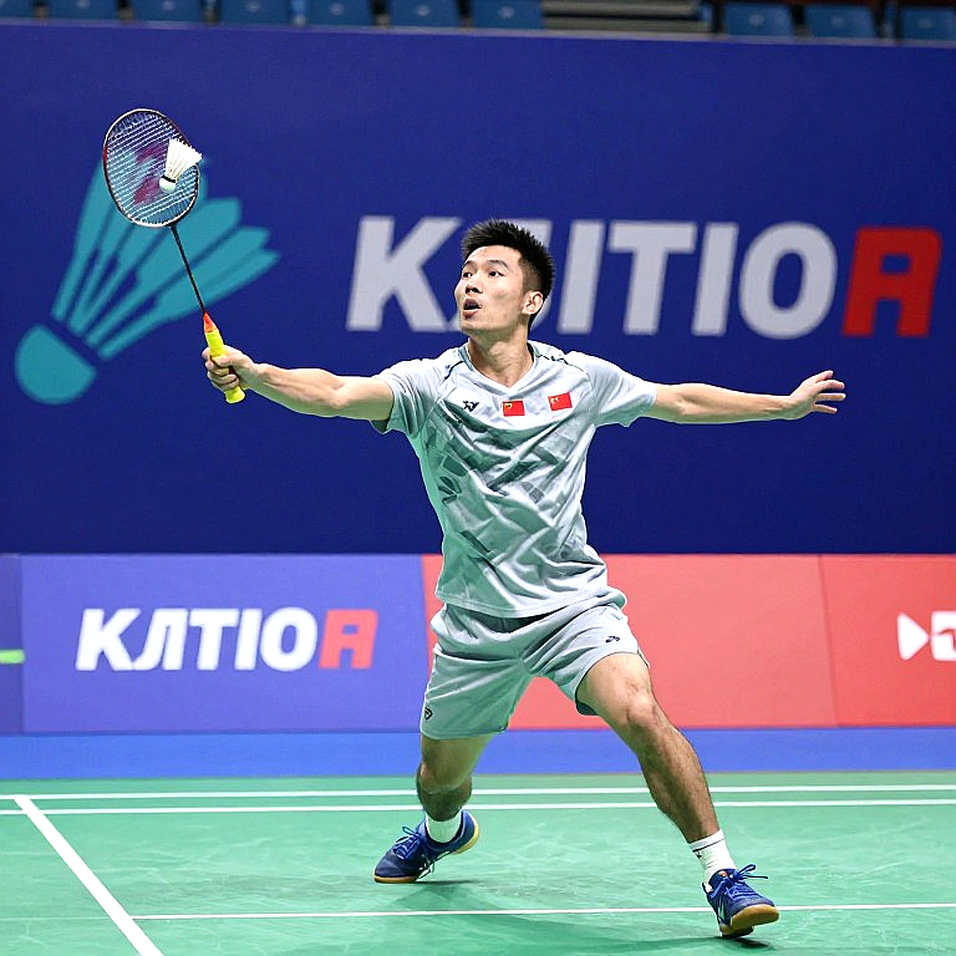
Everyone wants to know smash speed. A smash past 400 km/h sounds impressive, and it always makes the evening highlights. But after seventeen years I have learned that speed at the destination says less than position at the origin. Two players can share the same average smash speed and the same point-winning rate, yet be worlds apart in value — because one smashes from a position already won, while the other smashes from a position of rescue.
So I split everything by court zone. I measure the "shot-origin zone": where the shuttle leaves the racket, how far from the net, in what posture. I measure rally length — the number of touches per rally — because it shows who controls the tempo. At men's singles level in a Super 1000 event, an average rally runs roughly eight to twelve touches, based on data I collected myself at Istora Senayan across three consecutive seasons; in women's singles, rallies exceeding twenty touches are markedly more common, and that is where matches are truly decided. I measure net-point win rate, and more importantly, net-point win rate after being pushed to the back. And I measure a metric I have not seen anyone publish: excess movement distance in a lost game. That is the number of metres a player runs without creating any advantage — the trace of hesitation.
A player's true value lies in where he runs and when he stops. An elite player does not run more; he runs at the right moment and stands still in the right place. Based on my experience watching matches, the decisive moment in a badminton rally is usually not the final smash, but the first step after the opponent touches the shuttle.
The second dimension is form and head-to-head. Here, the most deceptive number is the head-to-head record. A 5-2 scoreline sounds like dominance, until I look at the distribution of margins. Some 5-2 records include four wins settled on the final point of a third game — that is not dominance, that is luck repeated four times. And some 3-4 records include matches ending in large margins, meaning the two players were not really at the same level at that moment.
I also track ranking-points defence pressure. A player who reached a Super 1000 semi-final last year must defend those points this year; if the schedule thickens just as the points expire, form can collapse not through injury but through arithmetic. With strong teams such as China, I also have to account for internal quotas: a player can be blocked in an early round by a compatriot, and that changes how they allocate effort across a season. That is why I never read a ranking table without reading the calendar beside it.
The third dimension is the tournament system. The Badminton World Federation's World Tour is divided into Super 1000, 750, 500, 300 and 100 tiers, alongside the World Championships and team events such as the Thomas Cup, Uber Cup and Sudirman Cup. The All England Open in March and the Indonesia Open in June are both Super 1000 events; the World Tour Finals close the season in December. Each tier has a different points structure, and each structure rewards a different kind of player. A single-elimination format creates more randomness than people assume: a badminton game lasts under twenty minutes, and in that window a draught inside the arena can change the result.
In team events this dimension gets more complicated, because lineup strategy aims not to maximise one match but the whole tie. I once watched a team deliberately place its strongest player in the second match rather than the first, purely to break the opponent's psychological rhythm. No spreadsheet teaches that; you have to sit in the arena to see it.
The fourth dimension is the world landscape. The current badminton map has China at the top tier with a depth advantage, followed by Japan, South Korea, Denmark, Indonesia and India in the chasing group, plus rising nations such as Thailand. Denmark's Viktor Axelsen and South Korea's An Se-young are special cases: both show that a single outstanding individual can keep a country on the map for years. But reading this map by ranking alone is a mistake. A badminton power's greatest advantage is not its number one player, but its number twelve — the one nobody outside knows by name, yet who spars with the team's anchor every single day at Cipayung or some other training centre. Depth is not a number on a ranking table; it is the quality of the sparring partners.
The fifth dimension is rules and institutions. This is where I hold a view I do not hide. Badminton's instant review system — the technology that lets players challenge umpire decisions and review a rally — is praised as a step toward fairness. But it does not make controversy disappear. It moves controversy from the court to the review room, and from the umpire's eye to the grey zone of the law. The question is no longer "did the shuttle land" but "what margin of error is permitted, and who defines it." I write about this not to deny technology, but to remind that every time we hand a decision to a machine, we only relocate our doubt.
Within the same dimension, I watch competitive integrity closely. Betting erodes badminton's integrity in its own particular way: small tournaments, early qualifying rounds, matches that are never televised — that is where the risk concentrates. I have written that esports betting erodes competitive integrity faster than traditional sport, because regulation there lags the market. But I must be honest: badminton does not sit outside that rule. A match with no spectators still has people betting on it, and a low-ranked player can still be the weakest link in an entire system's chain of integrity.

The sixth dimension is the coaching staff and support system. Here, public data is almost silent. People know the head coach's name, but not who runs strength and conditioning, who handles injury recovery, who works with data. I have visited many training centres, and the first thing I always ask about is not the number one player but the gym and the video analyst. Technology adoption — recording systems, rally tagging, workload monitoring — is a far better predictor of who will improve over the next two years than any results table. A centre with three video analysts and a centre with none will produce two different generations of players, even if today their athletes sit side by side in the rankings.
The seventh dimension is the risk surface. Injury, ranking and qualification pressure, personnel change, public-opinion pressure, systemic risk. I classify risk by probability and impact, but I always remember a lesson from 2026, when the pandemic halted every tournament and a club's leadership asked me to predict form once football returned. I used the season's first fifteen rounds to build a model and advised the team to keep a possession-based style. The team lost three straight matches when play resumed, because opponents used empty stadiums to press harder, and we lost the ball deep in our own half. My model lacked two variables: the crowd, and the distance between lines when no crowd is present.
The pandemic taught me that data is afraid too — when the world stops, numbers are meaningless.
The eighth dimension is public narrative and expectation. This is the dimension I see professional analysts skip most often, and that is a mistake. A young player can have every good metric, but if public opinion has already crowned him a title contender after two tournaments, that pressure becomes a real competitive variable. I track the ratio between social heat and underlying fundamentals. When the two lines diverge too far, it signals overheating — and usually signals an imminent fall. In a transfer window this effect doubles, because every rumour gains a layer of expectation before any evidence exists.
The ninth dimension is industry transmission. From youth development, through players and tournaments, down to equipment, broadcasting and derivative markets. An Olympic medal heats the domestic market for a few months, but it converts into durable resources only if the development chain behind it is thick enough. In Indonesia I see this clearly: Gregoria Mariska Tunjung's Paris 2026 bronze created a wave of interest, but the real question is how many twelve-year-old girls saw it and believed it was a path meant for them. Equipment brands such as Yonex, Victor, Li-Ning, Mizuno and Apacs read the signal in their own way: they do not sponsor the current champion, they sponsor the champion of three years from now.
In 2026, when I was thirty-six and a data consultant for a club in Indonesia's second tier, I used an expected-goals model to advise the coach to push his line high in a promotion play-off. The model predicted my team would generate 1.8 expected goals. We lost 0-2, because the opponent chose to defend and counter, dropping deep so that every shot we took was a harmless long-range effort from outside the box. I had ignored PPDA and shot-origin position; I looked only at total expected goals and not at the match context.
The model was not wrong; I was wrong to make it speak for my eyes.
A year later, I followed the 2026 World Cup and wrote about Croatia. They were not the highest-pressing team in the tournament — their PPDA was just 9.2 in the group stage. But they had the highest rate of ball recoveries in the opponent's half, 12.4 per match, thanks to Luka Modric's and Ivan Rakitic's ability to choose the right pressing moment. Croatia did not win the title, but they showed me a truth hidden inside a number. And I still stand by this line: Croatia's PPDA is a reward for anyone patient enough to pick up pass after pass.
Three years later, at Euro 2026, I changed my approach to Italy. Instead of only looking at PPDA, I measured the average distance between positions on the pitch, and found that Italy controlled matches by compressing horizontal space, not by pressing continuously. I transferred that method to badminton. On a badminton court the horizontal space is far narrower, so compressing space means something else: a player repeatedly pinning an opponent into a vertical corridor, then suddenly opening to the opposite flank. I count the number of cross-court rotations in a match, and among some top players that number is unusually high — the mark of a trained system, not of instinct.
But this is where I must be most careful, and where that blank dossier taught me its most valuable lesson. A beautiful correlation is not a mechanism. I can find a metric that correlates perfectly with victory in a tournament, then tell a very good story about it — and that story can still be entirely wrong, because the metric merely accompanied another cause I cannot see. My job is not to tell good stories from data. My job is to ask whether this metric has a mechanism that genuinely decides outcomes.
And this is what the blank dossier told me: it does not invent. With no data, it writes "insufficient information." It does not fill the gap with a story. Meanwhile, most reports I read each week are full of numbers but do exactly the opposite — filling gaps with belief, then calling it analysis.
I believe in models, but I pray before every match — because badminton is not an equation. In a transfer window, when noise drowns the signal, I filter rumours with three questions: who confirms it, where does the money go, and how does the squad structure change. A rumour with no structure behind it is just a story. A contract with a release clause and a wage bill is a fact. And a player judged by a single metric, torn from court zone, from breathing rhythm, from the sparring partner behind him — that is a trap I once walked into and do not intend to walk into again.
The blank dossier stayed on my desk until morning. I